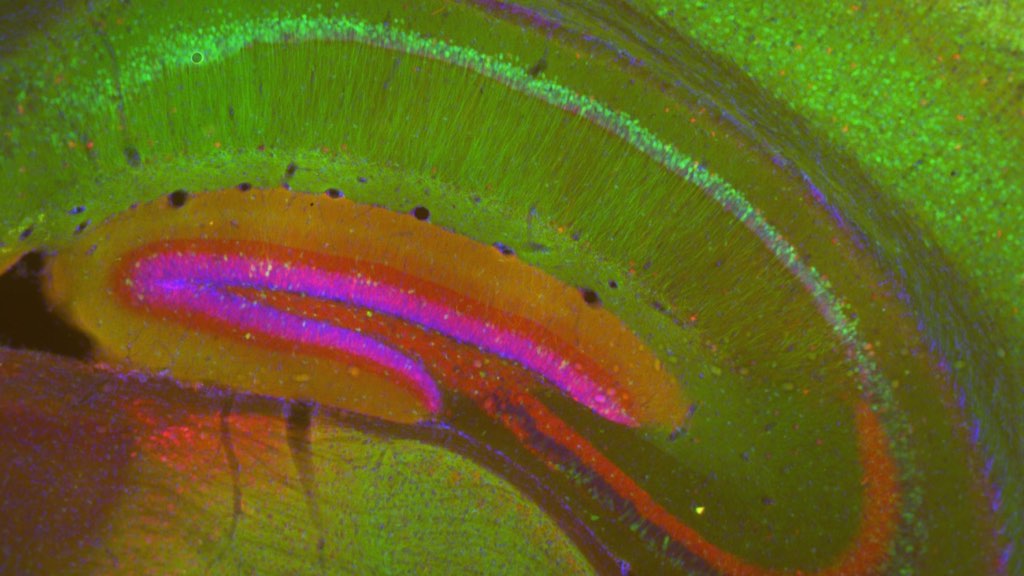
Psychedelics and myelin repair: a 2026 rat study hints MDMA and psilocybin rebuild the brain’s insulation to make fear-extinction gains — and PTSD recovery — last.
A 2026 study makes a claim odd enough to stop your scroll: MDMA and psilocybin may not just quiet fear — they may physically rebuild myelin, the fatty insulation wrapped around the brain’s wiring. In adult rats, both drugs reshaped myelin-making cells inside a memory hub while calming anxiety-like behavior (Study). The headline writes itself — “psychedelics heal PTSD” — but the genuinely new idea is subtler and more useful. Psychedelics and myelin repair may be how therapeutic gains get locked in, not merely how they first appear. One caveat up front, and we will repeat it: this is preclinical work in animals. It has not been shown in humans, and nothing here is dosing advice.
What Myelin Really Does
Start with the biology, because the whole story hinges on it. Myelin is a fatty sheath that coils around the long fibers of neurons the way insulation wraps a copper wire. It does two jobs at once: it speeds electrical signals — myelinated fibers conduct dozens of times faster than bare ones — and it keeps far-flung brain regions firing in sync. The cells that build and maintain it are oligodendrocytes, and they arise from a standing reserve of oligodendrocyte precursor cells. Together, the precursors and the mature myelin-makers form the oligodendrocyte lineage — the exact population the new rat study tracked.
For a long time the textbook view held that myelination was a childhood project, finished by early adulthood. That view is wrong. The nervous system keeps making fresh oligodendrocytes and laying down new myelin throughout adult life, and — crucially — it does so in response to what we do and learn. This is adult myelin plasticity, or activity-dependent myelination. When adult mice learn a demanding new motor skill, they produce roughly 50% more newly formed oligodendrocytes, and genetically blocking that fresh production stops them from mastering the task (Study). Learning does not just rewire synapses; it re-insulates circuits. That single fact is what turns “psychedelics remodel myelin” from science fiction into a biologically plausible hypothesis.
Inside the Rat Study
So what did the researchers actually do? The anchor paper, by Bostancıklıoğlu and colleagues in Biological Psychiatry, is a rat experiment — and it helps to say that plainly before the excitement builds. The team worked with about 210 adult male Wistar rats and put them through contextual fear conditioning, a standard model in which an animal learns to associate a place with a mild threat and then shows lasting anxiety-like behavior — a rough laboratory analog of the runaway fear learning seen in trauma. Some animals then received repeated low doses of psilocybin (0.5 mg/kg) or MDMA (0.1 mg/kg per day) for four days (Study).
The headline result came in two layers. Behaviorally, both drugs reduced the rats’ anxiety-like behavior. Biologically, both shifted the numbers of oligodendrocyte-lineage cells and left a multi-omic fingerprint of myelin remodeling — changes visible across gene activity, proteins, and metabolites — concentrated in the dentate gyrus, a part of the hippocampus central to forming and separating memories (Study). That “multi-omic” convergence matters: when three independent molecular layers point at the same myelin story, it is much harder to write off as a fluke of one noisy assay. In other words, the calmer behavior arrived alongside a coordinated reorganization of the brain’s myelin machinery in a memory hub. It bears repeating: this is a preclinical finding in rodents. It tells us something might be true in people; it does not show that it is.
Psychedelics and Myelin Repair
Here is where the finding earns its keep — and where psychedelics and myelin repair stops being a slogan and becomes a specific, testable mechanism. When the researchers layered three separate readouts — transcriptomics (gene activity), proteomics (proteins), and metabolomics (metabolites) — they converged on the same theme: an upregulation of myelin-related proteins in the dentate gyrus, with psilocybin preferentially switching on early oligodendroglial gene programs while MDMA enhanced markers of mature myelin (Study). Two compounds, two entry points into the same repair pathway.
What makes this more than a correlation is the loss-of-function work. The anxiety-relieving and myelin effects both ran through the 5-HT2A serotonin receptor — the same receptor behind a psychedelic’s subjective effects — and blocking it completely abolished both the behavioral and the myelin changes; disrupting myelin repair directly also wiped out the anti-anxiety benefit, showing the myelin change was necessary, not incidental (Study). A further dissociation control sharpened the point: using anisomycin to block fear-memory formation lowered anxiety but left myelin unrepaired, so simply suppressing the memory was not enough to reproduce the myelin-linked recovery (Study).
That 5-HT2A throughline ties the new work to a decade of plasticity research. Serotonergic psychedelics are established psychoplastogens — compounds that rapidly grow dendritic branches, spines, and synapses in cortical neurons, an effect abolished by 5-HT2A blockade (Study). More recent work pins the effect on an intracellular pool of 5-HT2A receptors (Study), and a review now treats this 5-HT2A → TrkB → mTOR cascade as the signature of the whole psychoplastogen class (Review). The rat study’s contribution is to extend that plasticity story from neurons to the cells that insulate them.
Now the nuance the press releases skip, and the reason honesty matters here. The drugs did not significantly change the mean g-ratio — the ratio of an axon’s diameter to its total myelinated diameter, the classic measure of how thick a myelin sheath is. On that metric, treated and untreated fear-conditioned animals looked the same (Study). The real effects were in oligodendrocyte-lineage cell numbers and the multi-omic remodeling signatures — a reorganization of the myelin system, not a blanket thickening of every sheath. That specificity is a feature, not a letdown: it argues the finding is a targeted process rather than a smear of nonspecific change.
Why Myelin May Lock It In
Why would remodeling insulation make a therapy last? Because in the adult brain, new myelin is part of how memories become permanent. When mice form a contextual fear memory, oligodendrocyte precursors proliferate in the prefrontal cortex, and blocking new myelin formation selectively erases the remote (weeks-old) memory while sparing the recent one — whereas a drug that promotes myelination strengthens long-term retention (Study). The same principle holds across tasks: disrupting learning-induced oligodendrocyte generation impairs the consolidation of both spatial and contextual fear memories and scrambles the sleep-related brain rhythms that stabilize them (Study).
Line that up with what trauma therapy is trying to do. Successful treatment does not delete a traumatic memory; it builds a new, competing safety memory — the core of fear extinction — and the clinical challenge is making that new learning durable so the fear does not come roaring back. If psychedelics remodel myelin in a memory hub, they may help cement extinction and safety learning the way fresh insulation cements any hard-won skill. That is the proposed missing link between a single dramatic session and a recovery that actually holds.
The flip side reinforces the logic. Myelin may not be a passive bystander in trauma. In rats, high-anxiety animals carry denser oligodendrocyte populations and more myelin protein in the dentate gyrus, and artificially forcing that program produces an anxious phenotype (Study). The human data are thinner: a small preliminary study found veterans with PTSD had higher estimated hippocampal myelin — measured indirectly with an MRI proxy rather than histology — and that the estimate tracked with symptom severity (Study). It is early, correlational work, but it points the same way: trauma may leave a myelin signature. That is part of why a treatment that can remodel myelin is worth taking seriously, and why “more myelin” is not automatically good. The goal is the right remodeling, not simply more.
The Human PTSD Evidence
Now step firmly out of the rat lab, because the case that psychedelic-assisted therapy actually helps people with PTSD rests on a completely separate body of evidence — and the two must not be blurred. That case is built on human trials that measured symptoms, not myelin.
The strongest data come from MDMA-assisted therapy. In the first phase-3 randomized controlled trial (MAPP1), 90 people with severe PTSD received either MDMA or placebo alongside structured psychotherapy; the MDMA group’s scores on the gold-standard CAPS-5 severity scale fell far more (a large effect, Cohen’s d of 0.91), 67% no longer met the criteria for a PTSD diagnosis versus 32% on placebo, and full remission reached 33% versus just 5% (Trial). A confirmatory phase-3 trial (MAPP2) replicated the result in a more diverse group: 71% of the MDMA group no longer met PTSD criteria at study end, versus 48% with placebo-plus-therapy, with disability scores improving more as well (Trial). Those are large effects for a notoriously stubborn condition, and they — not the rat data — are the real reason psychedelic therapy is taken seriously for PTSD.
But — and this matters — that evidence has not cleared the regulatory bar. In June 2024, an independent FDA advisory committee voted that the efficacy evidence was insufficient and that the benefits did not outweigh the risks (Review). On August 9, 2024, the FDA issued a Complete Response Letter to Lykos Therapeutics, declining approval and requesting an additional phase-3 trial (Announcement). A central sticking point was functional unblinding — because the drug’s effects are unmistakable, participants can usually tell whether they got MDMA or placebo, which can bias the results (Analysis). MDMA-assisted therapy is not FDA-approved.
And whether the benefit truly lasts is precisely where the rat myelin story becomes tantalizing. Preclinical work already hints at why these drugs might aid extinction: a single dose of MDMA robustly enhances long-term fear extinction in mice through BDNF signaling in the amygdala (Study), and psilocybin facilitates fear extinction by restoring hippocampal BDNF, dendritic spines, and dentate-gyrus neurogenesis (Study). The myelin finding offers a candidate answer for what makes those gains stick. But that bridge — from proven symptom relief in people to a myelin mechanism seen only in rats — is a hypothesis, not a demonstrated fact.
What This Doesn’t Mean
This is the part to read twice. The exciting myelin result is a rat model of contextual fear — a laboratory approximation of trauma, not the human condition itself. It has not been demonstrated in people, and it says nothing about human doses (Study). The specific quantities used in the rats (psilocybin 0.5 mg/kg, MDMA 0.1 mg/kg per day) are experimental parameters for a rodent protocol, not a template for anyone’s body.
Just as importantly: MDMA and psilocybin remain controlled substances with real risks — MDMA can raise blood pressure and heart rate and carries abuse potential, and both can trigger acutely distressing psychological states. In the human trials, they were given under intensive supervision, with trained therapists, medical screening, and monitoring built around each session. That controlled context is not a detail; it is a core part of why the trials looked as safe as they did. None of this is an invitation to self-medicate. Buying these drugs and dosing yourself is illegal, unmonitored, and dangerous, and it in no way reproduces a clinical protocol. The responsible move is to watch the research mature — and, if you are struggling, to seek evidence-based care from a licensed professional.
Frequently Asked Questions
Can psychedelics actually repair myelin in the brain?
A 2026 rat study found that both MDMA and psilocybin reshaped the brain’s myelin-making cells and left a molecular fingerprint of myelin remodeling in a memory hub called the dentate gyrus, while also calming anxiety-like behavior. Myelin is the fatty insulation wrapped around nerve fibers that speeds up signals and keeps brain regions in sync. This is preclinical work in animals, so it has not been shown in humans, and the article is clear that nothing here is dosing advice. Study
Is MDMA-assisted therapy FDA-approved for PTSD?
No, MDMA-assisted therapy is not FDA-approved. In June 2024 an independent FDA advisory committee voted that the efficacy evidence was insufficient and that the benefits did not outweigh the risks, and on August 9, 2024 the FDA issued a Complete Response Letter declining approval and requesting an additional phase-3 trial. One central concern was functional unblinding: because the drug’s effects are so noticeable, participants can usually tell whether they received MDMA or placebo, which can bias the results. Announcement
How well does MDMA-assisted therapy work for PTSD in human trials?
In a confirmatory phase-3 trial, 71% of people who received MDMA alongside structured therapy no longer met the criteria for a PTSD diagnosis at study end, compared with 48% who got placebo plus therapy. An earlier phase-3 trial showed a similar pattern, with 67% versus 32% no longer meeting the criteria and full remission reaching 33% versus 5%. Importantly, these trials measured symptoms, not myelin, so they do not confirm the animal myelin-repair idea. Trial
What doses of psilocybin and MDMA were used in the rat myelin study?
The rats received repeated low doses of psilocybin at 0.5 mg/kg or MDMA at 0.1 mg/kg per day for four days, in a study of about 210 adult rats. The article stresses that these are experimental parameters for a rodent protocol, not a template for anyone’s body. It explicitly warns that buying these drugs and dosing yourself is illegal, unmonitored, and dangerous, and that it in no way reproduces a clinical protocol.
Why might remodeling myelin help PTSD recovery last longer?
In mice, new myelin appears to be part of how memories become permanent: blocking new myelin formation selectively erased weeks-old fear memories, while a drug that promoted myelination strengthened long-term retention. Trauma therapy works by building a new safety memory that competes with the fear, and the challenge is making that new learning durable. The article suggests that if psychedelics remodel myelin in a memory hub, they may help cement that safety learning, though it stresses this is a hypothesis, not a demonstrated fact in people. Study
Key Takeaways
- A striking rat finding. In about 210 fear-conditioned rats, low-dose MDMA and psilocybin cut anxiety-like behavior while remodeling oligodendrocyte-lineage cells and myelin signatures in the dentate gyrus (Study).
- A specific, not fluke, mechanism. Blocking the 5-HT2A receptor — or disrupting myelin directly — abolished the benefit, showing the myelin change was necessary, not just correlated (Study).
- Why myelin could make it last. New myelin is required to consolidate remote fear memories in mice, so remodeling it may help newly learned safety memories endure (Study).
- Proven in people — for symptoms. Phase-3 trials of MDMA-assisted therapy left 71% of participants no longer meeting PTSD criteria, versus 48% on placebo-plus-therapy — but they measured symptoms, not myelin (Trial).
- Still preclinical, still not approved. The myelin work is animal-only and awaits human validation (Study), and MDMA-assisted therapy is not FDA-approved.
A Frontier Worth Watching
Strip away the hype and something genuinely exciting remains. For decades we have framed trauma therapy as rewriting memories and rebalancing neurotransmitters. The myelin idea adds a third dimension — that lasting recovery might depend on physically re-insulating the circuits where safety is relearned, and that psychedelics might nudge that process along. It is a clean, testable hypothesis, and the next few years of research will either build on it or knock it down. Both outcomes are exactly how science is supposed to work.
For now, the honest picture is a split screen: an exciting rat mechanism on one side, proven human symptom relief on the other, and open water in between. The most useful thing any of us can do is follow the real evidence instead of the headlines, support rigorous clinical research, and treat mental-health care as the serious, supervised medicine it is. If the brain’s capacity to remodel its own insulation fascinates you, it is the same thread running through much of our brain-health coverage — and if myelin turns out to be part of how healing sticks, that is a frontier well worth watching.
This article is for educational purposes and is not medical advice. Talk to a qualified clinician before changing your health regimen.


Leave a Reply