Part of our guide: Lower Blood Pressure Without Medication: What the Trials Show
Here is a fact that sounds like marketing until you read the trial: the largest cocoa study ever run cut cardiovascular death by 27 percent in older adults. The catch is twofold. First, that same trial technically missed its main goal — its primary heart endpoint came back statistically non-significant (Trial). Second, and more usefully, it was not the chocolate doing the work. The benefit came from cocoa flavanols delivered as a standardized extract, not from anything you can buy in the candy aisle. Hold onto that tension — a 27 percent signal sitting inside a “failed” trial, from a compound most chocolate has been stripped of — because it is the whole story.
What Cocoa Flavanols Are
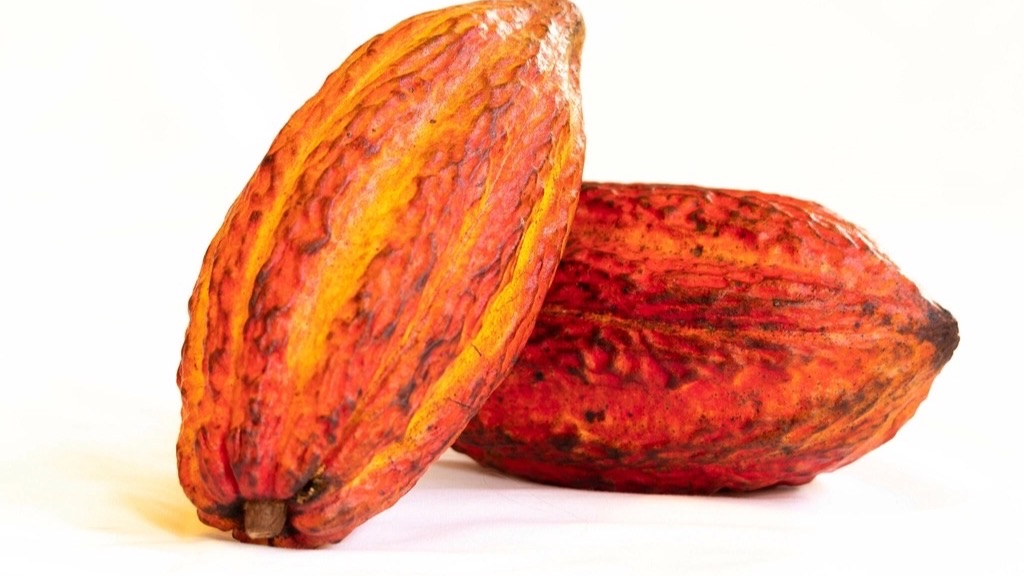
Cocoa flavanols are a class of plant polyphenols, specifically flavan-3-ols, found in the cacao bean. They are not a single substance but a family — monomers, oligomers, and longer polymers — and within that family one molecule does most of the heavy lifting in the heart-and-brain research: (-)-epicatechin. When scientists talk about cocoa “working,” they usually mean epicatechin and its close relatives, not cocoa butter, sugar, or the cocoa percentage printed on a wrapper.
This is the single most important distinction in the entire field, so it is worth stating bluntly up front: cocoa flavanols are a compound, and chocolate is a food. The two are only loosely related. A chocolate bar can be high in cocoa solids and still nearly empty of flavanols, because the steps that make cocoa palatable also destroy the very molecules being studied. We will return to that paradox in detail, but plant the flag now.
The dose that matters throughout this article is the one the major trials actually tested: roughly 500 mg of cocoa flavanols per day, including about 80 mg of (-)-epicatechin, delivered as a standardized cocoa extract (Trial). Every benefit and every null result below is anchored to that specific dose. Keep it in mind, because it quietly explains why eating dark chocolate is not the same experiment.
How Flavanols Help Arteries
The mechanism is unusually well mapped for a food compound, and it runs through one molecule you already know: nitric oxide (NO), the body’s master signal for relaxing blood vessels. Epicatechin’s headline trick is boosting nitric oxide, which widens arteries and improves blood flow.
The proof that this is genuinely nitric-oxide-driven — and not just vague “antioxidant” hand-waving — comes from an elegant human experiment. In healthy men, high-flavanol cocoa and even pure (-)-epicatechin acutely raised circulating nitric-oxide species and improved flow-mediated dilation (FMD), the gold-standard measure of how well an artery relaxes. The decisive step: when researchers blocked nitric oxide synthase with a drug, the benefit collapsed — FMD fell from 9.2 percent down to just 0.6 percent — confirming the effect was nitric-oxide-dependent (Trial). That is about as clean as mechanistic evidence gets in humans.
Zoom into the cell and you can see exactly how it happens. In human coronary artery endothelial cells, (-)-epicatechin directly activates endothelial nitric oxide synthase (eNOS) — the enzyme that manufactures NO — through specific phosphorylation and dephosphorylation events, with a micromolar dose roughly doubling NO output (Study). Review-level work pulls the threads together: epicatechin not only switches eNOS on, it also protects the nitric oxide you already have, by tamping down the enzymes (like NADPH oxidase) that generate the free radicals which otherwise consume NO (Review). So the flavanol both opens the tap and stops the leak. That dual action — more NO made, less NO destroyed — is the biological engine behind everything that follows.
What COSMOS Found
Now the main event. COSMOS — the COcoa Supplement and Multivitamin Outcomes Study — is the reason this topic deserves a serious article rather than a wellness blog post. It randomized 21,442 older US adults to a cocoa extract delivering 500 mg flavanols per day or placebo, and followed them for a median 3.6 years (Trial). This is a mega-RCT, the kind of evidence that should settle arguments.
Here is the awkward result. The trial’s primary endpoint — a composite of total cardiovascular events — was not statistically significant: 410 events on cocoa versus 456 on placebo, a hazard ratio of 0.90 with a confidence interval (0.78 to 1.02) that crosses 1.0, P = 0.11 (Trial). By the strict, pre-registered rules of the trial, COSMOS missed. Full stop.
And yet, underneath that headline sat a striking secondary endpoint: cardiovascular death fell with cocoa extract, hazard ratio 0.73 — a 27 percent reduction (Trial). A per-protocol analysis (which censors people once they stopped taking their pills) also showed a significant reduction in total cardiovascular events, HR 0.85 (Trial), hinting that adherence mattered. So why not celebrate? Because the trial’s own authors hung a warning label on it. The secondary outcomes were not adjusted for multiple testing, and the investigators wrote plainly that such results “should be interpreted cautiously and considered hypothesis generating,” ideally “reproduced in subsequent trials” (Trial). When you measure many outcomes, some will look impressive by chance; a secondary finding is a lead to chase, not a verdict.
Two more numbers keep us honest. All-cause mortality was not significantly reduced (HR 0.89, CI 0.77 to 1.03) (Trial) — so cocoa did not demonstrably help people live longer overall, only suggested fewer specifically cardiovascular deaths. That is the genuine, unspun state of the evidence: a real and biologically plausible signal, on a secondary endpoint, that has not yet been confirmed.
Flavanols and Blood Pressure
If flavanols boost nitric oxide and relax arteries, you would expect blood pressure to drop — and in the short term, it does. The most recent Cochrane meta-analysis of 35 trials in 1,804 mostly healthy people found cocoa produced small but statistically significant reductions: about -1.76 mmHg systolic and -1.76 mmHg diastolic (Meta-analysis). An earlier 2012 Cochrane review of 20 trials reported the somewhat larger figures often quoted — roughly -2.8/-2.2 mmHg (Meta-analysis). The plain-language Cochrane summary repeats the modern numbers and adds a candid caveat: seven of the trials were funded by companies with a commercial interest, and their reported effect was slightly larger — a hint of possible bias (Review).
So far, so promising. But here the tension snaps back. A 2025 long-term COSMOS analysis followed 8,905 participants free of hypertension at baseline and asked the harder question: does cocoa extract actually prevent people from developing high blood pressure over years? The answer was no — incident hypertension was essentially identical between groups (HR 0.96, CI 0.88 to 1.05) (Trial). A small surrogate nudge in 9-week trials did not translate into preventing a hard, long-term diagnosis.
How can both be true? Three reconciliations. A few short-term millimeters of mercury, averaged across mostly healthy people, is a surrogate — meaningful in aggregate but easily lost over years as bodies adapt and other factors dominate. Dose and population differ across studies. And tellingly, COSMOS found one bright spot: among participants who started with optimal blood pressure (systolic under 120 mmHg), cocoa extract was linked to a 24 percent lower risk of developing hypertension, emerging around year two — with no benefit in those already drifting toward elevated readings (Trial). The pattern suggests flavanols may help preserve healthy vessels early, not treat a problem already underway.
The COSMOS-Web Brain Bonus
COSMOS had a cognitive arm too, and it produced one of the most instructive null-with-an-asterisk results in nutrition science. COSMOS-Web randomized about 3,562 adults (mean age ~71) to the same 500 mg cocoa flavanol dose or placebo and tracked memory over a year (Trial).
The prespecified primary endpoint — better hippocampal-dependent memory across all participants — was null. No overall effect (d = 0.025, P = 0.42) (Trial). The interesting part lived in the subgroups. People who started with the lowest diet quality showed a small memory benefit, and those with the lowest habitual flavanol intake (measured by a urinary biomarker, not a questionnaire) showed a larger one (d = 0.141, P = 0.006). Rising flavanol levels over the trial tracked with improving memory (Trial).
A separate COSMOS clinic subcohort echoed the pattern almost exactly: no overall cognition effect, with only suggestive, uncorrected benefits in the lowest diet-quality group (Trial). The honest reading is not “cocoa makes you smarter.” It is “replenishing a deficit.” Flavanols seem to help the brain mainly in people who were running low to begin with — you cannot top up a tank that is already full. For someone eating a flavanol-rich diet, the extract had nothing left to add.
Cocoa Is Not Chocolate
This is the takeaway most worth the price of admission, and it is where almost everyone gets fooled. The cocoa-derived molecule that boosts nitric oxide is fragile, and the industrial process that makes cocoa smooth, dark, and mild — alkalization, also called Dutch processing — destroys most of it. In a chemical survey of commercial cocoa powders, average total flavanol content fell from 34.6 mg/g in natural cocoa to just 3.9 mg/g in heavily Dutched cocoa — close to a 90 percent loss (Study). The darker, mellower, more “premium”-looking the cocoa, the more likely its flavanols have been stripped out.
Chocolate is even less reliable. An analysis of 41 chocolate brands found total flavanols ranged enormously, with dark chocolate averaging only about 1.156 mg/g — and, crucially, no correlation between the cocoa-percentage on the label and the actual flavanol content (Study). A 90 percent bar can carry no more epicatechin than a 50 percent one. So that comforting heuristic — “buy the highest cacao percentage” — is essentially meaningless for flavanols. At roughly 1.2 mg/g, hitting the studied 500 mg dose would mean eating something like 400 grams of dark chocolate a day — far more sugar and saturated fat than any heart benefit could justify.
Which is exactly why COSMOS used a standardized cocoa extract, not a candy bar — 500 mg flavanols with 80 mg (-)-epicatechin in a capsule (Trial). Realistically, the studied dose comes from non-alkalized (natural) cocoa or a standardized supplement, full stop.
Now the caveats that keep this trustworthy. The 27 percent cardiovascular-death finding was a secondary endpoint, not corrected for multiple comparisons, in a trial whose primary endpoint was null (Trial). The participants were older Americans, so generalizability to younger people is unknown. And funding deserves daylight: COSMOS was supported by an investigator-initiated grant from Mars Edge, a Mars nutrition segment that also donated the study pills — though the trial states Mars had no role in design, conduct, analysis, or manuscript (Trial). Independent nutrition critic Marion Nestle pointedly noted that Mars funds research to support its cocoa-flavanol products and that, neutral primary endpoint notwithstanding, “Mars got its money’s worth” from the favorable secondary result (Review). None of this proves the finding wrong. It simply means a sponsor-friendly secondary result deserves extra skepticism and independent replication before anyone declares victory.
Frequently Asked Questions
Can I get cocoa flavanols from eating dark chocolate?
Not reliably. The cocoa percentage printed on a chocolate wrapper does not predict its flavanol content, and dark chocolate averages only about 1.156 mg of flavanols per gram, so a 90 percent bar can carry no more of the active molecule than a 50 percent one. To reach the roughly 500 mg dose the trials used, you would have to eat something like 400 grams of dark chocolate a day, which brings far more sugar and saturated fat than any heart benefit could justify. A standardized extract or non-alkalized natural cocoa is a more realistic source (Study).
How much cocoa flavanol did the COSMOS study actually use?
The major trials tested roughly 500 mg of cocoa flavanols per day, including about 80 mg of (-)-epicatechin, delivered as a standardized cocoa extract in a capsule rather than as chocolate. Every benefit and every null result in the research is anchored to that specific dose. That is a big part of why eating a chocolate bar is not the same experiment (Trial).
Did the COSMOS cocoa extract trial actually work?
It is a mixed picture. COSMOS randomized 21,442 older US adults, and its main pre-registered heart endpoint was not statistically significant, so by its own strict rules the trial missed. Underneath that, a secondary result showed cardiovascular death was 27 percent lower with cocoa extract, but the authors themselves labeled it hypothesis-generating and said it should be reproduced in future trials before anyone draws firm conclusions (Trial).
Does cocoa lower blood pressure long term?
In the short term it may nudge it down slightly. A Cochrane review of 35 trials found cocoa produced small reductions of about 1.76 mmHg systolic and diastolic. But a long-term COSMOS analysis of 8,905 people who did not have high blood pressure found cocoa extract did not prevent them from developing hypertension over years, so the short-term surrogate effect did not appear to translate into a lasting benefit (Trial).
Do cocoa flavanols improve memory?
For most people, the evidence suggests not much. COSMOS-Web tracked memory in about 3,562 older adults and found no overall effect from the cocoa flavanol supplement. A memory benefit appeared only in people who started with poor diet quality or low habitual flavanol intake, which the article frames as replenishing a deficit rather than boosting an already well-fed brain (Trial).
Key Takeaways
- COSMOS cut cardiovascular death 27 percent — as a secondary endpoint. The largest cocoa trial (n=21,442) missed its primary heart composite (HR 0.90, NS) but showed a 27 percent drop in CVD death (HR 0.73), explicitly labeled hypothesis-generating (Trial).
- The blood-pressure effect is small and short-term. Cocoa lowers BP by about -1.76/-1.76 mmHg in short trials (Meta-analysis), yet COSMOS found no reduction in long-term incident hypertension (HR 0.96) (Trial).
- The mechanism is nitric oxide, not magic. (-)-Epicatechin activates eNOS to make more nitric oxide and improve flow-mediated dilation, an effect that vanishes when NO synthase is blocked (Trial).
- The brain benefit only appears in low-flavanol eaters. COSMOS-Web found no overall memory effect, with gains limited to people who started with poor diet quality or low flavanol intake — replenishing a deficit (Trial).
- Cocoa is not chocolate. Dutch processing strips up to ~90 percent of flavanols (34.6 vs 3.9 mg/g) (Study), and cocoa percentage on a wrapper does not predict flavanol content (Study).
- The studied dose is 500 mg flavanols / 80 mg epicatechin per day. This is the extract dose COSMOS actually tested — impractical to reach from candy (Trial).
Should You Add Cocoa Flavanols
Here is the grown-up synthesis. Cocoa flavanols are a low-risk, modest-benefit intervention with a genuinely plausible mechanism — more nitric oxide, better artery function — and one tantalizing-but-unconfirmed signal of fewer cardiovascular deaths in the largest trial ever run (Trial). That is worth something. It is not worth treating like a cure. The primary endpoint was null, the best result was secondary and Mars-funded, and the long-term blood-pressure data came up empty (Trial). This is one piece of a cardiovascular-aging strategy, sitting beside exercise, sleep, and the rest — not a centerpiece.
If you do experiment, the most important rule is the one nearly everyone breaks: get your flavanols from real sources, not candy. That means non-alkalized natural cocoa or a standardized extract that actually states its flavanol and epicatechin content — because the chocolate bar promising “85 percent cacao” tells you almost nothing about the molecule that matters (Study). And if your diet is already rich in flavanols from berries, tea, and produce, the honest expectation is that an extract adds little, just as it added nothing to the well-fed brains in COSMOS-Web (Trial). Before adding any supplement, talk to a clinician — especially if you are on blood-pressure medication.
This article is for educational purposes and is not medical advice. Talk to a qualified clinician before changing your health regimen.


Leave a Reply