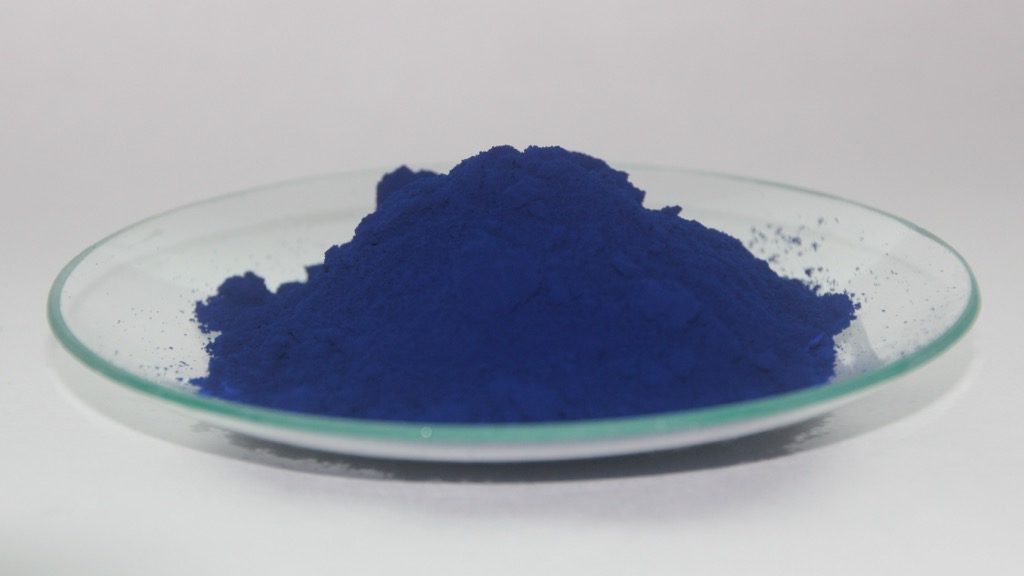
Methylene blue is sold as a brain booster on the strength of one small study. Here’s the real signal — and the FDA boxed warning the hype skips.
A century-old textile dye that doctors still inject in emergency rooms is now sold in dropper bottles as a focus enhancer, tongue tinted electric blue for the camera. The case for methylene blue as a nootropic rests on a genuinely interesting mitochondrial mechanism and exactly one small human cognition study — a real but slim signal worth taking seriously. The case for caution rests on something most nootropics never approach: methylene blue carries an FDA boxed warning for serious or fatal serotonin syndrome, the agency’s most severe alert. This is a signal-versus-hype story where the hype is loud, the signal is modest, and the safety stakes are unusually high. Let’s keep them straight.
What Methylene Blue Is
Methylene blue is a synthetic phenothiazine dye first made in 1876 — often called the first fully synthetic drug, and the molecular ancestor of an entire class of antipsychotics. For most of its life it has been exactly that: a medicine, not a supplement. It has been used as a malaria treatment, a surgical stain, and an antidote, and that long clinical track record is part of what makes it tempting to wave through as “well understood and safe.” Today its FDA-approved form is an intravenous injection sold as ProvayBlue, first approved in 2016, indicated for one narrow purpose — treating acquired methemoglobinemia, a condition in which the blood loses its ability to carry oxygen (Label). A second injectable version (Nexus Pharmaceutical) won FDA approval in 2024 for the same indication (Report).
That distinction is the foundation of everything that follows. Every FDA-approved methylene blue product is an injectable drug for a blood disorder. There is no FDA-approved oral form and no approved dietary supplement (Label). So the dropper bottle marketed for “cellular energy” is a prescription drug being repurposed and sold off-label as something it legally is not. That matters in two practical ways. First, purity: the human study that started the hype used U.S. Pharmacopeia-grade material, not the industrial dye sold to stain fabric, and the two are not interchangeable — chemical-grade methylene blue can carry heavy-metal contaminants you would never want to swallow. Second, oversight: a supplement-channel product carries none of the manufacturing controls a drug does, so dose accuracy and label honesty are whatever the seller decides they are. Hold that frame as we look at the science.
How It Powers Mitochondria
The mechanism is the genuinely fascinating part, and it deserves an honest accounting. Inside your cells, mitochondria run a four-complex assembly line called the electron transport chain that ultimately produces ATP, the body’s energy currency. Methylene blue slots into that line as an alternative electron carrier. It accepts electrons from NADH at complex I and, cycling between its oxidized and reduced forms, hands them off to cytochrome c near complex IV (cytochrome c oxidase) — effectively building a bypass around damaged links in the chain (Review). The net effect at the right dose is more cytochrome c oxidase activity, more oxygen consumption, and more ATP. The brain is the obvious place to look for an effect, because neurons are some of the most mitochondria-dense, energy-hungry cells in the body.
The numbers from animal work are striking. A single 1 mg/kg dose raised brain cytochrome oxidase activity by about 30% at 24 hours, three repeated doses pushed it to roughly 70%, and low-dose methylene blue measurably increased brain oxygen consumption (Review). So far, so promising.
Here is the catch that the marketing tends to skip — and the through-line of this whole article. The effect is hormetic: biphasic, an inverted U, helpful only inside a narrow low-dose window. In rat-brain tissue, cytochrome oxidase activity peaked at 138% of control at just 0.5 micromolar methylene blue, returned to baseline by 5 micromolar, and dropped below baseline at 10 micromolar (Review). The behavioral dose-response mirrors it — activity peaked around 4 mg/kg and fell below normal at 50 mg/kg and above (Review). At high local concentrations the molecule flips character entirely, stealing electrons from the transport chain and acting as a pro-oxidant, the opposite of the benefit (Review). With methylene blue, more is not better — more is worse. That single fact reshapes how you have to read every claim about it, because the gap between a useful dose and a harmful one is far narrower than the typical “take more if you want more” intuition.
What The Human Data Show
So what does the molecule actually do in people? The entire nootropic case rests on one study, and it’s worth describing precisely rather than breathlessly. In a randomized, double-blind, placebo-controlled trial, 26 healthy adults took a single oral dose of 280 mg (about 4 mg/kg) of pharmaceutical-grade methylene blue (Trial). The result: a roughly 7% increase in correct responses during memory retrieval versus placebo, plus increased fMRI activation during attention and short-term-memory tasks about an hour after dosing — more signal in the insular cortex during a sustained-attention task and in prefrontal, parietal, and occipital regions during a memory task (Trial).
That is a real, measured, placebo-controlled effect, and it deserves credit. It is also, by the authors’ own design, a single-dose study in 26 people. One small acute trial is a hypothesis worth testing further — not a verdict, and certainly not evidence that daily dosing does anything good. It tells us a 280 mg dose did something measurable in a brain scanner for an hour; it tells us nothing about a dropper every morning for a year.
The rest of the human literature actually narrows the claim rather than widening it. Methylene blue has been tested as a memory aid in fear-extinction therapy, and the results are revealing precisely because they’re so conditional. In a trial of 42 adults with claustrophobia, 260 mg given after an exposure session — during the memory-consolidation window — helped only when the session ended with low fear, and tended to worsen outcomes when the session ended with high fear (Trial). The drug appeared to enhance whatever memory was being consolidated, good or bad. In a separate chronic-PTSD trial, also n=42, adding methylene blue after brief daily exposure sessions did not beat placebo or standard exposure therapy on the primary PTSD outcome — though the authors did report a modest secondary signal (better quality of life, and a number-needed-to-treat of about 7.5) and a “delayed then accelerated” recovery pattern they read as potential utility (Trial). The honest reading across both: in humans, any methylene blue cognitive effect looks adjunctive, state-dependent, and modest — not a general “smarter, sharper” enhancer.
Where The Hype Outruns Evidence
Marketing copy leans heavily on the preclinical neuroprotection story, and that story is real — in animals. Methylene blue’s alternative-electron-transfer mechanism has been studied as a potential treatment in models of neurodegeneration and ischemia, and the biology that rescues failing mitochondria is legitimately interesting (Review). The problem is the gap between a promising mouse and a helped human — a gap that swallows the overwhelming majority of neuroscience candidates.
For methylene blue, that gap has actually been tested at scale, and the result is the part the hype omits. LMTM (leuco-methylthioninium, a stabilized methylene blue derivative) went into a Phase 3 trial for mild-to-moderate Alzheimer’s disease — the largest human test of a methylene blue compound for cognition ever run, with 891 participants (Trial). It failed. On the prespecified primary analysis, there was no benefit at either dose: the difference from control on the cognitive scale was −0.02 points (essentially nil) at the lower dose and −0.43 at the higher, with the functional outcome equally flat (Trial).
Independent experts were blunt about it. Conference coverage reported that the decline curves for both drug doses and placebo were nearly superimposable, with one leading Alzheimer’s researcher noting “the only important finding is that treatment was ineffective” (Report). A post-hoc subgroup that looked better was dismissed by reviewers as statistically invalid (Report). None of this proves methylene blue is useless for healthy cognition — the trial was in Alzheimer’s patients, not biohackers, and a failed disease drug isn’t the same as a failed enhancer. But it does mean the one large, rigorous human test of this molecule’s brain benefits came back negative, and any honest pitch has to say so out loud. Mechanistic promise is a reason to keep researching; it is not proof of human benefit.
The Safety Stakes Are High
This is the section that should anchor any decision, because methylene blue’s risk profile is in a different league from a typical nootropic. Three hazards stand out.
First, serotonin syndrome. Methylene blue is a potent reversible monoamine oxidase inhibitor (MAOI) with strong selectivity for the MAO-A subtype — the enzyme that clears serotonin (Review). Because of this, the FDA-approved label carries a boxed warning — the agency’s most serious — stating, verbatim, that the drug “may cause serious or fatal serotonergic syndrome when used in combination with serotonergic drugs and opioids,” and directs avoiding it alongside SSRIs, SNRIs, MAOIs, and opioids (Label). The MAO-A inhibition is so strong that “even a nanomolar quantity suffices to influence” the enzyme (Review). This isn’t a hypothetical lab risk — it surfaced clinically when surgical patients on antidepressants developed serotonin toxicity after methylene blue was used as a dye. If you take a common antidepressant — and tens of millions of people do — this interaction can be life-threatening, and it is the single most important fact in this article.
Second, G6PD deficiency. Methylene blue is contraindicated in people with glucose-6-phosphate dehydrogenase (G6PD) deficiency, a common inherited enzyme disorder, because their red blood cells can’t generate the NADPH needed to counter oxidative stress — so methylene blue can trigger hemolytic anemia (Review). This is not theoretical: one case report documented hemoglobin crashing from 81 to 38 g/L after a 50 mg dose in a G6PD-deficient patient (Report). G6PD deficiency affects hundreds of millions of people worldwide, and many who carry the trait have never been tested and don’t know.
Third, the methemoglobinemia paradox — the antidote becoming the poison. Methylene blue treats methemoglobinemia at low doses, but above a maximum cumulative dose of 7 mg/kg it flips into an oxidant that can cause or worsen the very condition it treats, with severe overdose (20 mg/kg or more) capable of causing massive hemolysis and death (Review). The same inverted-U seen in the mitochondrial data plays out at the whole-body level: at high cumulative doses, the molecule turns on you (Review). For a substance sold without dosing oversight, that is a sobering ceiling.
Frequently Asked Questions
Does methylene blue actually improve memory or make you smarter?
The nootropic case rests on essentially one small human study. In a randomized, placebo-controlled trial of 26 healthy adults, a single 280 mg oral dose was associated with about a 7% increase in correct answers during memory retrieval, plus more brain activation on attention and short-term memory tasks about an hour after dosing (Trial). That is a real but modest single-dose signal, not evidence that taking it every day makes you sharper.
Can you take methylene blue with antidepressants like SSRIs?
This is the single most important safety point in the article. Methylene blue is a potent MAO-A inhibitor, and its FDA-approved label carries a boxed warning, the agency’s most serious, stating it may cause serious or fatal serotonin syndrome when combined with serotonergic drugs and opioids (Label). The label directs avoiding it alongside SSRIs, SNRIs, other MAOIs, and opioids, so for the tens of millions of people on a common antidepressant this interaction can be life-threatening.
Is there an FDA-approved methylene blue supplement you can take by mouth?
No. Every FDA-approved methylene blue product is an injectable drug used to treat acquired methemoglobinemia, a blood disorder, and there is no approved oral form and no approved dietary supplement. So a dropper bottle marketed for cellular energy is a prescription drug being sold off-label, meaning its purity, dose accuracy, and label honesty are whatever the seller decides.
Who should not take methylene blue?
It is contraindicated in people with G6PD deficiency, a common inherited enzyme disorder, because it can trigger hemolytic anemia, the destruction of red blood cells. The article cites one case in which a G6PD-deficient patient’s hemoglobin crashed from 81 to 38 g/L after just a 50 mg dose (Review). It is also flagged for anyone taking antidepressants or opioids because of serotonin syndrome risk, and many people carry G6PD deficiency without ever being tested.
Can you take too much methylene blue, and is more better?
With methylene blue, more is worse. It follows an inverted-U dose response: a low dose can help mitochondria, but at higher concentrations it flips into a pro-oxidant that does the opposite. Above a cumulative dose of about 7 mg/kg it can paradoxically cause or worsen the very blood disorder it normally treats, and severe overdose of 20 mg/kg or more can cause massive red blood cell destruction and death. For a substance sold without dosing oversight, that is a sobering ceiling.
Key Takeaways
- The human nootropic signal is real but thin. One small randomized trial (n=26, single 280 mg dose) found a ~7% memory-retrieval gain and increased attention/memory brain activation — a hypothesis worth testing, not a proven effect (Trial).
- It follows an inverted-U dose-response. Cytochrome oxidase activity peaks near 0.5 micromolar (about 4 mg/kg in animals) and drops below baseline at higher doses, where methylene blue turns pro-oxidant — with this molecule, more is worse (Review).
- The biggest human disease test failed. The Phase 3 Alzheimer’s trial of a methylene blue derivative (n=891) showed no cognitive or functional benefit on its primary analysis (Trial).
- It carries an FDA boxed warning for serotonin syndrome. As a potent MAO-A inhibitor, methylene blue may cause serious or fatal serotonin syndrome with SSRIs, SNRIs, MAOIs, and opioids — a non-negotiable interaction check (Label).
- G6PD deficiency is a hard contraindication, and high doses are toxic. It can cause hemolytic anemia in G6PD-deficient people and paradoxically induce methemoglobinemia above a 7 mg/kg cumulative dose (Review).
- It’s an off-label drug, not an approved supplement. The only FDA-approved forms are injections for methemoglobinemia; there is no approved oral or supplement version, so purity and legality vary (Report).
Curiosity, With Eyes Open
Methylene blue is a genuinely fascinating molecule. The idea that a 19th-century dye can act as a backup electron carrier, rescuing tired mitochondria and nudging memory in a controlled trial, is the kind of mechanism that makes biohacking exciting in the first place. The signal is real. It is also small, single-dose, state-dependent, and shadowed by a large negative human trial — a candidate to watch, not a settled win.
What sets this compound apart from the usual stack additions isn’t the upside; it’s the downside. A boxed-warning interaction with the most widely prescribed class of antidepressants on earth. A contraindication that millions of people carry without knowing. A toxicity ceiling where the helpful molecule becomes a poison. None of that is reason for fear — it’s reason for respect, and for doing this the careful way if you do it at all.
So if methylene blue intrigues you, treat it like what it is: a drug. That means a real conversation with a clinician, a deliberate check of every drug interaction (antidepressants above all), knowing your G6PD status, sourcing only pharmaceutical-grade material, and confirming the legal status where you live. This is not a casual purchase you reason your way into from a single study. It’s a fascinating molecule that earns curiosity — the eyes-open kind.
This article is for educational purposes and is not medical advice. Talk to a qualified clinician before changing your health regimen.


Leave a Reply