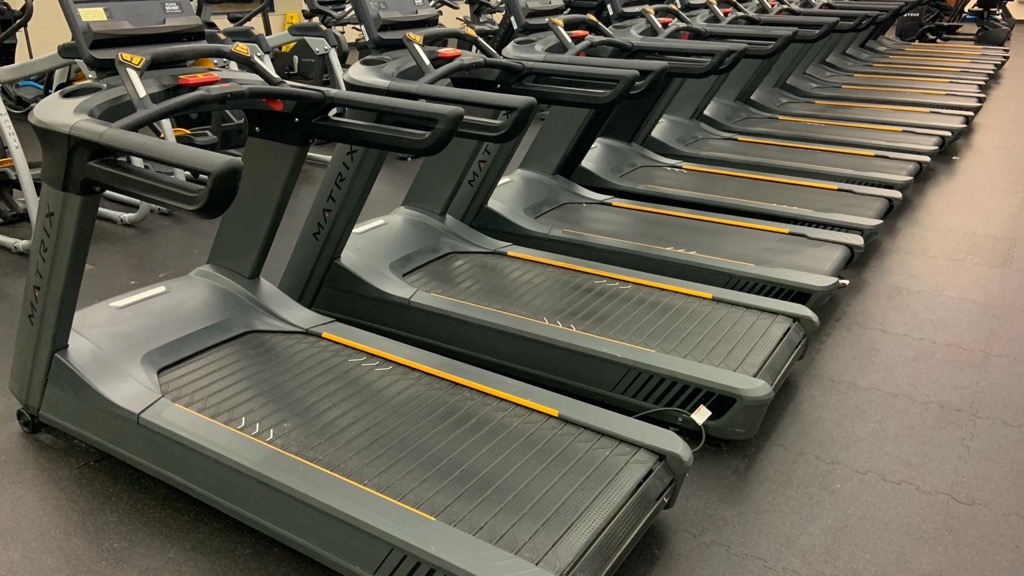
The single best predictor of how long you’ll live may not be hiding in your blood panel at all. It’s a number almost nobody gets measured: how much oxygen your body can actually use when you push it to the limit. When Cleveland Clinic researchers tracked 122,007 patients on a treadmill, this one metric—the heart of the VO2max longevity story—out-predicted nearly everything we screen for. Being in the lowest-fitness group was associated with a higher risk of dying than smoking, diabetes, or established heart disease (Study). We obsess over cholesterol and blood sugar. We rarely think to ask how much oxygen we can move. That oversight may be one of the most consequential blind spots in modern medicine.
What Is VO2max?
VO2max is the maximum amount of oxygen your body can take in and use per minute during all-out effort, expressed in milliliters of oxygen per kilogram of body weight per minute (mL/kg/min). Think of it as the ceiling of your cardiorespiratory engine—the highest rate at which your lungs can pull in oxygen, your heart can pump it, your blood can carry it, and your muscles’ mitochondria can burn it for fuel. No single organ owns the number. It’s the whole oxygen-delivery chain working together, which is exactly why it’s such a revealing measure of overall cardiorespiratory fitness.
The figures vary widely by age and sex. A reasonably fit man in his thirties might sit around 45–50 mL/kg/min; a same-age woman, a bit lower, reflecting differences in body composition and hemoglobin. Untrained, sedentary adults often land in the low-to-mid 20s, while world-class endurance athletes can exceed 70 or even 80. VO2max also declines with age—roughly 10% per decade after the thirties if you do nothing about it—so a “good” number for a 60-year-old looks very different from a “good” number at 25. What matters for survival isn’t hitting some athlete’s benchmark; it’s where you sit relative to others your age and sex, and which direction you’re heading.
Crucially, VO2max is best understood as an integrative biomarker rather than a runner’s bragging stat. A blood test usually measures one thing—a lipid fraction, a glucose level, an inflammatory marker. VO2max rolls cardiac output, vascular health, lung function, blood oxygen-carrying capacity, and muscle metabolism into a single readout of how well your entire system handles a demanding load. That breadth is precisely why it tracks so tightly with how long you live.
A Mortality Curve With No Ceiling
The landmark evidence comes from Mandsager and colleagues, published in JAMA Network Open in 2018. They followed 122,007 patients (mean age 53, 59% men) who underwent exercise treadmill testing at the Cleveland Clinic, tracking them for a median of 8.4 years—about 1.1 million person-years of data (Study). The relationship between fitness and death was a clean, graded dose-response: the fitter the patient, the lower the risk, all the way up the scale.
The headline number is striking. Compared with the “elite” group (the fittest, defined as at least two standard deviations above the age- and sex-adjusted mean), the lowest-fitness group had an adjusted hazard ratio of 5.04 for all-cause mortality (95% CI 4.10–6.20)—roughly five times the risk of dying (Study). Flipped around, being elite was associated with roughly 80% lower mortality than being unfit (Study).
What makes the finding remarkable is the absence of a ceiling. There was no observed upper limit of benefit—fitter was always better, with no plateau where extra fitness stopped paying off (Study). Even the elite group still had lower mortality than the merely “high”-fitness group right below them (adjusted HR 0.77; 95% CI 0.63–0.95), and the extra benefit of extreme fitness was especially pronounced in patients over 70 and in those with high blood pressure (Study). The old worry that endurance fitness might eventually harm the heart found no support here.
This isn’t one quirky dataset, either. A 2024 umbrella review in the British Journal of Sports Medicine—pooling 26 systematic reviews covering 199 cohort studies and more than 20.9 million observations—found the same dose-response signal at scale. Every 1-MET higher level of fitness (one MET equals about 3.5 mL/kg/min of VO2max) was associated with an 11% to 17% reduction in all-cause mortality, and the fittest people had roughly half the premature-death risk of the least fit (Meta-analysis). One Cleveland cohort, one global synthesis of millions—same conclusion.
Worse Than Smoking or Diabetes
Here is the comparison that earns VO2max its “master biomarker” reputation. In the Mandsager cohort, the researchers lined up low fitness against the classic risk factors that dominate medical checkups—and low fitness came out ahead, by a wide margin. The adjusted hazard ratio for low-versus-elite fitness was 5.04. The hazard ratios for the conditions we screen for relentlessly were far smaller: smoking 1.41, diabetes 1.40, and coronary artery disease 1.29 (Study).
Read that again. Being unfit was associated with a larger increase in mortality risk than being a smoker. Larger than having diabetes. Larger than carrying diagnosed coronary artery disease. The authors put it plainly: reduced fitness conferred a risk “comparable to, if not significantly greater than” those traditional clinical factors (Study). The Cleveland Clinic’s own summary echoed it—each step down the fitness ladder raised mortality by a magnitude on par with or beyond coronary disease, smoking, and diabetes (Study).
The disconnect with everyday practice is glaring. A physical exam reliably checks blood pressure, asks about smoking, and orders a glucose and lipid panel. It almost never measures—or even estimates—cardiorespiratory fitness, despite this being a strong and statistically independent signal. We aggressively manage the weaker predictors and largely ignore the strongest one. As a marker of who is most likely to die in the coming years, VO2max arguably deserves a seat at the table alongside blood pressure and cholesterol, not relegated to the world of athletes and sports labs.
Why It Predicts Lifespan
Why would a single oxygen number outperform the carefully validated markers in a standard blood draw? Because of what it quietly bundles together. To deliver a high VO2max, your heart has to generate a strong cardiac output, your arteries have to be elastic and responsive, your blood has to carry oxygen efficiently, and your muscles need dense, healthy mitochondria and metabolic machinery. A low VO2max means one or more of those systems is faltering—so the number captures system-wide resilience that any single blood marker, measuring one slice of physiology, inevitably misses.
Just as important, fitness adds predictive power on top of the usual suspects. In Mandsager, the hazard ratios held up after adjustment for age, sex, BMI, history of coronary disease, hyperlipidemia, hypertension, diabetes, smoking, kidney disease, medications, and more—fitness remained an independent predictor of survival (Study). The 2024 umbrella review reached the same verdict across its 20.9 million observations: fitness “provides additional information beyond traditional risk factors such as blood pressure, total cholesterol and smoking status” (Meta-analysis). And a Mayo Clinic Proceedings review concluded that measuring fitness can offer independent, additive information beyond even the Framingham risk score and other established clinical markers (Review). It doesn’t just repeat what your labs already say—it tells you something they can’t.
The signal is also remarkably durable over time. In a 46-year follow-up of 5,107 healthy middle-aged men—one of the longest fitness-mortality studies ever conducted, published in the Journal of the American College of Cardiology—each 1 mL/kg/min increase in VO2max was associated with roughly 45 extra days of life (95% CI 30–61 days), and the fittest men lived nearly five years longer than the least fit (Study). That translates an abstract hazard ratio into something tangible: every notch you can add to your aerobic ceiling is associated with measurable time, and the effect was still visible four and a half decades later.
How to Measure It
The gold standard is a cardiopulmonary exercise test (CPET): you wear a mask while walking on a treadmill or pedaling a bike at progressively harder intensity, and a gas analyzer measures the oxygen you consume and the carbon dioxide you produce in real time. Because it directly measures gas exchange across the cardiovascular, respiratory, muscular, and metabolic systems at once, CPET is considered the reference standard for assessing cardiorespiratory fitness—which is exactly why every other method is judged against it (Review). The downside is access: it needs a lab, equipment, and trained staff.
Fortunately, you don’t need a lab to get a usable number. Submaximal and field tests—like the Cooper 12-minute run (how far you can cover in 12 minutes) or various step tests—estimate VO2max from your performance. Non-exercise prediction equations infer it from your age, sex, resting heart rate, and activity level. And modern smartwatches now generate a VO2max estimate automatically from your heart rate and pace during workouts.
The catch is precision. A systematic review and meta-analysis of consumer wearables found that exercise-based estimates were accurate on average—a negligible mean bias of about −0.09 mL/kg/min against laboratory testing—but the spread for any one individual was wide, with limits of agreement running from roughly −10 to +10 mL/kg/min (Meta-analysis). Resting-based estimates were worse, tending to overshoot. The practical takeaway: treat a smartwatch number as a ballpark figure and, more importantly, as a trend line. Even an imperfect estimate, tracked consistently over months, tells you whether you’re moving in the right direction—and that direction is what matters most for longevity.
A Biomarker You Can Move
Here’s what sets VO2max apart from almost every other powerful mortality predictor: you can change it. Your age only climbs. Your genes are fixed. But your aerobic fitness is squarely within your control—and the evidence that moving it moves your survival odds is some of the most encouraging in longevity science.
Improving fitness over time is associated with lower subsequent mortality, even from modest gains. In the Aerobics Center Longitudinal Study, men who had two fitness exams several years apart saw their all-cause mortality drop about 15% for every 1-MET improvement in fitness, and those whose fitness increased had roughly 40% lower mortality than those whose fitness declined (Study). A classic Norwegian study reached the same conclusion: among healthy men retested about seven years apart and followed for 22 years, the biggest fitness improvers had less than half the death rate of those who improved least—and even small gains tracked with significantly lower mortality (Study). A dose-response meta-analysis of 34 cohorts nails down the per-unit value: about 12% lower all-cause mortality for each 1-MET higher fitness level (Meta-analysis).
And VO2max responds reliably to training. A meta-analysis of 28 controlled trials found endurance training raised VO2max by 4.9 mL/kg/min and high-intensity interval training by 5.5 mL/kg/min versus no exercise—large, real gains from either approach (Meta-analysis). The number stays movable into old age: across 41 controlled trials in adults over 60, endurance training produced a net 3.78 mL/kg/min improvement, a 16% bump over controls (Meta-analysis). An overview of 11 systematic reviews found training increases VO2max across both lower- and higher-intensity protocols, with the difference between intensities being small or inconclusive (Review). The levers are familiar—a base of easy zone 2 aerobic work plus a small dose of harder intervals—but the how is a separate story. What matters here is simply this: the strongest modifiable longevity biomarker we have genuinely moves when you train.
Frequently Asked Questions
Is being unfit really worse than smoking or diabetes?
In the Cleveland Clinic study of 122,007 patients, having low fitness was associated with about five times the risk of dying (hazard ratio 5.04) compared with elite fitness. That was a larger increase in risk than smoking (1.41), diabetes (1.40), or diagnosed coronary artery disease (1.29), and the researchers called low fitness a risk comparable to, if not greater than, those traditional factors. Keep in mind this is an association from observational data, not proof that fitness by itself explains the whole difference. Study
Can a smartwatch accurately measure your VO2max?
A smartwatch gives an estimate rather than a lab-grade number. A review of consumer wearables found that exercise-based estimates were accurate on average, with a tiny mean bias of about -0.09 mL/kg/min, but they could be off by roughly 10 mL/kg/min in either direction for any single person, and resting-based estimates tended to run high. The article suggests treating your watch reading as a ballpark figure and, more usefully, as a trend line you track over months. Meta-analysis
How can I measure my VO2max without going to a lab?
The lab gold standard is a cardiopulmonary exercise test, where you wear a mask on a treadmill or bike while a gas analyzer measures the oxygen you use, but you do not need one to get a usable number. Field tests such as the Cooper 12-minute run (how far you can cover in 12 minutes) or step tests estimate VO2max from your performance. Non-exercise equations infer it from your age, sex, resting heart rate, and activity level, and modern smartwatches generate an estimate automatically from your workouts.
Can you actually improve your VO2max, or is it fixed by genetics?
According to the article, VO2max responds reliably to training rather than being locked in. A meta-analysis of 28 controlled trials found that endurance training raised it by about 4.9 mL/kg/min and high-intensity interval training by about 5.5 mL/kg/min versus no exercise. It stays movable later in life too: across trials in adults over 60, endurance training produced a net gain of about 3.78 mL/kg/min. The article describes the basic approach as a base of easy zone 2 aerobic work plus a small dose of harder intervals. Meta-analysis
What is a good VO2max for my age and sex?
The article notes that typical numbers vary widely by age and sex. A reasonably fit man in his thirties might sit around 45 to 50 mL/kg/min and a same-age woman a bit lower, while untrained, sedentary adults often land in the low-to-mid 20s and world-class endurance athletes can exceed 70 or even 80. VO2max also tends to decline roughly 10% per decade after your thirties if you do nothing about it. What matters most for longevity, the article says, is not hitting an athlete’s benchmark but where you sit relative to others your age and sex, and which direction you are heading.
Key Takeaways
- Strongest modifiable mortality predictor: across 199 cohorts and 20.9 million observations, fitness shows a consistent dose-response link to survival that adds information beyond standard risk factors (Meta-analysis).
- No upper limit of benefit: in 122,007 Cleveland Clinic patients, fitter was always better—elite fitness was associated with ~80% lower mortality than low fitness, with no plateau (Study).
- Unfit rivals smoking and diabetes: low fitness carried a mortality risk (HR 5.04) far exceeding smoking (1.41), diabetes (1.40), and coronary artery disease (1.29) (Study).
- An integrative whole-body biomarker: VO2max bundles heart, vascular, lung, and mitochondrial health into one number and predicts survival independently of the Framingham score (Review).
- You can estimate it cheaply: CPET is the gold standard, but field tests and smartwatches give a usable trend line—within roughly ±10 mL/kg/min for exercise-based wearables (Meta-analysis).
- It’s movable with training: endurance and interval training raise VO2max by ~5 mL/kg/min, and each 1 mL/kg/min gain is linked to roughly 45 extra days of life (Study).
Train the Number That Tracks Your Life
Of all the biomarkers people chase in the name of living longer, VO2max is the rare one that is both powerfully predictive and squarely in your hands. Cholesterol panels, glucose readings, inflammatory markers—useful, but each captures a sliver. VO2max captures the whole engine, predicts mortality as well as or better than the risk factors we screen for hardest, and, unlike your age or your DNA, it answers directly to what you do this month and next (Study). That’s a rare combination: a number that matters enormously and that you can actually change.
So get a baseline. Book a CPET if you can, run a Cooper test if you can’t, or just read the estimate off your watch—then watch the trend, not the single data point. From there, the path is the unglamorous one: accumulate easy aerobic miles, sprinkle in some harder efforts, and let the months compound. Each notch you add isn’t just a fitter you; the data ties it to measurable extra time alive (Study). The most predictive longevity test in medicine isn’t a vial of blood—it’s a treadmill, a mask, and the willingness to breathe hard.
This article is for educational purposes and is not medical advice. Talk to a qualified clinician before changing your health regimen.


Leave a Reply