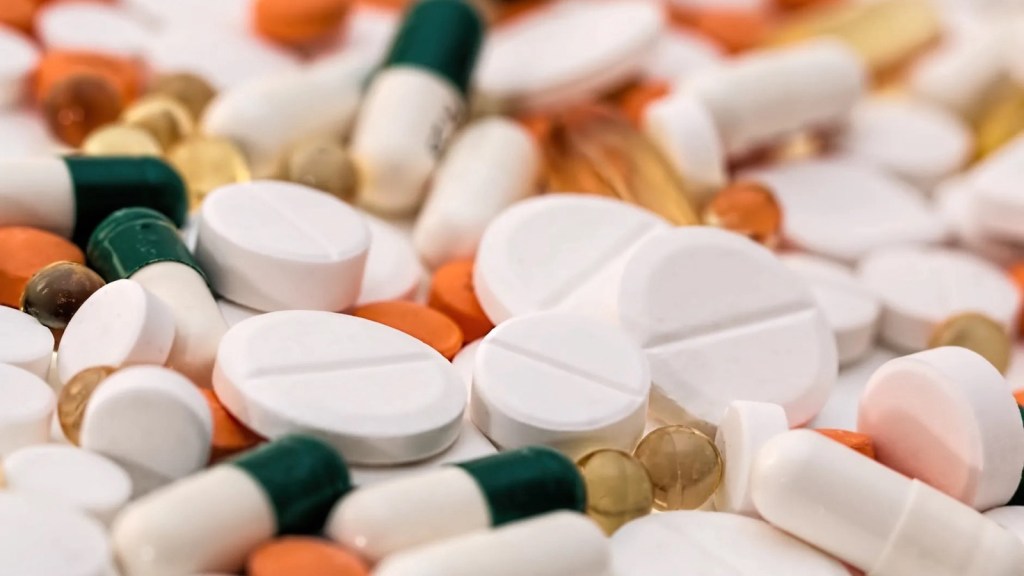
The newest GLP-1 pill takes about 11% off body weight in 72 weeks. People on a dummy tablet lost about 2% (Trial). Two of these pills are now approved, and in their own trials both take off less weight than the weekly shots do. The same drug class was then tested in early Alzheimer’s disease. In 3,808 people over two years, it did not slow the disease (Trial).
What a GLP-1 Pill Actually Is
GLP-1 is a hormone your own gut makes, and levels rise when you eat. It slows the stomach down and tells your brain the meal is over.
Drug makers have copied that hormone for years, and copying it used to mean a weekly injection. The copy is a peptide, and your gut digests peptides like food. So a plain tablet of one does almost nothing.
Two pills now get around that. The first was oral semaglutide 25 mg, cleared for weight management on 22 December 2025 (Announcement). The second was orforglipron, cleared on 1 April 2026 (Approval letter). Both need a prescription, and both come with a lower-calorie diet and more activity. The orforglipron label covers adults with obesity. It also covers adults carrying extra weight plus a weight-related condition (Label).
The two pills feel different in daily life. Oral semaglutide is the same peptide as the shot, packed with a helper that carries it through the stomach wall. Its label asks for an empty stomach in the morning, with a few sips of water. Then you wait 30 minutes before food, drink or other pills (Label). Orforglipron is an ordinary small molecule instead. Its label says once a day, with or without food, and sets no timing rule at all (Label).
Why Swallowing It Matters
Needle fear is the barrier most people name first. In practice, the fridge causes more trouble.
Injector pens have to stay cold until first use. That means an insulated bag on holiday and a plan for a power cut. The supply chain has to stay cold too, from factory to kitchen. A tablet sits in a cupboard at room temperature and travels in a pocket.
The timing rule is a barrier of its own. An empty stomach, a sip of water, then half an hour before coffee is a lot to get right every morning. Some people will miss it often. The newer tablet drops the rule (Label). These drugs get taken for years, so missed mornings add up.
Supply may get easier too. Orforglipron is built by standard chemistry, not grown in living cells (Label). That kind of chemistry usually scales up more easily than filling millions of pens.
Being able to get a drug is not the same as being able to pay for it. Prices and insurance rules for these drugs keep moving. Check what is true this month, not what a headline said last year.
How It Compares to the Shots
The pill is easier to take, and it takes off less weight.
Orforglipron was tested in 3,127 adults with obesity and no diabetes, for 72 weeks (Trial). A coin flip decided who got the drug and who got a dummy tablet (Registry). On the top dose, average weight loss came to about 11%. On the dummy tablet it was about 2% (Trial).
Put that on a bathroom scale. The average person in that trial started at about 103 kg, which is roughly 227 pounds (Trial). An 11% loss is about 11 kg, or 25 pounds.
You may have seen 12.4% quoted instead. That figure models what the drug does if everyone takes it exactly as directed (Trial). The 11% figure counts everyone who started, including the people who quit. That is the harder test, and the trial set it as the main question.
The other pill did a little better. Its maker funded a trial of oral semaglutide 25 mg in 307 adults, running about 64 weeks. Average loss was about 14%. On the dummy tablet it was about 2% (Trial).
Stomach trouble was common. About 74 in every 100 people on that pill reported a stomach or bowel complaint. On the dummy tablet it was about 42 in every 100 (Trial).
The weekly shots have bigger numbers. Weekly semaglutide took off about 15% of body weight in 1,961 adults with obesity or extra weight (Trial). Tirzepatide took off about 21% at its top dose in 2,539 adults (Trial).
Lining up separate trials like that is weaker than it looks. The people differ, the entry rules differ, and so does the diet advice. A 2025 editorial puts these trials side by side and says the same thing. It calls the comparison a hint rather than a settled answer (Editorial).
One trial did compare two shots head to head. It gave 751 adults tirzepatide or semaglutide for 72 weeks. Tirzepatide took off about 20% of body weight, semaglutide about 14% (Trial). Everyone involved knew who was getting what. The drug’s maker paid for the trial.
A 2026 review pooled ten studies that compared the two drugs directly. People on tirzepatide lost about 4% more of their body weight. They also reported serious side effects more often, though only three of those studies tracked them (Meta-analysis).
Retatrutide is the drug people keep asking about. In its main trial it took off about 28% of body weight at 80 weeks. In a heavier group followed for two years it reached about 30% (Trial). That trial gave it as a weekly shot, not a pill (Design). You also cannot buy it. Its maker still calls it experimental and plans to file for approval in early 2027 (Announcement). That date has already slipped once, over manufacturing paperwork (Report).
The Alzheimer’s Trial That Failed
The hope for these drugs went well past weight. Researchers wondered whether they could slow the aging brain.
That hope had a real basis. Large studies of people taking GLP-1 drugs for diabetes kept finding less dementia in that group (Cohort). A pooled read of trial safety reports pointed the same way (Meta-analysis). So Novo Nordisk funded the largest test of a GLP-1 drug ever run in dementia.
EVOKE and EVOKE+ were two trials with one design. Together they enrolled 3,808 adults aged 55 to 85, at 566 sites in 40 countries. Everyone had confirmed Alzheimer’s disease at an early stage, with mild memory problems or mild dementia. A coin flip decided who got the semaglutide pill and who got a dummy tablet. The main question was asked at two years (Trial).
Finding those people took work. Researchers screened 9,981 volunteers to fill the two trials. The average participant was 72 years old (Trial).
The main measure was a standard score. It rates memory, judgment, hobbies and personal care together, so it tracks whether a person is getting worse in daily life. Both groups did get worse over the two years. They got worse by the same amount (Trial).
The drug itself behaved as expected. Among people who took at least one dose, about 91 in every 100 on semaglutide reported a side effect. On the dummy tablet it was about 85 in every 100. Nothing new turned up (Trial).
Both trials had a third year built in. Participants and site staff were meant to stay in the dark about who got what (Design). Novo Nordisk cancelled that year (Announcement). The company did publish the full results in a major medical journal, not only a press release (Trial).
Moving a Marker Is Not Helping
The drug did move the biology. A smaller study inside the trial followed about 100 people per group, using spinal fluid. Seven markers of nerve damage and brain inflammation fell by up to about a tenth (Report). Those markers are how researchers track the damage Alzheimer’s does.
Two things limit that result. The same markers did not move in the blood. And those drops were extra findings, not the question the trial was built to answer (Report).
The people whose markers improved did no better. On every measure of thinking or daily function, the two groups declined together. The same share slipped into dementia (Report).
So the lab numbers improved and the patients did not. A marker moving is not proof that anyone was helped.
The everyday data still looks encouraging, with a catch. One study matched 13,965 pairs of people with diabetes. It compared a GLP-1 drug against another diabetes pill. Counted by the group each person was first put in, dementia rates matched. A second look at the people who stayed on the drug found dementia about a fifth less common (Cohort). People who stick with a medicine for six years differ from people who stop.
The trial evidence in people who already have Alzheimer’s is now fairly clear. An earlier trial gave injected liraglutide to 204 people without diabetes. It also missed its main target, though one of its extra measures of thinking did favor the drug (Trial). A 2026 review pooled four coin-flip trials in 112 people with Alzheimer’s or mild memory loss and no diabetes. Thinking did not improve there either (Meta-analysis).
One paper does claim a benefit, and it shows why care is needed. A single author reran the published numbers at later time points and found a difference in daily function (Reanalysis). Nobody planned that test in advance. The author also holds patents on GLP-1 drugs for Alzheimer’s. Treat the finding as a question worth asking, not a result.
One kind of trial would settle the bigger argument. Give the drug to people whose memory is still fine, then wait years and count the cases. No such trial has reported yet (Report).
Who These Drugs Are Actually For
These are prescription medicines for weight and for type 2 diabetes. In the pill trials, people qualified with a body mass index of 30 or more. A reading of 27 or more plus a weight-related problem also counted (Trial). The orforglipron label covers weight management only, and adults only (Label). They are not longevity supplements. The trials behind them measured body weight, and none of them measured lifespan (Trial).
That label also carries a boxed warning about thyroid tumors. Rodents given GLP-1 drugs developed them. The warning rules out anyone with a personal or family history of one rare thyroid cancer. The label adds that orforglipron itself did not cause those tumors in rodents. What the warning means for people is still unknown (Label). Take that one to a prescriber.
The side effect people actually meet is nausea. On the top dose of orforglipron, about 34 in every 100 reported it. On the dummy tablet it was about 10 in every 100, and rates were similar across all three doses (Release). Constipation, diarrhea and vomiting followed the same pattern. Most of it was mild or moderate, and most of it arrived while the dose was climbing (Trial).
Some people cannot stay with it. About 10 in every 100 on the top dose quit over side effects. On the dummy tablet it was under 3 in every 100 (Trial). Across four pooled orforglipron trials, people on the drug were about three times as likely to quit for that reason (Meta-analysis).
Muscle is the other cost, and our piece on GLP-1 muscle loss covers it in full.
A pill makes it easier to start treatment. It does not change who should be on one.
Frequently Asked Questions
Is the GLP-1 pill as good as the injection?
Not quite, going on the numbers we have. The newer pill took about 11% off body weight in 72 weeks (Trial). Weekly semaglutide took off about 15%, and tirzepatide about 21%, each in its own trial (Trial, Trial). No trial has put a pill against a shot directly, so treat that gap as an estimate (Editorial).
Which GLP-1 pills are approved?
Two of them. Oral semaglutide 25 mg was approved for weight management on 22 December 2025 (Announcement). Orforglipron followed on 1 April 2026, for adults with obesity or extra weight plus a related condition (Approval letter). Both need a prescription.
Did semaglutide fail for Alzheimer’s?
Yes, on the question it was asked. In 3,808 people with early Alzheimer’s disease, two years of the semaglutide pill worked no better than a dummy tablet (Trial). Novo Nordisk cancelled the planned extra year (Announcement). Spinal fluid markers did improve, but the people taking the drug declined at the same rate (Report).
Can GLP-1 drugs prevent dementia?
Nobody knows yet. One large study of people with diabetes found less dementia among long term users (Cohort). The same study found no difference when it counted everyone by their first assigned group. Preventing a disease is a different job from treating one that has already started. The failed trial tested treatment (Trial).
What are the side effects of the GLP-1 pill?
Mostly stomach and bowel. Nausea, constipation, diarrhea and vomiting were the common complaints, and all were far more common than on a dummy tablet (Trial). Most cases were mild to moderate (Release). About 10 in every 100 people on the top dose stopped because of them (Trial).
Key Takeaways
- The pill is real, and there are two. Oral semaglutide 25 mg arrived in December 2025, orforglipron in April 2026 (Approval letter).
- Convenience costs you some weight loss. The newer pill took about 11% off body weight in 72 weeks. The leading shots took off about 15% to 21% in their own trials (Trial).
- A tablet removes the fridge and the needle. Orforglipron goes down once a day, with or without food, and its label sets no fasting window (Label).
- The Alzheimer’s trial found nothing. In 3,808 people over two years there was no difference from a dummy tablet, even though spinal fluid markers improved (Trial).
- Everyday data is not trial evidence. Less dementia among long term users did not survive a proper test (Cohort).
- The gut is the real world problem. About 10 in every 100 quit the top dose over side effects, against under 3 in every 100 on a dummy tablet (Trial).
Read the Trial, Not the Promise
This drug class got good news and bad news in the same year. A pill exists now, so people who could never face a needle or a fridge can start treatment. The big claim about the aging brain got a proper test, and it did not hold up.
When the next GLP-1 headline lands, check what happened to the patients rather than the markers. Ask how many people were in the trial and how long it ran. Ask what question it set out to answer. Those answers usually tell you how much weight to give the story.
A failed trial is still a useful one. This one closed a question that everyday data had left open for years, and it did so in public.
The evidence here is being built in the open, and reported straight even when it disappoints. That is worth following.
This article is for educational purposes and is not medical advice. Talk to a qualified clinician before changing your health regimen.


Leave a comment