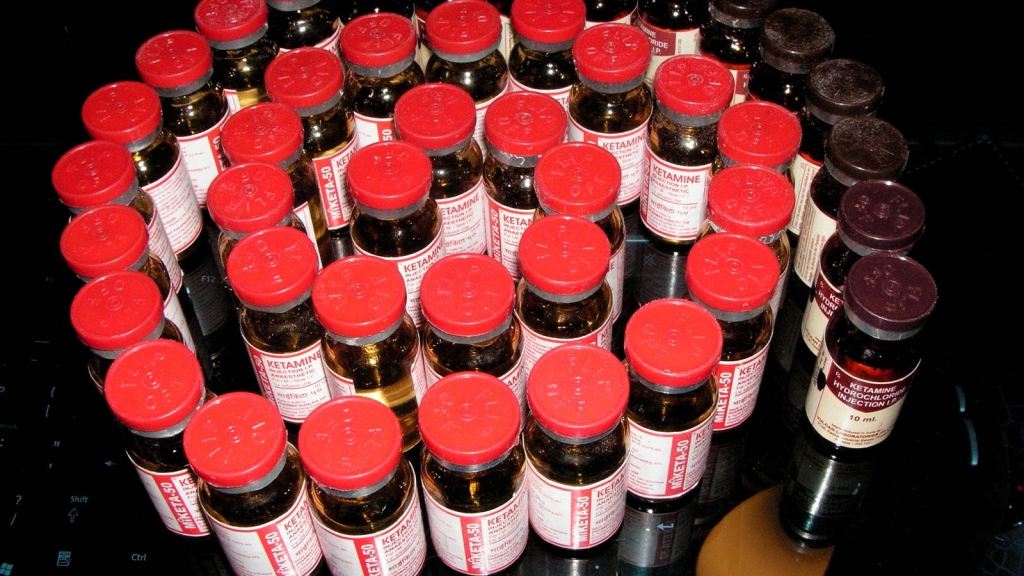
Ketamine can work for depression that other treatments have not helped, and it often works fast. In a trial of 403 people, symptoms fell by at least half for 55.4% on IV ketamine, against 41.2% on electroconvulsive therapy, or ECT (Trial). But a stricter trial in 65 hospital patients found no clear edge over a sedative used as a placebo. In that trial, neither the patients nor the people rating them were told who got which drug (Trial).
If you are thinking about suicide, call or text 988 in the US now, or call your local emergency number elsewhere.
So yes, ketamine helps some people. The lift is often short, and in the trials it came with medical monitoring. Clinics and websites now sell it in ways the trials never tested.
What Ketamine Therapy Is
Ketamine is an anesthetic, a drug hospitals use to put people under for surgery. At much lower doses, doctors also give it for depression. That use is off-label, which means the FDA has not approved the drug for it. In a June 2026 warning letter, the FDA wrote: “Ketamine is not FDA-approved for the treatment of any psychiatric disorder” (Source).
Most trials enrolled people with treatment-resistant depression. That usually means two or more antidepressants, taken properly, did not help. The drug is sold in three forms.
IV ketamine is dripped into a vein at a clinic. In the main trial against ECT, the dose was 0.5 mg per kilogram of body weight, given over 40 minutes (Trial).
Esketamine, sold as Spravato, is a nasal spray made from one of ketamine’s two mirror-image forms. Its label covers treatment-resistant depression in adults, on its own or with an antidepressant pill. It also covers depression with active suicidal thoughts or behavior, alongside an antidepressant (Source). The FDA approved using it without an antidepressant in January 2025 (Source).
Spravato comes with strict rules under a safety program called a REMS. Only certified health care settings can give it. You spray it yourself while a provider watches, then stay at least 2 hours to be monitored (Source).
Compounded ketamine comes as pills or lozenges that dissolve under the tongue. Telehealth companies prescribe them and mail them for use at home. The FDA says compounded drugs are not FDA approved, so it has not checked their safety, effectiveness or quality (Source).
The Trials That Made the Case
Two large trials built the case for ketamine. Both had real limits.
The first, called ELEKT-D, ran at 5 US sites and assigned a treatment to 403 adults. All had treatment-resistant depression without psychosis. A coin flip decided who got IV ketamine twice a week and who got ECT three times a week, for 3 weeks (Trial).
The goal was to show that ketamine was not clearly worse than ECT. Ketamine passed that test. Symptoms fell by at least half for 55.4% of the ketamine group, against 41.2% with ECT (Trial).
On a word-recall test, memory scores dropped sharply with ECT at 3 weeks but barely moved with ketamine. The ECT group’s memory slowly recovered during follow-up (Trial). Ketamine’s main side effect was dissociation, a spaced-out, detached feeling. ECT brought more muscle and bone complaints (Trial).
The trial had three catches. It was open-label, so everyone knew which treatment they got. Before treatment began, 38 people dropped out, and 33 of them had been assigned to ECT (Trial). And only 44 of the 365 people treated were hospital inpatients, so about 88% were outpatients (Study).
A later, unplanned look at the data found ketamine’s edge came mostly from outpatients. People with very severe depression, and the small group who started in hospital, improved faster at first with ECT. The authors called these findings preliminary (Study).
The second trial, ESCAPE-TRD, tested the esketamine spray. It took 676 people with treatment-resistant depression, who all stayed on their antidepressant. A coin flip added either esketamine or quetiapine, a daily pill (Trial).
By week 8, 27.1% on esketamine reached remission, meaning their depression had nearly cleared. On quetiapine, 17.6% did (Trial). And 21.7% on esketamine reached remission by week 8 and stayed well through week 32, against 14.1% on quetiapine (Trial).
This trial was open-label too. Patients knew which treatment they got, and only the people scoring depression were kept in the dark. Janssen, the maker of Spravato, sponsored the trial and was responsible for its design and data analysis (Trial). The authors also noted that esketamine patients had more clinic visits. And the quetiapine dose was raised quickly, which may have made it harder to tolerate (Trial).
Ketamine also seems to ease suicidal thoughts quickly. One analysis pooled the raw patient records from 10 trials, covering 167 people who had suicidal thoughts at the start. A single IV dose reduced those thoughts within a day, compared with salt water or midazolam (Meta-analysis). About 55% of those given ketamine were free of suicidal thoughts 24 hours after one infusion (Meta-analysis).
But the trials measured thoughts, not actions. Writing in 2018, the authors said that “no study has demonstrated that ketamine specifically reduces the risk of suicidal behavior” (Meta-analysis). A broader review covered 15 trials and 572 people. It found the drop in suicidal thoughts lasted up to about 3 days, with no clear effect after that. It also found almost no trial data on suicidal behavior (Meta-analysis).
How long does the lift last? A 2015 review looked at 21 studies and 437 people given ketamine. It found that one infusion helped from 4 hours up to 7 days after the dose. The few studies that checked at 12 to 14 days found no clear effect (Meta-analysis). Most of those studies had no placebo group, though.
After a full course, relapse is common. In ELEKT-D, people who responded were followed for 6 months while their own doctors treated them as usual. In the ketamine group, 19.0% had relapsed by month 1, 25.0% by month 3 and 34.5% by month 6 (Trial). The ECT group relapsed more often, reaching 56.3% by month 6 (Trial).
Esketamine shows the same pattern. In SUSTAIN-1, a coin flip decided whether 176 people in stable remission kept the spray or switched to a dummy spray. Both groups stayed on their antidepressant pill. Relapse hit 26.7% of those who kept the spray, against 45.3% of those switched (Trial). So the benefit may need ongoing doses to hold. Janssen funded that trial too.
The Trial That Found No Edge
The strictest recent test went the other way. KARMA-Dep 2 ran in Ireland from 2021 to 2024, with 65 adults in hospital for depression (Trial).
A coin flip decided who got ketamine and who got midazolam, a sedative that makes people drowsy and calm. Each person had up to 8 infusions, twice a week, on top of normal hospital care. Neither the patients nor the people scoring them were told which drug was given (Trial).
At the end of treatment, depression scores showed no clear difference between the groups. Self-rated scores did not differ either. Neither did thinking skills, quality of life or value for money (Trial). The authors concluded that ketamine was not more effective than midazolam.
The raw counts did lean toward ketamine. Of the 62 people analyzed, remission came for 14 of 32 on ketamine, against 9 of 30 on midazolam (Trial). But the paper reports no test of that gap, and the main measure showed no clear difference.
The trial was also smaller than planned, partly because COVID-19 disrupted the work. It was designed to catch only a large difference, so a modest benefit could have slipped past it (Trial).
Many patients also worked out which drug they had. By the end of treatment, 78.1% of patients on ketamine correctly named their drug, against 60.0% of those on midazolam. At least 9 in 10 raters guessed right in both groups (Trial).
That matters because ketamine’s spaced-out feeling is hard to miss. Once people know they got the real drug, hope may lift their scores. Lead author Ana Jelovac said such blinding problems “can lead to enhanced placebo effects and skewed trial results” (Source).
A 2019 study of the raw patient records from 9 trials, with 367 patients, shows the same pattern. On day 1, about 45 in every 100 people responded to ketamine, whether the comparison was salt water or midazolam (Study). But midazolam alone helped about 18 in every 100, while salt water helped about 1. So ketamine’s lead looked much smaller next to a drug people can also feel. These are estimates across different trials, and they cover only day 1 (Study).
A 2021 Cochrane review found that ketamine may help more people than a placebo at 24 hours, though the evidence was weak. Against midazolam, the reviewers called the evidence very uncertain (Review).
This does not show that ketamine does nothing. It suggests that part of the lift in some trials may come from expectation. Nobody yet knows how much.
Clinic Boom vs the Trials
Outside the trials, ketamine clinics now advertise online. A 2023 study looked at the websites of 17 ketamine advertisers across 26 locations in Maryland (Study). Thirteen offered infusions. The 7 that listed a price charged from $360 to $2,500 per infusion (Study).
Many ads skipped the risks. Seven of the 17 mentioned no side effects or addiction risk at all. Three falsely called ketamine nonaddictive, and one falsely claimed FDA approval for depression. Ten did not say the use was off-label (Study).
One large study of telehealth lozenges reported on 1,247 patients who finished 4 weeks of at-home ketamine. Of those, 62.8% improved by at least half on a depression questionnaire (Study). But there was no comparison group. The count also includes only people who finished with enough data. Five of the 10 authors list the telehealth company, Mindbloom, as their affiliation (Study).
In October 2023, the FDA issued an alert about compounded ketamine, including pills and lozenges. It warned that with home use, no provider is on site to watch for sedation and dissociation. It also said doses may vary. The agency added that it “has not established safe or effective dosing of ketamine for any psychiatric indication” (Source).
The alert described one patient being treated for PTSD. Their breathing slowed after they took compounded ketamine by mouth outside a health care setting. That person’s blood level appeared to be twice the level typical for anesthesia (Source).
Prescribing by video rests on a temporary DEA rule. Ketamine is a Schedule III controlled drug (Source). Under the current rule, registered prescribers can prescribe such drugs by video without an in-person visit, if they meet certain conditions (Source). That rule ends on December 31, 2026. When we checked on October 30, 2026, we found no further extension in the Federal Register.
The main trials worked differently. They screened people first, then gave doses in a clinic with staff watching. Spravato’s label also requires a blood pressure check before each dose and again about 40 minutes after (Source). With lozenges at home, no one is in the room to check.
Side Effects and Real Risks
Side effects are common, but most are brief. A 2017 review of 60 studies covered 899 patients given ketamine for depression. The most common side effects were headache, dizziness, dissociation, raised blood pressure and blurred vision (Source). They were mostly reported right after a dose, and they were more common on ketamine than on placebo. Repeated, long-term use had barely been studied (Review).
The longest safety data come from the esketamine spray. A study followed 802 patients for up to a year. Dizziness, dissociation, nausea and headache each hit about a quarter to a third of them (Study). Most were mild or moderate, happened on dosing days and cleared the same day. Dissociation usually faded within 1.5 hours. About 1 in 10 people stopped because of side effects (Study). The study had no placebo group for comparison.
Blood pressure is the one to watch. In that study, 33 of 802 people (4.1%) had a sharp spike. The top number reached 180, or the bottom number reached 110. Spikes were more common in people who already had high blood pressure. Notable sedation showed up in about 7% to 8% of patients (Study). A longer follow-up tracked 1,148 patients, half of them for nearly 4 years or more. About 1 in 15 had a reading that high at least once (Study).
Bladder trouble is a known worry. The FDA lists lower urinary tract and bladder symptoms among ketamine’s risks (Source). Yet the long esketamine studies reported no case of interstitial cystitis, a painful bladder disease, linked to treatment (Study) (Study). Urinary infections and milder bladder inflammation did still occur (Study).
Misuse is the other concern. Spravato’s label carries a boxed warning about abuse and misuse (Source). An interim report from the long esketamine study followed half its patients for about 3 years or more. Study doctors reported no drug-seeking, overdose or abuse (Study). But every dose was given under watch in a clinic, and the authors said that setting likely helped prevent misuse. Those were formal studies of the nasal spray, not of lozenges at home.
The trials also chose their patients with care. ELEKT-D took only people whose depression came without psychosis (Trial). If you have had psychosis, high blood pressure or trouble with drugs or alcohol, raise it with your psychiatrist first.
Harm from home use is known mostly from case reports, like the FDA’s breathing case. Such reports show that harm can happen, not how often.
Frequently Asked Questions
Is Ketamine for Depression Safe?
In formal studies, most side effects were short-lived, though blood pressure spikes and sedation happened. In an esketamine study of 802 people lasting up to a year, 4.1% had a sharp blood pressure spike (Study). The FDA has warned that home use removes on-site monitoring for sedation and dissociation (Source). Safety may depend heavily on screening and supervision.
Is Ketamine for Depression FDA Approved?
Ketamine itself is not FDA-approved for any psychiatric disorder (Source). The esketamine nasal spray, Spravato, is approved for treatment-resistant depression in adults. It can only be given in certified health care settings, with at least 2 hours of monitoring (Source).
Ketamine vs Esketamine for Depression?
Ketamine is usually given off-label as an IV drip at a clinic. Esketamine is a nasal spray made from one form of the ketamine molecule. Neither big trial tested one against the other: IV ketamine was compared with ECT (Trial), and esketamine with quetiapine (Trial).
Does Ketamine Work for Depression Long Term?
The lift often fades. In ELEKT-D, about a third of people who responded to ketamine had relapsed within 6 months (Trial). In SUSTAIN-1, people switched off esketamine relapsed far more often than those who kept taking it (Trial). Lasting benefit may depend on ongoing treatment.
Is Ketamine for Depression Addictive?
It can be misused, and the FDA lists abuse and misuse among its risks (Source). In a long esketamine study with supervised doses, doctors reported no drug-seeking or abuse. Half the patients were followed for about 3 years or more (Study). Even so, 3 of 17 Maryland clinic advertisers falsely called ketamine nonaddictive (Study).
Key Takeaways
- Fast, but often short-lived. One infusion helped for up to about a week in pooled studies (Meta-analysis). About a third of ketamine responders relapsed within 6 months (Trial).
- The best positive trials were open-label. Patients knew their treatment in both big trials, and Janssen designed and analyzed ESCAPE-TRD (Trial).
- A stricter trial found no clear edge. In 65 hospital patients, ketamine showed no clear advantage over midazolam, and most patients and raters guessed the drug (Trial).
- Clinics and home lozenges go beyond the trials. The FDA warned in 2023 that home use lacks on-site monitoring and that doses may vary (Source).
- Side effects are real. Dizziness, dissociation and nausea were common in a study lasting up to a year (Study). In that study, 4.1% had a sharp blood pressure spike (Study).
- See a psychiatrist first. Spravato’s label requires certified settings and at least 2 hours of monitoring after each dose (Source).
Start With a Psychiatrist
Ketamine is a real option for some people whose depression has not lifted. In the main trials, people were screened first and dosed in a clinic or hospital. Ordering lozenges from a website is a different thing.
Bring these trial facts to your appointment. Ask whether ketamine fits your history, how you will be monitored and what happens when the course ends. Ask about other options too, such as how much exercise helps depression.
If you are in crisis, do not wait for an appointment. Call or text 988 in the US, or call your local emergency number elsewhere.
For some people, ketamine is worth a careful look with a psychiatrist. The evidence is mixed, and you deserve to see all of it.
This article is for educational purposes and is not medical advice. Talk to a qualified clinician before changing your health regimen.


Leave a Reply