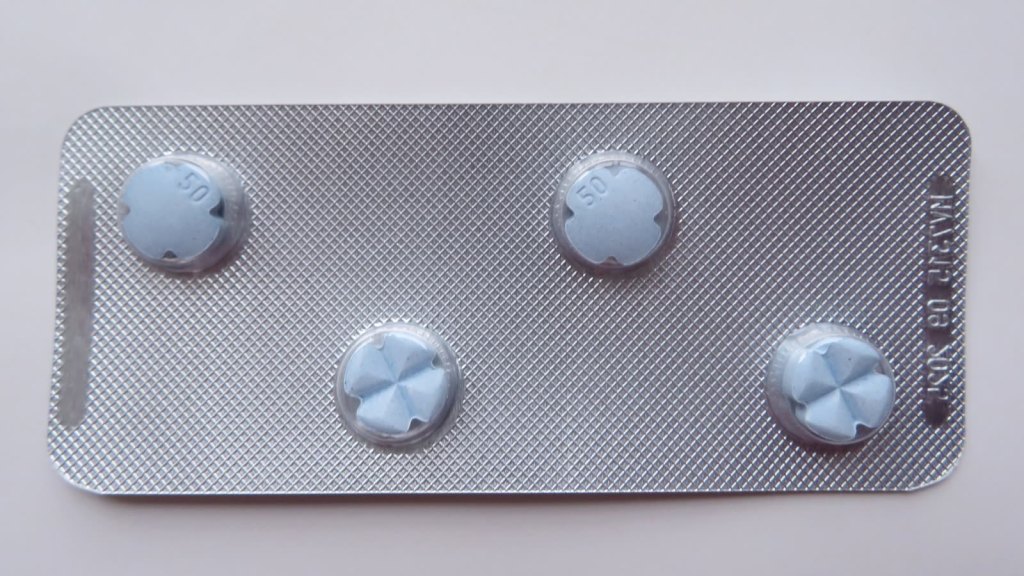
No trial has shown that Viagra can prevent dementia. In a UK study of 269,725 men with erectile dysfunction, those who took Viagra-type drugs had about 18% lower risk of Alzheimer’s (Study). But that link comes from health records, not a trial, and it faded under a stricter check.
The idea got a fresh push on episode 2537 of the Joe Rogan Experience. David Sinclair said: “Vascular dementia, second largest cause of dementia in the world, blood flow. And it’s the easiest to reverse. You just do exercise or take one of these PDE5 inhibitors, Viagra.”
The link is worth testing. But the records behind it fall into two well-known traps. A few trials have decided by coin flip who got these drugs, and they looked mainly at brain blood flow. None has shown that the drugs prevent or reverse dementia.
What PDE5 Inhibitors Do
Sildenafil is the drug in Viagra, and tadalafil is the drug in Cialis. Both are PDE5 inhibitors, named after the enzyme they block.
Blood vessel walls relax when they get a signal from nitric oxide, a gas the body makes. The PDE5 enzyme turns that signal down. Block the enzyme, and the vessel stays wider for longer. That is why the Viagra label treats it as a vessel-widening drug and warns that it can lower blood pressure (Source).
Both drugs are approved for erectile dysfunction. Doctors also prescribe both for pulmonary arterial hypertension, which is high blood pressure in the arteries of the lungs (Study). Tadalafil is also used for an enlarged prostate (Source).
Vascular dementia is memory and thinking loss caused by a poor blood supply to the brain. It is often called the second most common kind, after Alzheimer’s. A common cause is small vessel disease, damage to the brain’s tiniest arteries. If a pill widens blood vessels in the body, maybe it can feed starved brain tissue too. Researchers have tested tadalafil for that reason (Trial).
Where the Dementia Idea Came From
The recent interest began with a computer analysis. In 2021, a team checked existing drugs against a model of the genes and proteins tied to Alzheimer’s. Sildenafil stood out (Study). The team then searched US insurance records covering 7.23 million people.
Over 6 years, sildenafil users had about 69% lower Alzheimer’s risk than similar non-users (Study). The study compared 116,412 users with 460,356 non-users picked to resemble them. About 98% in each group were men. In raw numbers, about 8 in every 10,000 users were diagnosed, against about 26 in every 10,000 non-users.
The authors wrote that the link “does not establish causality or its direction” (Study). In plain terms, the data cannot show what caused what. They called for a proper trial.
A 2024 UK study tracked the health records of 269,725 men aged 40 and over with newly diagnosed erectile dysfunction (Study). Over about 5 years, 1,119 of them, roughly 4 in every 1,000, were diagnosed with Alzheimer’s. Men who started a Viagra-type drug had about 18% lower risk than men who did not.
The drop showed up only in men with more prescriptions. Men with 21 to 50 had about 44% lower risk, and men with more than 50 about 35% lower (Study). Men with 1 to 20 prescriptions showed no clear drop. The authors say they could not reliably judge whether more pills meant more protection. They also could not tell whether men picked up or took their prescriptions.
An editorial in the same journal said a well-designed trial is needed before anyone prescribes these drugs to prevent Alzheimer’s (Editorial). It also warned that the records behind the three studies it reviewed may miss or mislabel dementia.
Meta-analyses, which pool the results of many studies, found the same link with a warning attached. A 2024 meta-analysis combined 6 studies of real-world users, more than 8.3 million people in all (Meta-analysis). Users had about half the Alzheimer’s risk. But the authors rated the evidence behind every result as very low quality. The studies disagreed sharply with each other, and two of the six were rated poor.
A 2025 meta-analysis of 5 studies and 885,380 patients also found lower risk with sildenafil (Meta-analysis). Across all 5 studies and the whole drug family, though, chance could explain the result. Every study looked back at old records. The authors called for trials.
Why Viagra May Not Prevent Dementia
Studies of health records can mislead in two classic ways. Both fit the Viagra data.
The first is healthy-user bias, where people who take a drug are healthier to begin with. To get a prescription, a man has to want sex, see a doctor and ask. He also has to be well enough for the pill. Men who take nitrates for chest pain, a sign of heart disease, are told never to use these drugs (Source). So the men who get them may start out with healthier blood vessels. The same trap can affect other dementia claims, such as the shingles vaccine and dementia link.
The records could not fully correct for that. The 2021 database had no data on education, how well off people were, or APOE, the best-known Alzheimer’s risk gene (Study). It also mixed people who took the drug for different reasons. A 2022 commentary said this may explain the large benefit the database showed (Commentary).
The second trap is reverse causation, where early disease changes who takes the drug. Alzheimer’s starts quietly, well before anyone diagnoses it (Study). In that window, a man may lose interest in sex or stop asking for refills. He then looks like a non-user who got dementia. So the drug looks protective even if it did nothing.
Researchers test for this with a lag: they ignore the first years of tracking. In the UK study, a 1-year lag left the 18% drop in place (Study). With a 3-year lag, it shrank until chance could explain it. The authors note that a longer lag also leaves fewer men to study, so this test alone cannot settle it. Still, it is the pattern you would expect if hidden early dementia drove part of the link.
The most careful test, published in 2022, compared two groups with the same lung disease (Study). Using US Medicare records, the team paired 2,888 patients starting a Viagra-type drug with 2,888 starting a different lung-pressure drug. The two groups were alike on 76 factors. Four separate analyses each tackled a different source of error, including reverse causation and wrong diagnoses.
None found a reliable drop in dementia risk. In the main analysis, 55 people on Viagra-type drugs were diagnosed with Alzheimer’s or a related dementia, against 59 on the other drug (Study). A second analysis kept counting for up to 3 years, even if people stopped the drug. The counts were nearly the same: 62 against 63. One analysis leaned toward lower risk, but with so few cases, chance could explain it.
That study has limits. In the main analysis, the typical patient was tracked for only about 5 months. The study may also have been too small to spot a modest effect (Study). Its patients were sicker than typical older adults, too. Even so, an outside commentary praised its bias checks as “robust analyses lacking in many other studies” (Commentary).
The team also tested sildenafil on brain cells in the lab. It did not fix Alzheimer’s-type problems in most tests, and it eased inflammation only a little (Study). At the lowest dose, it raised levels of amyloid, the protein that clumps in Alzheimer’s, in two tests.
Genes give a third angle. Some people carry gene variants linked to slightly lower PDE5 activity, which acts like a tiny lifelong dose of the drug. Genes are dealt out at conception, so this works like nature’s own coin flip. The method is called Mendelian randomization.
A 2025 study in Aging Cell used it and found no sign that lower PDE5 activity cuts Alzheimer’s risk, in men or women (Study). A second 2025 study found slightly higher odds of Alzheimer’s (Study). It hinted at lower vascular dementia risk, but not with every gene measure. Both teams note that genes copy a small lifelong nudge, which is different from a course of full-dose pills.
What Brain Blood Flow Trials Found
Only a handful of trials have decided by coin flip who got one of these drugs for brain health. None was built to test dementia.
The most detailed is OxHARP, published in 2024 (Trial). It enrolled 75 people with a typical age of 70, after a minor stroke or mini-stroke. All had small vessel disease on scans. Everyone took sildenafil, another drug called cilostazol and a dummy pill for 3 weeks apiece, in an order picked by chance.
The main goal was to calm how hard blood pulses through the brain’s big arteries. Sildenafil did not do that (Trial). But on sildenafil, brain vessels widened more readily when they needed to. More blood also reached the white matter, the brain’s deep wiring. Headaches hit 18 in every 100 people on sildenafil, against about 6 in every 100 on the dummy pill. Most were mild.
The OxHARP team tested thinking only at the start, not during treatment (Trial). They wrote that the gain “does not prove that this will result in clinical benefits” against stroke or a decline in thinking.
Tadalafil has its own trials. In PASTIS, 65 adults aged 50 and over with small vessel disease took a single 20 mg dose. On another day, they took a dummy pill (Trial). Blood flow deep in the brain rose slightly, but chance could explain the change. Tests of attention, speed and working memory showed no clear gain either (Trial). The authors note the trial was small and used one dose.
The longest, ETLAS-2, enrolled 76 people with small vessel disease after a stroke or mini-stroke. They were assigned 20 mg of tadalafil or a dummy pill daily for 3 months (Trial). Scores on a standard memory and thinking test came out about the same in both groups. Side effects hit 76% of people on tadalafil, against 36% on the dummy pill.
A 2026 meta-analysis pooled four trials that compared these drugs with a dummy pill, 236 patients in all (Meta-analysis). The drugs raised blood flow in damaged white matter. People on them were also more than twice as likely to report a side effect. Thinking did not improve in any area tested. None of the four enrolled people with Alzheimer’s or mild cognitive impairment, the early memory slip that can come before dementia.
A proper trial is planned. Imperial College London has registered a one-year tadalafil trial in 244 adults with early Alzheimer’s or mild cognitive impairment (Source). Its main goal is to check safety, and thinking scores come second. The registry entry, last updated in September 2025, still lists it as not yet recruiting.
Now compare this record with Sinclair’s word “reverse.” No trial has shown that either drug prevents or reverses dementia. The trials that measured thinking found no gain (Meta-analysis). Sildenafil may help small brain vessels work better for a few weeks. No one knows yet whether that ever leads to better memory.
The Safety Fine Print
Never combine either drug with nitrates, such as nitroglycerin for chest pain. Together they can cause a dangerous drop in blood pressure. The Viagra label bans the pairing in any form. It also says no one knows when nitrates become safe after a dose (Source). The Cialis label allows a nitrate only in a life-threatening emergency, and only 48 hours or more after the last dose (Source). Even then, it calls for close medical watch.
Alpha-blockers, common pills for prostate symptoms, also widen blood vessels. Taken with Viagra, they can drop blood pressure enough to cause dizziness or fainting in some people (Source). The label says men already stable on one should start Viagra at 25 mg. For an enlarged prostate, the Cialis label advises against taking the two together (Source).
Both labels warn about NAION, a rare loss of blood flow to the optic nerve, which links the eye to the brain. It can show up as sudden vision loss in one or both eyes (Source). Anyone who notices it should stop the drug and get care at once. Studies linked recent use to about twice the usual risk. Both labels say this does not prove the drug causes it (Source). We looked at the same eye condition in whether Ozempic causes blindness.
Women are largely missing from this evidence. Only 2% of sildenafil users in the 2021 study were women (Study). In most of the studies in the 2025 review, fewer than 2 in every 1,000 people were women (Meta-analysis). In the 3-month tadalafil trial, 6 of the 13 women on the drug stopped early because of side effects (Trial).
Taking either drug to protect your brain would be off-label, meaning a use it is not approved for. No trial backs that use. If you are curious, talk it through with a clinician who knows your heart and your other medicines.
Frequently Asked Questions
Does Viagra Help Dementia?
There is no good evidence that it does. Four small trials compared these drugs with a dummy pill in people with small vessel disease. Brain blood flow rose, but thinking did not improve (Meta-analysis). None of those trials enrolled people with dementia. The first dummy-pill trial of these drugs in early Alzheimer’s uses tadalafil. It is registered but listed as not yet recruiting (Source).
Does Viagra Reduce Risk of Dementia?
Health-record studies link it to lower Alzheimer’s risk, but they cannot show cause. A 2024 meta-analysis rated that evidence as very low quality (Meta-analysis). The most careful record study compared two groups with the same lung disease. It found no reliable drop in risk (Study). Gene studies did not support a benefit for Alzheimer’s either (Study).
Does Viagra Cause Memory Loss?
The Viagra label does not list dementia or a decline in memory and thinking as side effects (Source). It does list transient global amnesia among voluntary reports sent in after approval. That is a sudden memory blackout that usually clears within a day. A 2020 report described a single patient who had a brain scan after taking sildenafil. It showed a small lesion typical of this blackout. The authors say this may point to the drug as a trigger, but one case cannot show cause (Study).
Is Viagra Used for Dementia?
No. Viagra is approved for erectile dysfunction, not dementia. No trial supports using it to protect the brain (Source). A one-year tadalafil trial in early Alzheimer’s is registered. The registry estimates it will finish in August 2028 (Source).
Key Takeaways
- Records only: Health-record studies tie these drugs to less Alzheimer’s, but a 2024 review rated that evidence very low quality (Meta-analysis).
- A stricter check weakened it: In 269,725 UK men, an 18% lower Alzheimer’s risk faded once the first 3 years were set aside (Study).
- The careful test found no drop: Four separate analyses of patients with the same lung disease found no reliable fall in dementia risk (Study).
- Blood flow rose, thinking did not: In 4 small trials against a dummy pill, the drugs raised flow in damaged brain tissue. Thinking did not improve (Meta-analysis).
- Label rules come first: Never mix them with nitrates, take care with alpha-blockers, and stop at once for sudden vision loss (Source).
- Blood pressure has trial support: Tighter control meant fewer cases of mild cognitive impairment in SPRINT MIND (Trial). Exercise gave a small gain that faded (Trial).
Protect Your Brain’s Blood Supply
If the goal is healthy blood flow to the brain, start with what trials have tested.
Blood pressure comes first. In SPRINT MIND, a coin flip assigned 9,361 adults aged 50 and over with high blood pressure to one of two targets (Trial). None had diabetes or a past stroke. One group aimed to keep the top blood pressure number below 120. The other aimed for below 140. Over about 5 years, 287 people in the tighter group developed mild cognitive impairment, against 353 in the standard group. Dementia cases fell too, from 176 to 149, but chance could explain that gap.
A 2020 meta-analysis of 12 blood pressure trials and 92,135 people shows how big the effect is (Meta-analysis). Dementia or thinking problems struck 7.0 in every 100 people whose blood pressure was lowered. In the comparison groups, it was 7.5 in every 100. That is a small drop, but it comes from trials, not records.
Exercise may help a little. In 70 adults with mild thinking problems from poor blood flow, 6 months of aerobic training gave a small gain in thinking scores (Trial). The gain was smaller than the authors count as meaningful. It had also faded 6 months after training stopped. So even for exercise, “easiest to reverse” is a stretch.
Our guide to lowering blood pressure without medication covers the steps trials support.
The idea is worth testing, and a proper trial is planned. Until it reports, Viagra for the brain is worth watching rather than taking on your own.
This article is for educational purposes and is not medical advice. Talk to a qualified clinician before changing your health regimen.


Leave a Reply