Most supplements sold for “longevity” share an awkward secret: they have never been tested in a single human being. Urolithin A is one of the rare exceptions. In a four-month, placebo-controlled trial, this gut-microbiome metabolite switched on the cellular machinery that clears out damaged mitochondria and added roughly 12% to participants’ muscle strength — while quietly missing its own pre-specified headline goal (Trial). That combination — a genuine, measurable win alongside an honest miss — is the whole story of urolithin A benefits: modest but real, a plausible mitochondrial tune-up for midlife muscle rather than the youth pill the marketing implies.
What Urolithin A Is
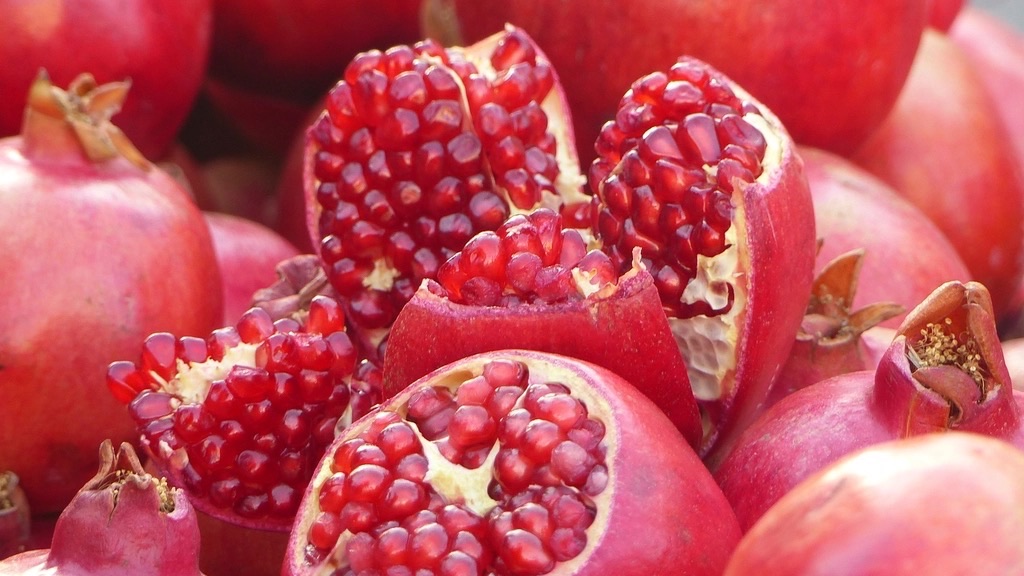
Urolithin A is not something you eat. It is a postbiotic — a compound your gut bacteria manufacture from raw material in food. The raw material is a family of polyphenols called ellagitannins (and their breakdown product, ellagic acid), abundant in pomegranates, walnuts, strawberries, raspberries and other berries. Eat a pomegranate, and over the next day the right microbes convert its ellagitannins into urolithin A in your colon.
The catch — and the entire commercial reason urolithin A exists as a pill — is that most people’s microbiomes can’t do this well. When healthy US adults were given a pomegranate-juice challenge, only about 40% converted the precursors into meaningful urolithin A; a third produced essentially none, and another quarter made only trace amounts (Trial). Researchers sort people into metabotypes: metabotype A produces urolithin A, metabotype B adds other urolithins, and metabotype 0 makes none at all. The non-producer share is only around 10% in Spanish and Chinese cohorts, but it may run as high as 60% in the United States (Study).
Converter status isn’t even fixed for life. In a cohort of 839 people aged 5 to 90, aging turned out to be the single biggest factor shaping which gut microbes a person carries to make urolithins (Study) — meaning the people most likely to be non-converters are often the older adults with the most to gain from the compound. That gap is exactly what a purified supplement is meant to fill. The branded form, Mitopure, delivers a standardized dose directly, bypassing the microbiome lottery entirely (Trial).
How Mitophagy Works
What makes urolithin A mechanistically interesting — and genuinely distinct from NAD+ boosters like NMN — is not that it adds fuel to the cell, but that it takes out the trash. Its signature action is mitophagy: the targeted recycling of worn-out, damaged mitochondria, tagged for disposal through the PINK1/Parkin pathway. As we age, spent mitochondria pile up and cellular quality control slows; urolithin A appears to nudge that cleanup crew back into gear so that healthier mitochondria can take their place.
The foundational evidence is a 2016 paper in Nature Medicine that first flagged urolithin A as a natural mitophagy inducer. In Caenorhabditis elegans roundworms, it extended lifespan by 45.4% versus vehicle — and genetic knockdown showed the mitophagy machinery (the pink-1 gene among others) was required for that longevity effect, not just correlated with it (Study). In rodents, aged mice given urolithin A showed 9% greater grip strength and 57% more spontaneous running-wheel activity despite no change in muscle mass; a second aged-mouse model ran about 42% farther on a treadmill, and young rats improved running capacity by roughly 65% (Study).
Those numbers are eye-catching, and they are exactly why the compound got its shot at human trials. But worms and rodents are not people. This is preclinical groundwork that makes the mitophagy hypothesis plausible — it is not proof that clearing mitochondria does anything meaningful in a human body. For that, you need trials in humans.
The Muscle Strength Trial
Which brings us to the centerpiece. In 2022, researchers published a four-month randomized, double-blind, placebo-controlled trial (the ATLAS study) in Cell Reports Medicine: 88 overweight, middle-aged adults aged 40 to 64 were given placebo, 500 mg, or 1,000 mg of urolithin A daily (Trial). It remains the most important human dataset on the compound — and reading it honestly means reading its scorecard, not its press release.
Start with the miss. The pre-specified primary endpoint was peak power output on a cycling test — and it failed. Urolithin A raised peak power only about 4% from baseline, with no significant difference from placebo (Trial). By the strictest reading of the trial’s own rules, the study did not hit its target.
But the muscle-strength results, a secondary endpoint, told a more encouraging story. Hamstring peak torque rose 12% at 500 mg (p=0.027) and 9.8% at 1,000 mg (p=0.029) versus placebo, with maximal knee-flexion strength up around 10.5% at both doses (Trial). Part of that gap came from decline in the control group: the placebo group’s strength actually dropped over the four months, so some of the effect was urolithin A holding off an age-typical slide rather than adding raw force (Trial).
Crucially, the trial also looked inside the muscle and found the mechanism doing its job. Urolithin A raised phospho-Parkin at Ser65 — a direct molecular fingerprint of mitophagy being switched on — and produced dose-dependent increases in the OXPHOS proteins of respiratory Complexes I, II and III, while blood markers of mitochondrial stress (acylcarnitines) and inflammation (CRP) fell (Trial). This is the part that lifts urolithin A above the average supplement: a plausible mechanism, measured in human tissue, tracking with a real functional gain. It built on the first-in-human trial from 2019, in Nature Metabolism, which had already shown that 500–1,000 mg/day for four weeks was safe in sedentary older adults and shifted skeletal-muscle mitochondrial gene expression toward what the authors called “a molecular signature of improved mitochondrial and cellular health” (Trial). The verdict on muscle: real, but modest — a secondary finding from a trial that missed its main target.
The Weaker Endurance Case
If the muscle story is “modest but real,” the endurance story is “mostly not there.” This is where the marketing gets ahead of the data, so it deserves the skeptical spotlight.
In the 2022 trial, the aerobic signals were tantalizing but statistically soft. Peak VO2 climbed about 10% within the 1,000 mg group (p<0.01), and six-minute walking distance improved by roughly 33 meters — yet neither result beat placebo, coming in at p=0.058 and p=0.098 respectively (Trial). “Significant within the treatment group” but “no better than the sugar pill” is precisely the kind of finding that gets oversold into a headline.
The cleaner test arrived in 2025. In a placebo-controlled trial published in Sports Medicine, 42 highly trained male distance runners took 1,000 mg/day for four weeks during an intensified training camp. The performance results were flatly null: a 3,000-meter time trial did not improve (p=0.116), running economy was unchanged, and VO2max rose in both groups with no advantage for urolithin A (Trial). Where it did help was recovery — creatine kinase, a marker of muscle damage, was lower after racing (p=0.0016), perceived exertion dropped (p=0.02), and muscle proteomics showed upregulated mitochondrial and downregulated inflammatory pathways (Trial). The authors’ own conclusion is refreshingly blunt: urolithin A “did not further enhance performance in highly trained male endurance athletes.” Treat it as a possible recovery aid — not an endurance ergogenic.
Rebooting Aging Immune Cells
The newest — and most speculative — signal moves from muscle to the immune system. A 2025 trial in Nature Aging gave 50 healthy middle-aged adults (45 to 70) 1,000 mg/day for four weeks and tracked their T cells. Urolithin A shifted CD8+ T cells toward a more youthful, “naive-like,” less-exhausted profile (a treatment difference of 0.50 percentage points, p=0.0437), boosted those cells’ fat-burning capacity (+14.7 points, p=0.0061), lowered the exhaustion transcription factor TOX, and raised the proliferation marker Ki-67 (Trial). In plain terms, the treated immune cells looked a little less aged.
Now the caveat the summaries tend to skip. This was not blanket anti-inflammation. Urolithin A did not lower the classic inflammatory cytokines IL-6, TNF or IL-1β — only IL-2 fell — and, tellingly, when the treated cells were activated in the lab they produced more TNF, not less, pointing to a restored effector response rather than immune suppression (Trial). It is an intriguing early extension of the mitophagy story into inflammaging — the low-grade immune drift of aging — but it rests on one small, four-week trial. Rejuvenating a cell-surface profile is a long way from proving fewer infections or a longer life.
The Honest Caveats
Now the part that should shape how much weight you give everything above. Nearly every human urolithin A trial shares one feature: it was funded by the company that sells the supplement. The flagship muscle-strength trial was sponsored by Amazentis SA, the maker of Mitopure, and six of its authors were disclosed as company employees, with others on its board or scientific advisory board (Trial). The 2019 first-in-human study? Same sponsor, with the same core authors listed as employees and board members (Trial). The 2025 immune trial? Also funded by Amazentis, with lead authors on staff (Trial). None of this makes the data fake — these are real, peer-reviewed, placebo-controlled trials — but industry funding reliably tilts published results toward the sponsor’s product, so independent replication matters more than usual here.
Stack up the rest honestly. Effect sizes are modest. The flagship trial missed its primary endpoint. Aerobic outcomes were underpowered or null. And there is no long-term or hard-outcome data — nobody has shown urolithin A prevents falls, fractures, disease, or death. What does look solid is safety: doses of 500–1,000 mg/day were well tolerated from four weeks out to four months (Trial). And the people most likely to benefit are exactly the ones the biology predicts — non-converters who make little urolithin A on their own, and lower-activity midlife and older adults with the most mitochondrial slack to reclaim. This is a tune-up, not a youth pill.
How To Take It
If you want to try urolithin A, start with the food that feeds the pathway. Pomegranates — juice, arils, or the whole fruit — are the richest everyday source of the ellagitannins your microbes convert into urolithin A, with walnuts, strawberries and raspberries close behind. For the roughly 40% of people whose gut bacteria convert efficiently, a polyphenol-rich diet may already deliver a meaningful dose without any capsule at all (Trial).
The pill exists for everyone else. Every human trial to date has used 500 mg or 1,000 mg per day of the purified compound, and both doses were well tolerated from four weeks out to four months (Trial). Curiously, more was not better: in the muscle-strength trial the 500 mg dose matched or slightly edged out 1,000 mg on the headline strength measures, so there is no signal that doubling the dose buys extra benefit (Trial). Beyond that, the honest answer to most practical questions — the ideal time of day, how many months to stay on it, who should steer clear — is that the trials simply have not run long enough to say.
If you do experiment, treat it like any unproven intervention. Give it a defined window — the published trials ran twelve to sixteen weeks — pick one thing you can actually measure, whether that is grip strength, a timed sit-to-stand, or how your legs feel late in a workout, and judge honestly whether it moved. The biology predicts the clearest payoff for non-converters and lower-activity midlife and older adults; someone young who already makes their own urolithin A has the least to gain, and a clinician should sign off first if you take other medications.
Frequently Asked Questions
What foods can I eat to get urolithin A?
You cannot eat urolithin A directly. It is a postbiotic, meaning your gut bacteria make it from polyphenols called ellagitannins. The richest everyday source of those precursors is pomegranates, with walnuts, strawberries and raspberries close behind. The catch is that only about 40% of people have gut bacteria that convert these precursors well, which is the whole reason a purified supplement exists (Trial).
Does urolithin A actually build muscle?
In a four-month placebo-controlled trial of 88 overweight middle-aged adults, hamstring strength rose about 12% at the 500 mg dose, so the effect may be real but is modest. However, the trial missed its main pre-specified goal, peak power on a cycling test, which was no better than placebo. Some of the benefit came from the compound holding off an age-typical strength decline seen in the placebo group rather than adding raw force (Trial).
How much urolithin A should I take per day?
Every human trial to date has used either 500 mg or 1,000 mg per day of the purified compound. More did not appear to be better: in the muscle-strength trial the 500 mg dose matched or slightly edged out 1,000 mg on the headline strength measures, so there is no signal that doubling the dose buys extra benefit. The article notes the trials have not run long enough to answer practical questions like the ideal time of day or how many months to stay on it.
Is urolithin A safe to take?
In the published trials, doses of 500 to 1,000 mg per day were well tolerated, from four weeks out to four months. That said, there is no long-term or hard-outcome data, so nobody has shown urolithin A prevents falls, fractures, disease or death. The article suggests treating it like any unproven intervention and having a clinician sign off first if you take other medications (Trial).
Does urolithin A improve endurance or running performance?
The evidence suggests it is not an endurance booster. In a 2025 trial of 42 highly trained male distance runners taking 1,000 mg daily, a 3,000-meter time trial, running economy and VO2max showed no advantage over placebo. Where it may help instead is recovery: markers of muscle damage and perceived exertion were lower after racing, so it is better treated as a possible recovery aid than a performance enhancer (Trial).
Key Takeaways
- A real ~12% strength gain — with an asterisk. Hamstring strength rose about 12% at 500 mg in a four-month RCT, but the trial’s pre-specified primary endpoint, peak power, was no better than placebo (Trial).
- A genuinely distinctive mechanism. Urolithin A triggers mitophagy — recycling damaged mitochondria via PINK1/Parkin — a pathway validated from worms to human muscle tissue (Study).
- Only ~40% of people make their own. Most microbiomes convert dietary ellagitannins poorly, which is the entire rationale for taking a purified supplement (Trial).
- It is not an endurance booster. In elite distance runners it aided recovery but did nothing for time trials, VO2max, or running economy (Trial).
- An early immune-aging signal. Four weeks nudged CD8+ T cells toward a younger, less-exhausted profile — promising, but small and short (Trial).
- Follow the funding. Almost every trial is manufacturer-sponsored with author conflicts, so treat the results as encouraging but awaiting independent replication (Trial).
A Modest but Real Edge
So where does urolithin A honestly fit? Not as a miracle, and not as a replacement for the two things that genuinely rebuild mitochondria and muscle: movement and food. The compound looks best as a complement to resistance training and a polyphenol-rich diet, never a substitute for either.
What makes it unusual is not the size of its effect but the honesty of its evidence. Most of the supplement aisle asks you to extrapolate from a petri dish or a mouse; urolithin A asks you to weigh a real, four-month human trial — primary-endpoint miss and all. If you are a likely non-converter, older, or simply someone whose gut does not make much on its own, a 500–1,000 mg dose is a low-risk experiment with a plausible, human-tested upside, as long as your expectations stay calibrated to the data: a mitochondrial tune-up for midlife muscle and a bit of cellular housekeeping, not a reset button on aging. That is a rare thing in the supplement aisle — a modest claim that the human evidence can actually back.
This article is for educational purposes and is not medical advice. Talk to a qualified clinician before changing your health regimen.
 Bio-Hacking.Blog
Leave a comment