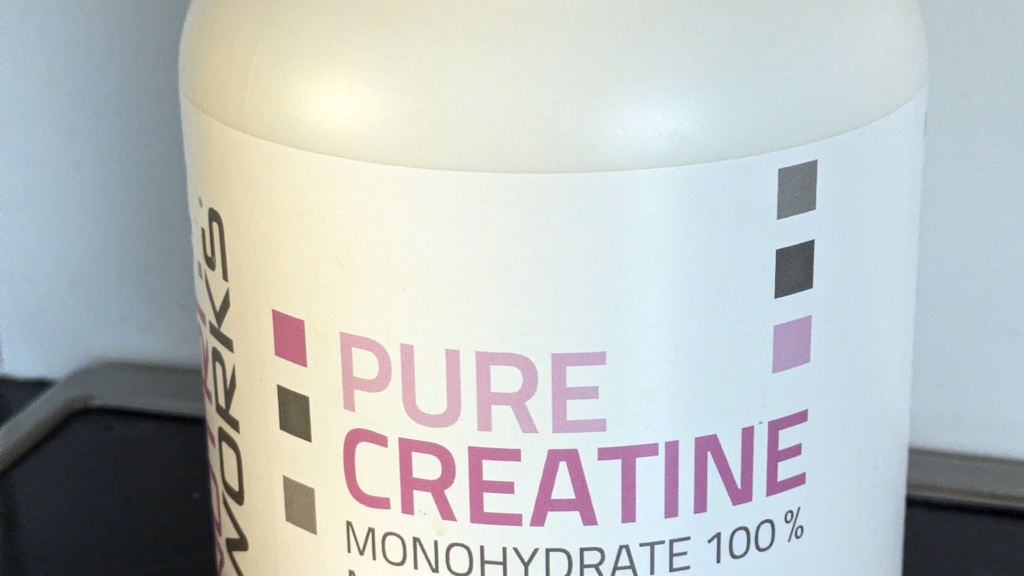
The most-studied supplement on the planet hangs out in gym bags, but its quietest superpower has nothing to do with biceps. Creatine doesn’t just power muscle—it recharges the brain’s energy buffer, the same battery your neurons drain under heavy mental load. The science of creatine cognition points to measurable support for memory, processing speed, and mental stamina, and the payoff looks biggest exactly when your brain is running on empty. Decades of athletic research have, almost by accident, handed us a deep library to mine for what creatine does above the neck. In other words, the world’s favorite “muscle powder” may be the most evidence-backed nootropic hiding in plain sight.
How Creatine Fuels the Brain
Creatine is a small nitrogen-containing compound your body both eats and makes. You get it from meat and fish, and your liver, kidneys, and pancreas synthesize the rest endogenously, so even strict vegetarians carry some. Roughly 95% of your total stash sits in skeletal muscle—but the small fraction held in the brain is metabolically critical, and that’s where the cognitive story begins.
To understand why, you have to understand how brains pay their energy bills. Neurons run almost entirely on ATP (adenosine triphosphate), the cellular energy currency, yet they store almost none of it in reserve. When a neuron fires hard, it needs ATP regenerated now—faster than fresh oxygen and glucose can be trucked in. That’s the job of the phosphocreatine system. Phosphocreatine (PCr) is creatine with a high-energy phosphate group attached, and the enzyme creatine kinase snaps that phosphate onto spent ADP to instantly remake ATP. The brain expresses creatine kinase heavily in its most metabolically demanding cells—hippocampal neurons and cerebellar Purkinje cells among them—exactly where rapid, on-demand energy keeps signaling crisp.
How fast is “instantly”? Phosphocreatine regenerates ATP roughly 40 times faster than oxidative phosphorylation and about 10 times faster than glycolysis, letting muscle cells and likely neurons absorb a sudden energy spike without waiting on extra fuel delivery (Review). The creatine-kinase/phosphocreatine system works two ways at once: as a temporal buffer that smooths out energy surges, and as a spatial shuttle that ferries energy from mitochondria to distant, high-demand sites—a crucial trick in large, polarized cells like neurons where raw ATP diffuses far too slowly to keep up (Review). Top up that phosphocreatine pool and, in theory, you give the brain a deeper energy reserve to draw on. That’s the entire premise—and as we’ll see, it predicts exactly when creatine should help most.
Sharper Memory and Cognition
So does topping up the tank actually sharpen cognition? The pooled evidence says: yes, modestly, and selectively. The landmark Avgerinos 2018 systematic review combed six RCTs in 281 healthy participants and found genuine signal—but a narrow one. There was evidence that short-term memory and intelligence/reasoning may be improved by creatine, while results for other domains (long-term memory, attention, executive function, reaction time, mental fatigue) came back conflicting (Systematic review). Crucially, performance stayed unchanged in young people, vegetarians out-responded meat-eaters in memory tasks, and the authors concluded the benefit clusters in aging and stressed individuals (Systematic review). Hold onto that conclusion—it’s the through-line of this whole article.
A few years later, the Prokopidis 2023 meta-analysis zeroed in on memory across eight RCTs. The headline number was a small but significant overall improvement (SMD = 0.29; 95% CI 0.04–0.53; P = 0.02), and the responder split was dramatic: older adults aged 66–76 posted a moderate-to-large effect (SMD = 0.88), while younger adults aged 11–31 showed essentially nothing (SMD = 0.03) (Meta-analysis).
Here’s where intellectual honesty matters, because this finding didn’t stand unchallenged. A letter to the editor flagged a statistical problem: several trials contributed multiple correlated memory outcomes from the same participants, treated as if they were independent—a “double-counting” that inflated the study’s statistical power (Critique). The authors re-ran the numbers, and after correcting for it, the overall memory effect was no longer statistically significant (SMD 0.19; 95% CI −0.07 to 0.46; P = 0.15). The older-adult benefit, though, survived intact (SMD 0.80; P = 0.004) (Meta-analysis). The lesson isn’t that creatine does nothing—it’s that the broad “everyone gets smarter” claim is shakier than the targeted “older brains benefit” claim.
The most recent pooled look, a 2024 Frontiers in Nutrition meta-analysis of 16 RCTs and 492 participants, reported that creatine may improve memory, landing the effect at SMD = 0.31 (95% CI 0.18–0.44)—a small-but-real signal (Meta-analysis). Its subgroup analysis found larger benefits in people with disease, adults aged 18–60, and females, and intervention duration did not moderate the effect. Read that estimate with some caution, though: a 2025 corrigendum and subsequent critiques flagged the same unit-of-analysis problem—correlated outcomes from the same participants pooled as if independent—that limits confidence in the exact number (Meta-analysis). The direction is consistent across all three reviews; the precision is what remains contested. Taken together, the meta-analytic picture is less “creatine makes everyone smarter” and more “creatine tops up a depleted system, and the size of the win depends on who you are.”
When the Brain Is Stressed
Now for the strongest evidence in the whole creatine-cognition file—and it lands precisely where the mechanism predicts. If creatine works by deepening the brain’s energy reserve, the effect should be loudest when the brain is energy-stressed. Sleep deprivation is exactly that kind of stressor, and the Gordji-Nejad 2024 trial tested it beautifully.
This was a double-blind, placebo-controlled crossover RCT in which young adults stayed awake for 21 hours after a single high oral dose of creatine monohydrate—0.35 g/kg, far larger than the gym standard. The cognitive results were striking. Processing speed jumped across the board versus placebo: a language task by 29%, a numeric task by 24%, and a logic task by 16% (Trial). Memory accuracy rose about 10%, creatine blocked a sharp placebo-group decline in digit span, and subjective fatigue dropped by roughly 8%—a meaningful win at 3 a.m. on no sleep.
But the part that elevates this from “interesting” to “mechanistically convincing” is what the brain scans showed. Using phosphorus magnetic resonance spectroscopy, the researchers watched the high-energy phosphate pool shift: phosphocreatine rose in the motor cortex while ATP and inorganic phosphate fell, and—most tellingly—sleep deprivation dragged down the brain’s intracellular pH, an effect creatine actively counteracted (Trial). The cognitive boost wasn’t a black box; it tracked a real, measurable change in brain bioenergetics. The energy-buffer theory got caught in the act.
Sleep loss isn’t the only way to starve a brain of energy, though, and a second, independent stressor tells the same story. In a hypoxia trial, healthy adults took 20 g/day of creatine for a week and then breathed a thin, ~10%-oxygen gas mixture for 90 minutes. Creatine raised brain creatine/phosphocreatine by 9.2%, boosted corticomotor excitability by roughly 70% under oxygen deprivation, and—the headline cognitive finding—preserved complex attention (a composite of Stroop, shifting-attention, and continuous-performance tasks) that otherwise declined under hypoxia (Trial). An independent commentary corroborated the attention benefit; on excitability it was more guarded, noting a suggestion of increased excitability but cautioning that the study’s analysis didn’t permit a direct placebo-versus-creatine comparison, and that effects on memory and psychomotor speed stayed statistically inconclusive (Commentary).
Two unrelated stressors—no sleep and low oxygen—both pointing the same direction is exactly the pattern you’d want if the brain-energy mechanism is real. Stress the system, deplete the buffer, and a topped-up phosphocreatine reserve has somewhere useful to spend itself. Rest a well-fed brain, and there’s less slack for creatine to take up.
Who Benefits Most
If the benefit scales with how depleted your brain’s energy buffer is, the responder profile almost writes itself: people who start low on creatine, and people running their brains hot. Three groups stand out.
Vegetarians and other low-baseline populations were the original poster children. Because dietary creatine comes mainly from meat and fish, vegetarians carry smaller stores—more headroom to fill. The classic Rae 2003 crossover RCT in 45 young vegetarians found that 5 g/day for six weeks produced a large, highly significant boost in both working memory and intelligence (P < 0.0001) (Trial). For years that anchored the “vegetarians respond best” hypothesis. But honesty demands the counterweight: a larger, more recent RCT in 123 adults that directly tested diet found vegetarians did not benefit more than omnivores—if anything the effects were smaller in vegetarians, and the cognitive gains bordered or missed significance overall (Trial). The low-baseline story is plausible but contested.
Older adults are the sturdier responder signal. Across the meta-analytic evidence, age is the demographic that keeps surfacing. In the Prokopidis pooled data the over-66 subgroup showed a moderate-to-large memory benefit (SMD 0.80; P = 0.004) even after the statistical correction that erased the overall effect (Meta-analysis). Aging brains, with their declining bioenergetic efficiency, seem to have the most slack for a fuller energy buffer to take up.
The sleep-deprived and cognitively overloaded round out the list—the Gordji-Nejad and hypoxia trials above are really responder studies in disguise, showing that an acutely energy-stressed brain is a creatine-responsive brain. The common thread across all three groups is depletion: the further your phosphocreatine pool sits below the ceiling, the more room a topped-up tank has to make a visible difference.
Which raises the dosing question lurking under all of this. The standard 3–5 g/day comfortably saturates muscle—but the blood-brain barrier is a far tougher gatekeeper. Even 20 g/day for four weeks raises total brain creatine by only about 8.7%, with the increase regionally uneven and far smaller than the ~20% jump seen in muscle (Study). A dose-response RCT testing 10 versus 20 g/day in young adults found no cognitive benefit and concluded that higher and/or longer dosing may simply be required to move the needle in the brain (Trial). The likely culprit is transport: the creatine transporter (CRT1/SLC6A8) is sparse in barrier capillaries, so a recent review argues that doses around 20 g/day or 0.3–0.4 g/kg/day, sustained longer, are probably needed to meaningfully elevate brain creatine—though the optimal protocol is still unknown (Review). It’s entirely possible the muscle dose has been underselling creatine’s brain potential this whole time.
And Yes, It Still Builds Muscle
One brisk paragraph for completeness, because this is the part everyone already knows. Creatine remains the most robustly validated supplement for strength, power, and lean-mass gains, which is exactly why decades of research exist for us to mine for cognitive effects in the first place. That long safety and efficacy record is the unsung reason the cognitive research can move quickly—nobody has to relitigate whether the compound is safe to swallow. The happy accident is that the same compound you’d take for a heavier deadlift is the one feeding your neurons—two systems, one cheap scoop.
Frequently Asked Questions
Does creatine actually improve memory and brain function?
Pooled studies suggest creatine may give memory and processing speed a small but real lift, with a 2024 review of 16 trials landing the memory effect at a modest level (Meta-analysis). The benefit looks selective rather than universal: it tends to cluster in people whose brain energy is depleted, while well-rested young meat-eaters show little. The exact size of the effect is still contested.
How much creatine should I take for brain benefits?
The standard 3 to 5 grams a day is enough to saturate muscle, but the blood-brain barrier limits how much reaches the brain, so researchers chasing cognitive effects have leaned on higher doses of roughly 10 to 20 grams a day. Even 20 grams daily for four weeks raised total brain creatine by only about 8.7%, far less than the rise seen in muscle. The optimal brain protocol is still unknown and an area of active research rather than settled advice (Review).
Who benefits most from creatine for cognition?
The article points to people whose brain energy buffer starts low or runs hot: older adults, vegetarians and other low-baseline groups, and the sleep-deprived or cognitively overloaded. Over-66 adults kept showing a moderate-to-large memory benefit even after a statistical correction erased the overall effect. A well-rested young omnivore, by contrast, should not expect much.
Can creatine help when you’re sleep deprived?
In one double-blind trial, young adults kept awake for 21 hours took a single large dose of creatine (0.35 g/kg) and saw processing speed rise by up to about 29% versus placebo, with memory accuracy up around 10% and subjective fatigue down roughly 8%. Brain scans showed matching shifts in the brain’s high-energy phosphate chemistry (Trial). This was a single study using a much larger dose than the usual gym amount, so it is promising rather than settled.
Is creatine bad for your kidneys?
According to the article, the International Society of Sports Nutrition position stand finds creatine safe and well-tolerated up to 30 grams a day for five years, with no compelling evidence of kidney harm in healthy people (Review). The alarming kidney case reports were confounded by pre-existing disease, medications, excessive doses, or co-ingested steroids rather than sensible creatine use. If you already have kidney disease, the article advises checking with a clinician first.
Key Takeaways
- It recharges the brain’s energy battery. Creatine refills the phosphocreatine/ATP buffer, which regenerates cellular energy ~40x faster than oxidative phosphorylation—exactly the rapid backup neurons need under load (Review).
- Memory and processing speed may get a small, real lift. The 2024 Frontiers meta-analysis pegs the memory effect at SMD ≈ 0.31, modest and pooled across 16 RCTs, though the exact estimate is contested (Meta-analysis).
- The biggest gains come when the brain is stressed. A single high dose during sleep deprivation lifted processing speed up to ~29% and cut fatigue ~8%, with matching brain-energy changes on MRS (Trial).
- Older adults and low-baseline people respond most. Over-66 adults show a moderate-to-large memory benefit even after statistical correction, while well-rested young omnivores show little (Meta-analysis).
- The muscle dose may be too small for the brain. 3–5 g/day saturates muscle, but the blood-brain barrier limits uptake, so brain-targeted research uses ~10–20 g/day (Review).
- It’s exceptionally safe. The ISSN position stand finds creatine well-tolerated up to 30 g/day for 5 years, with no compelling evidence of kidney harm in healthy people (Review).
The Cheapest Nootropic There Is
Here’s the quietly radical part: the most evidence-backed nootropic you can buy isn’t a designer compound with a three-figure price tag. It’s a tub of creatine monohydrate, the same exhaustively studied, dirt-cheap powder lifters have used for thirty years. The International Society of Sports Nutrition calls short- and long-term use—up to 30 g/day for five years—safe and well-tolerated in healthy individuals, with no compelling evidence of renal harm (Review). The scary kidney case reports? On closer inspection they were confounded by pre-existing disease, medications, absurd doses, or co-ingested steroids—not creatine taken sensibly (Review).
A practical starting point is simple: 3–5 g/day of plain creatine monohydrate, taken consistently—the same protocol that saturates muscle. Skip the loading phase and exotic “advanced” formulas; monohydrate is the form nearly every trial actually used, and it costs pennies a serving. If your interest is specifically the brain, note that researchers chasing cognitive effects have leaned on higher doses (roughly 10–20 g/day) precisely because the blood-brain barrier is stingy—an area of active research rather than settled advice (Review). Don’t expect fireworks if you’re a well-rested young omnivore; do pay attention if you’re older, plant-based, chronically under-slept, or grinding through a cognitively brutal stretch. And if you have pre-existing kidney disease, check with a clinician first—the one genuine caution flag worth respecting (Review). Our creatine dosing guide covers loading, timing, and why a higher kidney blood reading on creatine is not kidney damage.
Cheap, safe, and sitting in plain sight for decades—creatine is the nootropic that was never marketed as one.
This article is for educational purposes and is not medical advice. Talk to a qualified clinician before changing your health regimen.


Leave a Reply