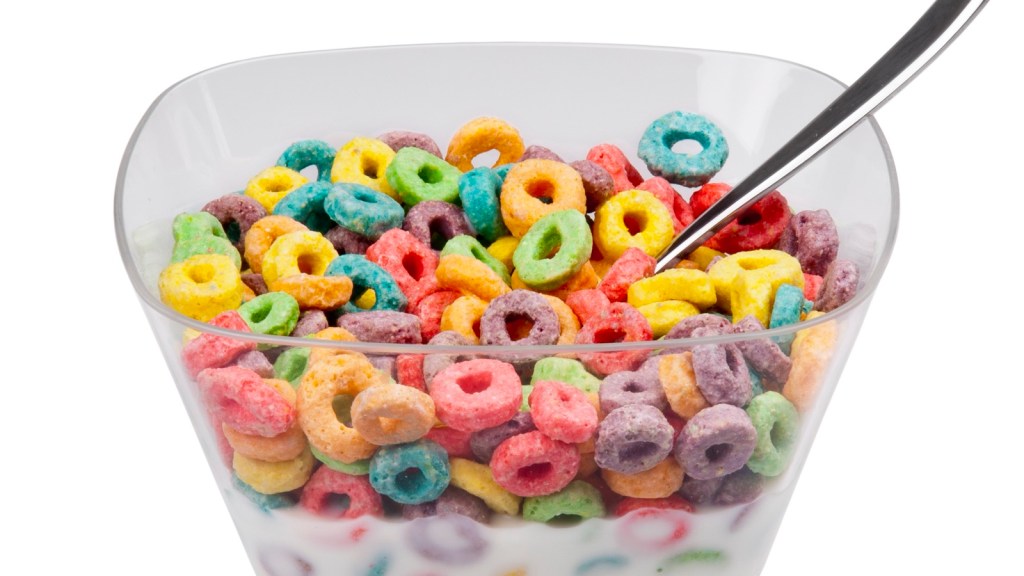
In the one experiment built to settle it, 20 adults ate 508 more calories a day and gained weight on an ultra-processed diet, even though every meal was matched to an unprocessed diet for calories, sugar, fat, sodium, and fiber (Trial). That result is the strongest sign that ultra-processed foods drive overeating through the degree of processing itself, not their nutrient makeup. Large population reviews add that people who eat the most ultra-processed food have higher rates of early death and chronic disease, but that half of the story is observational and imperfect, so the fair verdict is a genuine signal worth acting on, not settled proof of cause.
What Ultra-Processed Foods Are
The exposure in this story is not a nutrient, an additive, or a named diet. It is the degree of industrial processing itself, captured by a food-classification system called NOVA that sorts everything we eat into four groups by how much industrial transformation it has undergone (Review). Group 1 is unprocessed or minimally processed food: fruit, eggs, plain yogurt, dried beans, a bag of flour. Group 3, processed food, is a group-1 food preserved with added salt, sugar, or oil, think canned vegetables, salted nuts, or a simple bread of flour, water, yeast, and salt, usually just two or three ingredients (Review).
Group 4, ultra-processed foods (UPFs), is the category that matters here. NOVA defines it as industrial formulations of ingredients, most of them of exclusive industrial use, built through a chain of processes. The practical tell is the ingredient list: a product is ultra-processed if it contains at least one substance you would never cook with, such as high-fructose corn syrup, hydrogenated or interesterified oils, protein isolates, or hydrolysed proteins, or a class of cosmetic additive, such as flavors, colors, emulsifiers, sweeteners, or thickeners (Review). Picture packaged snacks, soft drinks, mass-produced breads, reconstituted meats, and most breakfast cereals.
The stakes are large because these foods now dominate the modern plate. In the United States, adults get 53% of their daily calories from ultra-processed foods, and children and teens get nearly 62% (Study). The United Kingdom looks much the same, with adults drawing about 54% of their energy from UPFs (Study). For a majority of people in wealthy countries, the ultra-processed category is not a fringe indulgence, it is the background diet.
The Metabolic-Ward Experiment
Almost every claim about UPFs and health rests on population surveys, which can only show that two things travel together. One study broke that pattern. In 2019, Kevin Hall and colleagues at the US National Institutes of Health ran a randomized controlled trial inside a metabolic ward, the gold-standard setting where researchers control and weigh every gram a participant eats (Trial).
Twenty adults lived on the unit and ate, in random order, two weeks of ultra-processed meals and two weeks of unprocessed meals. The two menus were painstakingly matched for presented calories, energy density, total carbohydrate, fat, protein, sugar, sodium, and fiber, so the biggest remaining difference was the degree of processing. Participants could eat as much or as little as they liked at every meal.
The result was striking. On the ultra-processed diet, people ate 508 calories more per day and gained about 0.9 kilograms in two weeks. On the unprocessed diet, the same people lost about 0.9 kilograms (Trial). Weight change tracked almost perfectly with how much they ate. The surplus came mostly from eating more carbohydrate and fat rather than protein, which stayed roughly constant across both diets (Trial). Because the two diets were nutritionally matched, the extra eating could not be pinned on more sugar or fat on the plate, it pointed at processing itself.
The honest caveat is size. Twenty people is a small sample, and two weeks is a short window. But the tightly controlled, within-person design, where each participant served as their own control, gives it a causal weight that a million-person survey cannot match. It is the closest thing the field has to a real experiment on the question everyone actually cares about.
Why Processing Drives Overeating
If processing itself pushes calories in, how? The trial and later work point to a handful of plausible mechanisms, none of them fully settled.
The clearest candidate is eating rate. In the Hall trial, people ate the ultra-processed meals far faster, taking in 48 calories per minute versus 31 on the unprocessed diet, more than 50% quicker (Trial). A separate analysis of 327 foods found the same gradient: average energy intake rate climbed from about 36 calories per minute for unprocessed foods to 54 for processed and 69 for ultra-processed (Review). Soft, energy-dense, easy-to-chew textures let you swallow a lot of energy before the gut and brain register that you are full.
Energy density compounds this. Many UPFs pack more calories into each bite, so a fast eating rate delivers more energy per minute still. Layer on hyperpalatable combinations of fat, sugar, and salt built to be moreish, and appetite feedback, the fullness signals that normally tell you to stop, seems to arrive late and weak. Importantly, the eating-rate gradient held across a wide range of foods, not just the trial menus, which is what makes it a serious contender rather than a one-off quirk (Review). Still, the researchers who mapped it are careful to frame the effect as a candidate mechanism, not a formally proven one (Review). The takeaway is modest but useful: how a food is built, its texture and the speed at which you eat it, may matter as much as what is in it.
Part of the answer may be the food matrix, the physical scaffolding of a whole food that processing tears down. Intact grains, beans, and fruit lock their calories inside fibrous cell walls that take real chewing to breach, which paces a meal and can blunt the sugar rush; milling, extruding, and pureeing strip that structure out, leaving energy that is softer, faster to chew, and quicker to absorb (Review). That physical difference, not any single chemical, may be the simplest reason a bowl of whole oats and a bowl of puffed cereal behave so differently once you eat them.
What the Big Reviews Show
Zoom out from the ward to the population, and the picture is consistent even if it is softer. In 2024, a BMJ umbrella review by Lane and colleagues pooled the epidemiological evidence across nearly 9.9 million people, the most comprehensive synthesis to date (Review).
The headline number: people with the highest ultra-processed food intake had a 21% higher risk of death from any cause than those with the lowest, an all-cause mortality relative risk of 1.21 (Review). A subset of outcomes earned the review’s firmest grade, convincing evidence: ultra-processed intake was linked to roughly 50% higher risk of death from cardiovascular disease, and, in dose-response analysis, about 12% higher risk of type 2 diabetes (Review). Two mental-health outcomes joined that top tier, with higher UPF intake associated with more anxiety and more common mental disorders (Review).
Those are the strongest signals among more than 30 adverse outcomes the review examined, spanning heart disease, metabolic disease, cancers, and mental health. It is worth noting how much the effect size depends on how it is measured: in the dose-response analysis, the mortality link shrank to about 2% higher risk per increment of intake, a useful reminder that a scary headline number is only one way to slice the data (Review). No single cohort proves anything, but the directionality is remarkably consistent. Across different countries, populations, and research teams, more ultra-processed food tends to travel with worse health, and when many imperfect studies lean the same way, that convergence is itself a form of evidence.
Where the Evidence Gets Shaky
Now the part the headlines usually skip, and the reason to keep a cool head. The population evidence is almost entirely observational, which means it can show that UPF intake and disease travel together but cannot prove one causes the other.
Two problems bite hardest. The first is reverse causation: people who are already unwell, or heading that way, may eat differently, so the diet could be a marker of poor health rather than its cause. The second is residual confounding: heavy UPF eaters also tend to have lower incomes, lower overall diet quality, and other lifestyle differences, and statistics can never fully strip those out. The Lane review itself is blunt about quality. Of its 45 pooled analyses, 41, about 91%, were graded low or very-low certainty under the GRADE system, with none rated high (Review). Even the flagship mortality figure was labeled highly suggestive, not convincing.
The cleanest fix would be a large, years-long randomized trial that fed thousands of people processed or unprocessed diets and then counted heart attacks and diabetes cases, but no such study exists, and none is ever likely to, given the cost and the near impossibility of policing what people eat for years. So the field is left triangulating from one small, tightly controlled experiment and a mountain of larger, messier cohorts, which is exactly why honest summaries land on signal rather than proof.
There is a deeper issue with the ruler itself. Critics argue that NOVA’s group 4 is too blunt and heterogeneous, lumping sugar-sweetened soda in with fortified whole-grain cereal and plain yogurt as if they carried equal risk (Review). A 2025 critical review makes the case directly: sugar-sweetened beverages are consistently tied to harm, while some fortified cereals and dairy products show neutral or even favorable patterns, so a single ultra-processed label conflates processing with very different foods (Review). The subtype data back this up. In an analysis of three large US cohorts covering more than 200,000 people, sugary and artificially sweetened drinks and processed meats were linked to higher cardiovascular risk, while breads, cold cereals, yogurt, and savory snacks were neutral or even inversely associated (Study).
So the balanced reading is this: one clean experiment shows processing can drive overeating, large but confounded population data lean toward harm, and a blunt classifier means not every ultra-processed food deserves the same suspicion. That is a real signal, worth acting on, without pretending it is proof.
Frequently Asked Questions
Are all ultra-processed foods equally bad?
No. The evidence suggests risk varies a lot by subtype rather than tracking the ultra-processed label uniformly. Sugar-sweetened beverages and processed meats are the most consistently harmful, while some fortified cereals, yogurts, and dairy products show neutral or even favorable patterns (Review). In an analysis of three large US cohorts, several UPF subtypes were not associated with higher cardiovascular risk at all (Study).
Do ultra-processed foods actually cause weight gain, or is it just correlation?
There is stronger-than-usual evidence here. In a controlled metabolic-ward trial where meals were matched for calories, sugar, fat, sodium, and fiber, people ate about 508 more calories a day and gained weight on the ultra-processed diet, while losing weight on the unprocessed one (Trial). That within-person experiment points toward cause, not just correlation, though it was small and short. The population-level links to disease remain observational.
How much of my diet is ultra-processed?
Probably more than you would guess. US adults get about 53% of their daily calories from ultra-processed foods, and children and teens get nearly 62% (Study). UK adults are similar, at about 54% of energy intake (Study). For most people in wealthy countries, UPFs are the majority of the plate, not an occasional treat.
Is it the additives or the processing that is the problem?
Nobody knows for certain, and it may be several things at once. The one controlled trial matched the diets for calories, sugar, fat, sodium, and fiber, yet the ultra-processed meals were still overeaten, largely because they were eaten much faster, about 48 versus 31 calories per minute (Trial). That hints the physical form and eating speed matter, not just any single additive (Review). These remain candidate mechanisms rather than settled science.
Key Takeaways
- Processing itself drove overeating: in a nutrient-matched metabolic-ward trial, people ate about 508 more calories a day and gained weight on the ultra-processed diet, versus losing weight on the unprocessed one (Trial).
- Big reviews link UPFs to death and disease: a 9.9-million-person umbrella review tied the highest UPF intake to 21% higher all-cause mortality, with convincing signals for cardiovascular death and type 2 diabetes (Review).
- Faster eating is a leading mechanism: UPFs are eaten far quicker, roughly 48 versus 31 calories per minute, so soft, energy-dense textures may push calories in before fullness catches up (Review).
- The population data are confounded: about 91% of the pooled analyses were low or very-low quality, and reverse causation plus lifestyle differences mean association is not proof (Review).
- Not all UPFs are equal: NOVA’s group 4 is a blunt ruler, so sugary drinks and processed meats look harmful while some cereals and yogurts are neutral or favorable (Review).
- Bottom line: cut the clearly harmful UPFs first and treat scary population headlines with measured skepticism, because the signal is real without being settled (Study).
Reading the Headlines Wisely
You do not need to fear your own kitchen to use this evidence well. The most defensible move is also the least dramatic: start by swapping the ultra-processed foods the data most consistently flag, sugar-sweetened drinks and processed meats, for whole or minimally processed alternatives, and worry far less about the fortified cereal or the tub of plain yogurt (Study). A few easy trades do most of the work: water or unsweetened coffee in place of soda, whole fruit instead of fruit drinks, and a plainer version of a staple over its most heavily formulated cousin. That single act of triage captures most of the plausible benefit without turning every grocery trip into an anxiety exercise.
When the next alarming statistic scrolls past, hold it to the same standard the scientists do. A relative risk from an observational study describes a population, not your plate, and it cannot cleanly separate the food from the whole life around it. The one experiment that could isolate processing found a real effect, that meals engineered for speed and softness get overeaten, and that is reason enough to lean toward food that looks like food (Trial). The rest is a signal still coming into focus, informative but not yet proof.
So here is the honest bottom line: eat mostly food your grandparents would recognize, keep the clearly engineered stuff for genuine treats, and let the science keep sharpening the picture. The evidence is real, it is imperfect, and it is well worth watching.
This article is for educational purposes and is not medical advice. Talk to a qualified clinician before changing your health regimen.


Leave a Reply