The sleep apnea signs that matter most get noticed by somebody else: loud snoring, pauses in breathing, and a gasp that ends the pause. Gasping or choking is the most reliable single clue. Snoring on its own tells a doctor very little (Systematic review). About 936 million adults aged 30 to 69 have obstructive sleep apnea. Roughly 8 in 10 moderate or severe cases are never diagnosed (Modelling study, Study).
If a partner has seen any of those three, ask a doctor for a sleep test.
What Sleep Apnea Is
Obstructive sleep apnea is a breathing problem that only happens while you are asleep. The muscles that hold your throat open relax, so the airway narrows or closes. Breathing stops for a few seconds and the oxygen in your blood dips. Then the brain wakes just enough to open the airway again.
Then it happens again. In moderate or severe cases that is dozens of times an hour, and you remember none of it. Doctors count those breathing events per hour of sleep and grade the result mild, moderate or severe.
The scale is easy to underrate. A 2019 analysis put the total at 936 million adults aged 30 to 69 (Modelling study). About 425 million of them are in the moderate or severe range. The estimate was built from solid data in only 16 countries. A company that makes breathing machines paid for the work.
In the 1990s, Wisconsin researchers surveyed nearly 5,000 working adults who could all get to a doctor easily. Even so, roughly 9 in 10 women and 8 in 10 men with moderate or severe apnea had never been diagnosed (Study). A San Diego community study published in 2026 measured breathing at home and still found about 8 in 10 undiagnosed (Study). Those recordings were made years earlier, so today’s gap may be smaller.
The damage happens while you are asleep. That is why the person with the condition is the last to know.
Sleep Apnea Signs a Partner Sees
The most useful sleep apnea signs come from whoever sleeps next to you. There are three: loud snoring most nights, witnessed pauses in breathing, and gasping, snorting or choking that ends a pause.
The three are not equally useful. A large review in JAMA pooled 42 studies that checked symptoms against a full overnight sleep study (Systematic review). Gasping or choking at night was the most useful sign by far. Snoring on its own told the researchers almost nothing, because plenty of people snore without having apnea.
The same review named one combination that helps rule apnea out: mild snoring in someone who is not overweight (Systematic review). Among people sent to a sleep clinic, those with apnea were heavier on average, though the two groups overlapped a lot.
Clinics narrow things down with a short questionnaire, usually the STOP-Bang. It asks about snoring, tiredness, observed pauses, blood pressure, body size, age, neck size and sex. A score of 3 or more caught about 88 of every 100 people with moderate or severe apnea (Meta-analysis). But of every 100 people it flags, fewer than 30 turn out to have it. The low score is the useful one. Of every 100 people who score 0 to 2, about 93 are clear. Sleep specialists say plainly that no questionnaire can diagnose apnea by itself (Guideline).
A partner sees what you cannot, and sleeping alone is one reason cases run undetected for years.
If you are the partner, describe what you saw, not what you think it means. “You stop breathing, then you gasp. It happens most nights. It worries me.” Bring specifics: how many nights a week, how long the pauses seem, whether anyone has moved to another room. Then ask one question: “Can I be referred for a sleep test?”
Signs You Notice Yourself
What the sleeper notices is much weaker evidence. Sleep breaks apart all night, and the symptoms are whatever is left by morning.
Five come up again and again. The first is waking unrefreshed after a full night in bed. The others are daytime sleepiness, morning headache, dry mouth, and getting up to urinate more than once.
Night-time urination has a real link. One pooled analysis of 13 studies found people with apnea about 40% more likely to report it (Meta-analysis). The link was clearest in severe cases, and it held up in men. In women the data were too thin to call.
Morning headache is common, but it points nowhere in particular. Across 23 studies, about 1 in 3 people with apnea reported one (Meta-analysis). Headaches were not clearly more common than in people without apnea, so the symptom cannot sort one group from the other.
Daytime sleepiness is the biggest trap. Doctors measure it with the short Epworth questionnaire. Across 108 studies covering nearly 48,000 people, it missed about half of those with moderate apnea (Meta-analysis). Feeling fine during the day does not rule apnea out.
The misses are not spread evenly. Women were the most under-diagnosed group in the Wisconsin work (Study). Part of the reason is the picture most of us carry: a large man snoring loudly. If you do not match it, your tiredness gets explained some other way for years.
The Cost of Not Knowing
The clearest cost shows up on the road. A 2009 review pooled 18 studies. Drivers with apnea crashed at roughly 2.4 times the rate of other drivers (Meta-analysis). The studies disagreed with each other a lot, and most counted crashes people reported themselves. Starting from an assumed baseline, the authors put drivers with apnea at about 19 crashes a year per 100 drivers, against 8 per 100. That gap is roughly one extra crash a year for every nine drivers.
A larger 2022 review of 30 studies pointed the same way. People with apnea were more than twice as likely to have had a car accident (Meta-analysis). Ordinary drivers and professional drivers were affected alike. How sleepy people said they felt did not predict who crashed.
Treatment appears to move that number sharply. A 2010 review followed the same drivers before and after they started a breathing machine, and crash risk fell by roughly 70% (Meta-analysis). Alertness improved within days rather than months. Nobody decided by coin flip who got a machine, so the real drop is probably smaller.
Blood pressure is the quieter cost. Treating apnea is linked to a small fall, roughly 2 points. Each extra hour of use per night is linked to a little more (Meta-analysis).
If you are already fighting sleep at the wheel, say so at the appointment now.
Home Test or Sleep Lab
Most people picture wires and a hospital ward. Usually it is neither.
A home sleep apnea test is a small kit you wear for a night or two in your own bed. A sensor clips to a finger to track oxygen, and a soft tube sits under the nose to track airflow. You post the kit back or upload the data.
A sleep lab study adds sensors for brain waves, eye movement and leg movement. That is why it measures actual sleep rather than time in bed.
American sleep specialists set the rules in a 2017 guideline (Guideline). An otherwise healthy adult with signs of moderate or severe apnea can take either route. A lab study is required instead for several groups. That list covers serious heart or lung disease, muscle weakness from a nerve condition, and suspected shallow breathing at night. Long-term opioid use, a history of stroke and severe insomnia are on it too.
A home test can come back negative, unclear or technically poor. In each case the guideline says to follow it with a full lab study (Guideline). In pooled comparisons, home kits were good enough to confirm apnea in people already likely to have a moderate or severe case. They were still less accurate than the lab, and about 1 in 10 failed technically, against fewer than 1 in 200 there (Meta-analysis).
The convenience is real, and so is the saving. A Spanish trial split 430 patients between the two routes (Trial). After six months, daytime sleepiness was no worse on the home route. Quality of life and blood pressure were similar too, and the home route cost about 400 euros less per patient. Which route fits you is a conversation with a clinician.
What a Wearable Can Flag
Some watches now carry a cleared sleep apnea notification. It does not score your sleep stages. It watches small breathing movements over months, then flags a pattern.
In the data behind the US clearance, the feature caught about 2 in 3 people with moderate or severe apnea (Regulatory summary). Nobody whose sleep was normal got a false alert.
The gap sits in the middle of the range. The maker’s own testing picked up about 4 in 10 moderate cases, against about 9 in 10 severe ones (Validation report). Apple says the same thing in its app. No alert does not mean no apnea. A silent watch is not an all-clear, least of all when a partner is describing pauses.
Whether a wearable can measure your sleep at all is a separate and messier question about sleep tracker accuracy. A cleared notification claims much less than that. Consumer devices are not a substitute for medical evaluation, though they can feed usefully into a real clinical conversation (Position statement).
Treat an alert as a reason to book a test, never as a result.
Hours per Night Decide
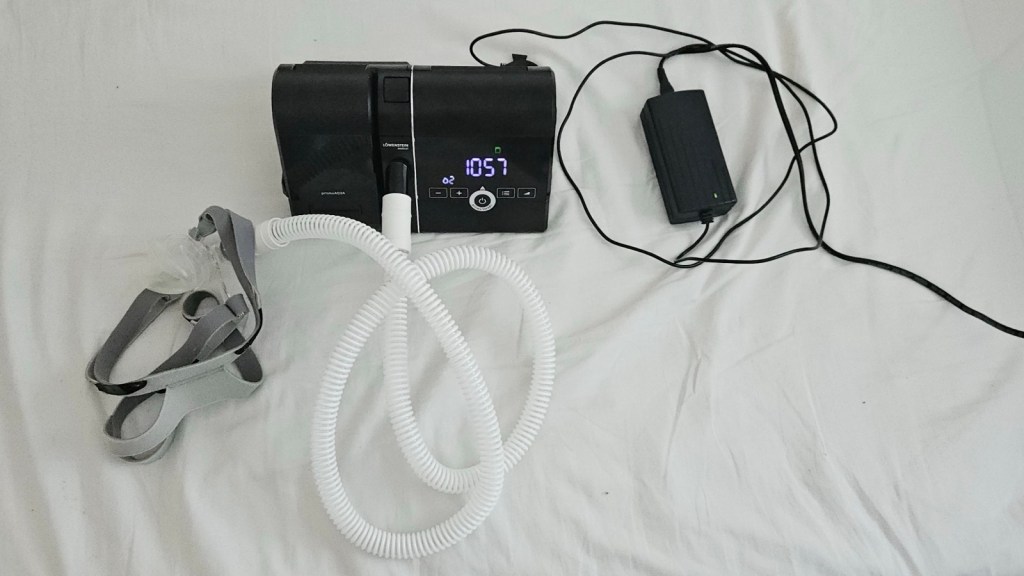
One argument comes up constantly online. CPAP is a machine that holds the airway open with a steady flow of air. A large trial called SAVE tested it in 2,717 adults with moderate or severe apnea plus heart or blood-vessel disease (Trial). Over about 3.7 years, heart attacks and strokes were no less common: 17 in every 100 on CPAP against 15 in every 100 without it.
That gets quoted as proof the machine does not protect the heart. It leaves out two things. People in the trial wore the mask about 3.3 hours a night. The trial also excluded anyone with severe daytime sleepiness, so it never tested the group most likely to need it. Participants did get benefits: less snoring, less daytime sleepiness, better mood and better quality of life (Trial).
Researchers later pooled the raw patient records of 4,186 people from that trial and two others (Meta-analysis). Overall the result did not budge. But people who actually used the machine at least 4 hours a night had roughly a third lower risk of another heart or stroke event. Who used it well was not decided by coin flip, so that is a link rather than proof.
It is also contested. An earlier review of 10 trials in 7,266 people found no heart benefit. It found no link between hours of use and outcomes either (Systematic review). Low use may explain why nothing showed up, but that is a reading, not a settled fact.
The hours themselves are not in doubt. A review of two decades of data found about a third of CPAP users do not use it enough to benefit (Systematic review). Average use was around 4.5 hours a night, and it has not improved in 20 years. French national records covered 480,000 people who started CPAP in 2015 and 2016. Nearly 1 in 4 stopped within a year (Study). Nearly half had stopped within three.
So the useful question at a follow-up visit is not whether you own a machine. Ask about mask fit, pressure settings, and who to call when it bothers you.
Other options are worth raising. Weight loss can change the diagnosis itself. Two year-long trials gave the weight-loss drug tirzepatide to 469 adults with obesity and moderate or severe apnea (Trial). Between 4 and 5 in every 10 people on the drug no longer met the trials’ threshold for meaningful disease. On the dummy injection it was roughly 1 in 6.
Positional therapy suits people whose apnea is mainly a back-sleeping problem. The authors note that covers more than half of cases. Small devices buzz when you roll over. In pooled studies they cut breathing events roughly in half (Meta-analysis). The evidence is short-term only.
A mandibular advancement device is a fitted mouthpiece that holds the lower jaw forward. Pooled trials show it beats a dummy appliance. CPAP clears more breathing events still, though the authors rated that evidence low quality (Meta-analysis). Three trials tracked how long people actually wore each device. They kept the mouthpiece in about 40 minutes longer a night (Meta-analysis). One 220-person trial in people with high blood pressure asked whether the mouthpiece was no worse than CPAP, not whether it was better (Trial). Pressure fell with the mouthpiece and barely moved with CPAP, but the gap was small enough that chance could explain it.
Each of those is a conversation with a clinician who has seen your test results. One thing is not on the list: taping your mouth shut at night. The evidence behind mouth taping is thin. Someone with undiagnosed apnea may be breathing through their mouth to get air. Closing it takes that escape route away.
Frequently Asked Questions
What are the first sleep apnea signs to look for?
Loud snoring most nights, pauses in breathing, and gasping or choking that ends a pause. Of those, gasping or choking is the most reliable single clue. Snoring alone tells a doctor very little (Systematic review). Take the list to a doctor and ask about a sleep test.
Can you have sleep apnea without snoring?
Yes. Snoring is common in apnea, but it is a poor marker either way (Systematic review). Feeling alert is not reassuring either. A standard sleepiness questionnaire missed about half of moderate cases (Meta-analysis). If someone has seen you stop breathing, ask a doctor for a sleep test.
Can a smartwatch diagnose sleep apnea?
No. A cleared watch notification caught about 4 in 10 moderate cases and about 9 in 10 severe ones in the maker’s own data (Validation report). Sleep specialists say consumer devices are not a substitute for medical evaluation (Position statement). An alert is a good reason to book a test, and silence is not an all-clear.
Is a home sleep test as good as a sleep lab?
For straightforward cases, close. A trial ran 430 patients through one route or the other (Trial). Sleepiness was no worse at home. Quality of life and blood pressure were similar, and the cost was lower. Home kits are still less accurate, so an unclear result should be followed by a lab study (Guideline).
Does losing weight cure sleep apnea?
It may improve it a great deal in people with obesity. In two year-long trials of tirzepatide, roughly 4 to 5 in every 10 people no longer met the trials’ threshold for meaningful apnea (Trial). That was measured by a repeat sleep study, not by how people felt. Any decision to stop treatment belongs with the clinician who ordered the test.
Key Takeaways
- It is common and mostly undetected. About 936 million adults aged 30 to 69 have obstructive sleep apnea (Modelling study). Roughly 8 in 10 with a moderate or severe case have never been diagnosed (Study).
- Three signs come from a partner. Loud snoring, pauses in breathing, and gasping or choking. Gasping is the most reliable single clue, and snoring alone is not (Systematic review).
- What you feel is a weak guide. A standard sleepiness questionnaire missed about half of moderate cases (Meta-analysis). Morning headache is common in apnea without pointing to it (Meta-analysis).
- A home test suits most people, not everyone. The guideline names who needs the lab, and sends an unclear home test there too (Guideline).
- A watch alert is a prompt, not a result. It caught about 2 in 3 moderate or severe cases (Regulatory summary). It is not a diagnostic tool (Position statement).
- Hours per night decide. In SAVE people wore the mask about 3.3 hours and saw no heart benefit (Trial). Those using it 4 hours or more had about a third lower risk of another event (Meta-analysis).
Ask for a Sleep Test
The step that closes this gap is smaller than it feels. Describe your nights out loud to a doctor. Bring what your partner has heard, in their words. Then ask whether a home test fits your situation, or whether your history points to the lab.
Sleep apnea can be diagnosed, and it can be treated. No gadget, tape or supplement stands in for a test that counts your breathing.
Most people who have it have carried it for years without knowing. The evidence on what to do next is solid, so the hard part is only getting tested. That is the piece you can start this month.
This article is for educational purposes and is not medical advice. Talk to a qualified clinician before changing your health regimen.


Leave a comment