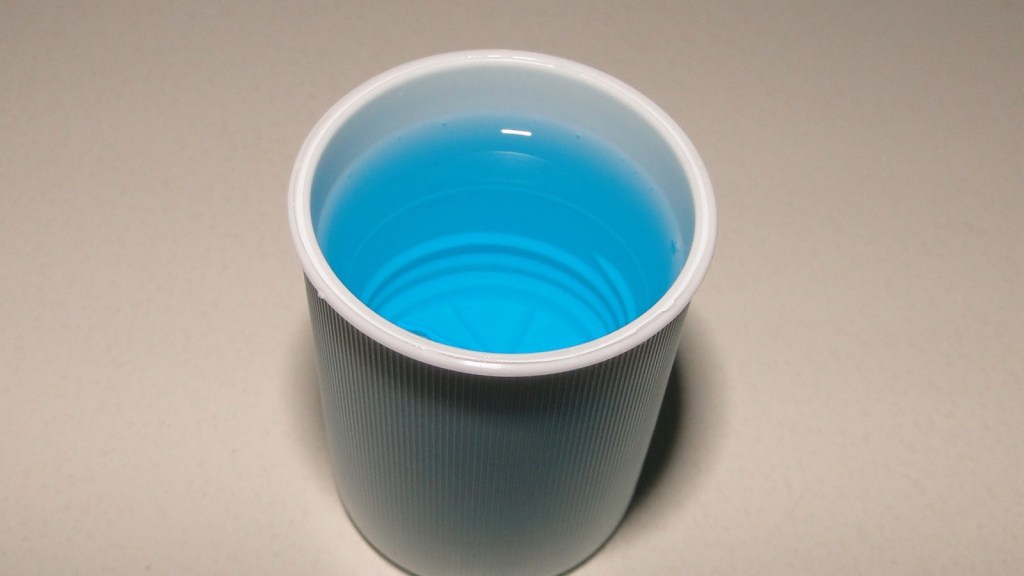
The mouthwash blood pressure effect is real, but it is small. In the first experiment, 19 healthy volunteers rinsed twice a day with a strong antiseptic for one week. Their mouths made about 90% less nitrite, and their blood pressure rose by 2 to 3.5 points (Study). Pool every controlled trial together and that rise gets smaller still. No trial has shown that skipping a rinse prevents a heart attack.
So there is no need to panic about the bottle in your bathroom cabinet. But the biology behind it is odd, and it leads somewhere useful. The best evidence in this story is about your gums.
How Your Mouth Makes Nitric Oxide
Start with a handful of rocket. Beetroot, spinach, lettuce and celery are all rich in nitrate. That is a simple salt the plant pulls out of the soil. You swallow it and your gut absorbs it. Then your salivary glands do something odd. They pull that nitrate back out of your blood and pour it into your mouth.
The detour has a point. Bacteria live in the deep grooves at the back of your tongue. They strip an oxygen atom off the nitrate and turn it into nitrite. You swallow the nitrite, and your body turns it into nitric oxide. Nitric oxide tells the muscle in an artery wall to relax. Relaxed arteries mean lower pressure.
Human cells cannot do that first step. The bacteria do it for us. So part of your blood pressure control depends on microbes living on your tongue.
Feed those bacteria and they respond. In one trial, 10 days of nitrate-rich beetroot juice reshaped the whole bacterial community in people’s saliva. The nitrate-friendly species grew and the others shrank (Trial). This pathway is why nitrate-rich vegetables do anything at all. Across 16 short trials in 254 adults, nitrate and beetroot juice lowered the top blood pressure number by about 4 points (Meta-analysis).
There is more than one road to nitric oxide. Our piece on cocoa flavanols and the COSMOS trial covers a different one. That route works through the lining of the blood vessel itself, and it needs no bacteria. This one does. That is why an antiseptic rinse can interrupt it.
The Mouthwash Blood Pressure Studies
The rinse used in most of this research is chlorhexidine, a medicated antiseptic sold in the UK as Corsodyl. It is not the minty stuff most people gargle without thinking.
The first experiment came out of London in 2013. Nineteen healthy young non-smokers took part, and none of them used mouthwash. They spent one week living normally. Then they spent a week rinsing with chlorhexidine twice a day. Their mouths almost stopped turning nitrate into nitrite. Nitrite in their saliva fell by about 90%, and nitrite in their blood fell by a quarter. Blood pressure rose by 2 to 3.5 points on clinic, home and 24-hour readings (Study).
The change showed up within a single day and lasted the week. Two caveats belong here, and the authors state both. Nobody got a dummy rinse, and the normal week always came first. The team also tested how much nitrite the mouth made, rather than counting the bacteria themselves.
Two years later an Australian group tried the same thing in a tougher group. Fifteen men and women took part, average age 65, all already on blood pressure medication. Three days of antibacterial rinsing raised the top number by about 2 points compared with water. The bottom number did not move (Trial). Nitrite in their saliva fell, as expected.
The oddest result involves exercise. Twenty-three adults ran on a treadmill for 30 minutes, twice, and rinsed at intervals over the next two hours. After a mint-flavoured water dummy rinse, their top number sat 5.2 points below their starting level an hour later. After chlorhexidine, it sat only 2 points lower, and by two hours the drop was gone (Trial). Blood nitrite never rose on the chlorhexidine days. That was one workout, though, not a habit.
These were crossover studies. Each person did both conditions, so everyone acted as their own comparison. That design is what makes a study of 15 or 23 people worth reading.
Where the Signal Gets Weak
In 2026 a Dutch team gathered every controlled trial of chlorhexidine and blood pressure. They screened 100 studies and found 5 that qualified, covering about 120 adults in total. The rinsing lasted three to seven days. Every participant started with normal blood pressure.
Pooled together, the average rise was about 1.5 points on the top number, and nothing on the bottom. Both were small enough that chance could explain them (Meta-analysis). Two of the five studies did show a rise on their own. The reviewers still judged any change very small and too minor to matter in practice.
An earlier review of mouth rinses in general reached the same place. It pooled five studies in which each person took both turns, and found no meaningful rise. The reviewers called the evidence too thin to settle the question either way (Meta-analysis). They also warned that the pooled trials disagreed with each other a lot. An independent commentary in 2026 agreed. It stressed that the certainty is low, and that long-term use has barely been studied (Commentary).
Then there is the headline everyone remembers. Researchers followed 540 overweight adults in Puerto Rico for about three years. None had high blood pressure at the start, and 66 of them were diagnosed with it during the study. People who rinsed twice a day or more were diagnosed roughly twice as often as lighter users (Study).
That study watched people. It did not assign anyone to rinse. Heavy rinsing travels with gum disease, smoking history and other risks. The team adjusted for nine factors and tested many more, which helps but never settles it. Two details rarely make the headlines. The outcome was a diagnosis the person reported themselves. And in the twice-a-day group, blood pressure measured at the study visit showed no link at all. The authors write plainly that they cannot prove cause.
Hospital records show a similar pattern, with the same limits. People who had been prescribed chlorhexidine were more likely to carry a high blood pressure diagnosis. Gum disease itself carried a much stronger link in the same records (Study). The authors did account for gum disease, and the mouthwash link held. But diagnosis codes are a blunt measure of gum health. The rinse may still be standing in for the sore mouth it was prescribed for, and a records review cannot rule that out.
One piece is missing from all of it. No trial has tested whether stopping mouthwash changes heart attacks, strokes or deaths.
Gum Disease Blunts the Benefit
A Spanish and Mexican team gave the same bottle of beetroot juice to 30 adults. Fifteen had periodontitis, the advanced form of gum disease. Fifteen had healthy gums. Ninety minutes later, the healthy group’s top number had fallen by about 7 points. In the gum disease group, it had not fallen at all (Study).
Then the patients got an ordinary deep clean, with no antibiotics and no antiseptic rinse. Seventy days later they drank the juice again. This time their top number fell by about 4 points. Nitrate-reducing bacteria had increased in their gum pockets, and their saliva now handled nitrate more like a healthy mouth does (Study).
The study was small, so take it as a first hint. There were 15 people per group, no dummy drink, and no coin flip deciding who got what. The authors call it the first study of its kind.
It fits a wider pattern, though. Across 60 studies that watched people rather than treating them, people with gum disease were more likely to have high blood pressure (Meta-analysis). Across 12 trials that decided by coin flip who got treatment, treating gum disease lowered the top number by about 5 points (Meta-analysis). The reviewers rate that evidence moderate to low.
The strongest signal came from people who had both problems. One trial enrolled 101 patients with high blood pressure and moderate or severe gum disease. After two months, intensive gum treatment had lowered their 24-hour top number by about 11 points more than a basic clean (Trial). That was one centre, 101 people and two months, and the authors call it an early test of the idea.
So an inflamed mouth may be one reason a vegetable-rich diet underperforms. If that is your situation, a dentist will do more for you than a supplement.
Who Responds, and Who Does Not
Beetroot trials often disagree with each other, and age explains a lot of that.
One trial gave 10 days of nitrate to 18 adults, and each person took both turns. Half were aged 18 to 22 and half were 70 to 79. Pooled across everyone, nothing happened. In the older half, the top number fell. The paper’s own explanation is simple. The young volunteers sat at around 112 over 63, so there was almost nowhere to go (Trial).
The same group repeated it at scale in 2025, with 39 young and 36 older adults across three two-week blocks. The older adults’ pressure fell on nitrate-rich beetroot juice. The young adults showed no response. The two age groups’ oral bacteria also reacted to the juice differently (Trial).
That trial carries an awkward detail for the mouthwash story. Two weeks of antiseptic rinsing did not measurably shift the oral bacteria of either age group (Trial). The same lab that found the age split did not find the bacteria wiped out.
The trial-level picture for beetroot is steadier. Across 11 trials in 349 people with high blood pressure, beetroot juice lowered the top number by about 5 points. There was no clear effect on the bottom number, or on 24-hour readings (Meta-analysis). A separate pooling of 7 trials in 218 adults with high blood pressure landed on nearly the same figure (Meta-analysis).
The size of the drop depends on how much room there is to fall. If your pressure is already low, dietary nitrate has little to work with.
Eat the Nitrate, Skip the Rinse
Three practical things come out of all this.
First, get your nitrate from food. A daily serving of beetroot, rocket, spinach, lettuce or celery does the job. The trials used roughly 200 to 800 mg of nitrate a day from juice. The effect held out to 90 days, and people did not stop responding to it (Meta-analysis). Those reviewers rated their own evidence low, so treat it as promising rather than settled. You do not need a nitric oxide supplement.
Second, treat antiseptic mouthwash as what it is. Chlorhexidine is a short-course medical product. It is advised for two to four weeks, and licensed in the UK for 30 days. National dental guidance calls agents like it useful for short flare-ups, not for routine care (Review). The licensed product information for the 0.2% rinse describes a course of about one month for inflamed gums (Product information).
Long use has a known cost. A 2017 Cochrane review pooled 51 trials in 5,345 people who used the rinse alongside normal brushing. Rinsing for four weeks or longer stains your teeth. In people with mildly inflamed gums, the gum benefit was too small for the authors to call it worth having (Review). The same review found the evidence on tartar unclear, so nobody should claim that part. Alcohol-free versions do not appear to spare your teeth the staining (Meta-analysis).
Third, if your gums bleed, book a dentist before you buy anything. That is the step with the best evidence behind it.
Chlorhexidine is the best-studied culprit, and other rinses are not automatically the same. Thirty young adults used a cetylpyridinium chloride rinse for seven days. It shifted the way nitrite was balanced in their saliva. But the amount of nitrite did not fall, and neither did their overall nitric oxide (Trial). Essential-oil rinses do change the mix of oral bacteria. But they hit fewer known nitrate-reducing species than chlorhexidine does (Study), and a small 12-person study found little effect on nitrate-reducing activity (Study).
If a dentist or doctor prescribed you a rinse, finish the course and ask them about it. Chlorhexidine after gum surgery, for oral thrush, or in hospital care is prescribed for a reason, and it is short by design (Review). Do not quit a prescription because of a blog post.
Frequently Asked Questions
Does mouthwash raise blood pressure?
In small experiments, yes, by a couple of points. A week of twice-daily chlorhexidine raised blood pressure in 19 healthy volunteers, and sharply cut the nitrite their mouths made (Study). Three days of antibacterial rinsing did the same in 15 adults already on blood pressure treatment (Trial). Pooled across all the trials, though, the rise is not clear.
Is the mouthwash blood pressure effect big enough to matter?
Probably not, for most people. Pooling the controlled trials, the average rise was about 1.5 points on the top number. That is small enough that chance could explain it, and the reviewers said it would make no real difference to health (Meta-analysis). The honest caveat is that those studies ran three to seven days, in people with normal blood pressure. Long-term daily use has barely been tested (Commentary).
Should I stop using the mouthwash my dentist prescribed?
No. A prescribed rinse is treating something: gum surgery, an ulcer, thrush or actively inflamed gums. The course is short by design (Review). Finish it, and raise the blood pressure question at your next appointment. Independent reviewers make the same point from the other side. Chlorhexidine should be prescribed when there is a clear reason for it, for the shortest useful time (Commentary).
Do the bacteria come back if I stop rinsing?
The early evidence says yes, though it is thin. In one small study with no comparison group, 26 adults rinsed with chlorhexidine for a week. Their pressure did rise, but by too little for the researchers to call it real. Three days after stopping, pressure sat below the rinsing value, and nitrate-reducing tongue bacteria bounced back (Study). Recovery may not be even across the mouth. After a four-week course in 20 dental patients, saliva bacteria looked close to their old state a month later. The plaque on their teeth was still less varied than at the start (Study).
Does beetroot juice actually lower blood pressure?
In people who already have high blood pressure, it appears to lower the top number by about 5 points (Meta-analysis). In young healthy volunteers it often does nothing, because there is little room to fall (Trial). Gum health seems to matter too. The effect was missing in people with untreated periodontitis (Study).
Key Takeaways
- Your tongue does part of the work. Bacteria in the grooves of your tongue turn dietary nitrate into nitrite. Your body then converts that into the nitric oxide that relaxes arteries (Trial).
- Antiseptic rinsing interrupts it. A week of twice-daily chlorhexidine cut nitrite production by about 90% and raised blood pressure by 2 to 3.5 points in 19 volunteers (Study).
- The pooled effect is small. Across five controlled trials in about 120 adults, the average rise was small enough that chance could explain it (Meta-analysis).
- Gum disease blunts beetroot, and treatment may restore it. Beetroot juice failed to lower blood pressure in people with periodontitis. It worked again 70 days after a deep clean (Study).
- Eat the vegetables. In people with high blood pressure, beetroot juice lowered the top number by about 5 points, and people kept responding out to 90 days (Meta-analysis).
- Never stop a prescribed rinse on your own. Chlorhexidine is a short course used for real dental problems, and the blood pressure question is one for your dentist (Review).
Feed the Bacteria Doing the Work
Your mouth is part of your circulation. The bacteria on your tongue do a step your own cells cannot do.
Two cheap habits keep that step working. One is a plate with something green or purple on it most days. The other is a dental check-up when your gums bleed, instead of a rinse bought to hide it. Neither will transform anyone’s blood pressure on its own. Both are worth doing anyway.
The evidence here is still building, and it is worth watching.
This article is for educational purposes and is not medical advice. Talk to a qualified clinician before changing your health regimen.


Leave a comment