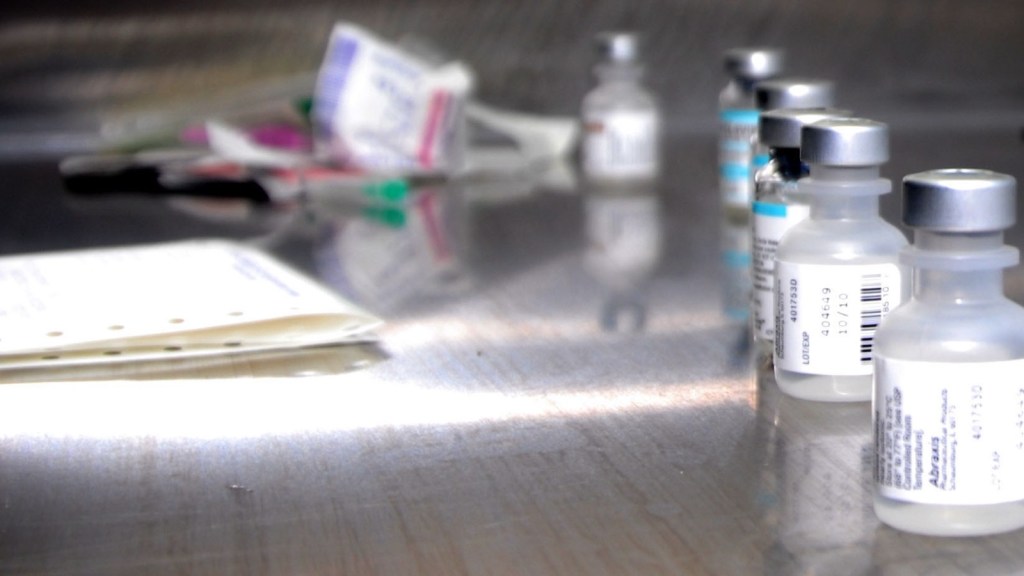
NAD IV therapy has never been tested for the benefits clinics sell it for. A 2026 review gathered 113 studies on NAD+. None of them was a trial of infused or injected NAD+ for wellness or aging (Review). The human studies it found had all tested pills. A single drip session sells for $200 to upwards of $1,000 (Report).
So clinics charge the most for the one version nobody has studied.
What NAD IV Therapy Is
NAD+ is a helper molecule. Every cell uses it to turn food into energy and to run repairs. Levels appear to drop with age, which is why longevity clinics sell ways to top them up (Review).
A session looks like any other drip. A bag of saline hangs on a pole with NAD+ mixed into it. In the one published clinic study, each bag held 500 mg (Study). A research infusion used 750 mg spread across six hours (Study). You sit in a chair while it runs, usually for an hour or more.
Clinics market this for energy, focus, mood, hangovers and slower aging.
NAD+ for infusion is not an FDA-approved drug. It is compounded, which means a pharmacy mixes it to order. The FDA says it does not verify the safety, effectiveness or quality of compounded drugs before they are sold (FDA). That is a statement about oversight. It says nothing either way about whether NAD+ works.
No Trial Has Tested the Drip
In 2026 two researchers searched the whole field. They screened work published between January 2010 and October 2025 and kept 113 studies. Of those, 33 tested an NAD+ product in people. Eighty were done in rodents (Review). In 28 of the human ones, a coin flip decided who got the supplement.
Across fifteen years of research, no eligible trial had tested intravenous or injected NAD+ itself for anti-aging or wellness (Review).
Those 33 human studies tested pills. They used oral nicotinamide riboside (NR) and nicotinamide mononucleotide (NMN). Those are the two building blocks your body turns into NAD+. So the evidence quoted on a clinic website comes from a different product, swallowed rather than infused.
A separate 2026 review says much the same thing. It calls infused NAD+ the most contested version, and notes that how it behaves in the body is still poorly mapped (Review).
Where the NAD+ Actually Goes
One human study of an NAD+ drip has been published. It measured blood and urine rather than health.
Eleven healthy men aged 30 to 55 took part. Eight received 750 mg of NAD+ over six hours, and three received plain saline (Study). For the first two hours, blood NAD+ did not move at all. Its breakdown products stayed flat too.
At that speed the NAD+ was cleared from the blood almost completely, and kept being cleared for at least two hours (Study). By the six-hour mark the men were passing much more NAD+ into their urine, along with one of its by-products.
Laboratory work on cells suggests why. NAD+ is a large molecule, and cells have no easy way to let it in. In cultured cells, surface enzymes strip it down first. The smaller piece that crosses the membrane is nicotinamide riboside (Study). Those cells showed no direct route for the whole molecule. This was cell culture and not people, so it suggests a mechanism rather than proving one.
The two studies point the same way. The bag empties into a vein, the body takes the molecule apart, and some of it leaves in the urine. A May 2026 NPR report went looking for human data on NAD+ injectables. It found none from well-controlled studies, and almost none on the infusions (Report).
What the Drip Feels Like
People who buy drips often call them unpleasant, and one clinic chain has now put that on the record. It reviewed the charts of 14 of its own clients (Study). Six had 500 mg of NAD+ by drip. Eight had 500 mg of nicotinamide riboside instead. Each person had four infusions on four days in a row.
All six people in the NAD+ group reported moderate to severe symptoms during the drip. The list included stomach cramping, diarrhea, nausea, vomiting, a faster heartbeat, throat pain, congestion and chest pressure (Study). The symptoms stopped as soon as the infusion finished.
The NR group had an easier time. Five of the eight reported minor tingling in the tongue, jaw and arms, plus mild cramping (Study).
How fast the bag runs seems to matter. Clients controlled their own flow rate and slowed the NAD+ drip to cope. Their sessions ran roughly two to three times longer than the NR ones, and the length varied a lot from person to person (Study). In the research infusion, a bigger dose went in slowly over six hours. None of those eight men reported any side effects (Study).
This evidence is thin, for two reasons. It covers 14 people, looked at after the fact, with no dummy drip for comparison. The clinic selling the infusions also employed the researchers, who wrote that this may have biased them (Study). So it hints at how a drip feels. It does not pin down how often the symptoms happen.
Blood tests a month later showed steady liver, kidney, inflammation and thyroid markers in both groups (Study).
Drips Versus Pills
Most people are weighing a drip against a pill. Pills do raise blood NAD+. One pooling of 12 coin-flip trials in 513 people found that NMN clearly lifted NAD levels (Meta-analysis). The health numbers people buy it for stayed put. Fasting blood sugar, triglycerides and cholesterol matched the comparison groups. The authors wrote that the field may be exaggerating what NMN does. They also judged every trial flawed, so this is not the last word.
A second 2026 pooling of 15 trials agrees. People took NMN at 250 to 2,000 mg a day, for two weeks up to six months. Side effects and liver markers stayed at the level of the comparison groups (Meta-analysis). Weight, blood sugar, blood fats and the top blood pressure number held steady too. That safety record covers a few hundred people for six months at most.
A later trial tested whether people actually felt better. Over 24 weeks, 58 people took a high dose of nicotinamide riboside or a dummy pill. A coin flip decided who got which. Blood NAD+ roughly tripled on NR and stayed up. Thinking scores, fatigue, sleep, anxiety and mood stayed where they started in both groups (Trial). Half the NR group had dropped out by week 20, and the supplement’s maker helped fund the work. That weakens the result rather than settling the question.
Pills clearly move the number in the blood. Whether that makes anyone feel better is still unproven. We compared the two precursors in our piece on NMN vs NR in the first head-to-head trial.
The prices sit far apart. Pills run $30 to more than $80, and NAD+ shots several hundred dollars (Report). A drip costs $200 to over $1,000 a session, and no trial has measured what it does for health (Review). No peer-reviewed trial has compared a drip against a pill for how much NAD+ it delivers. The one coin-flip comparison that exists is still an unpublished preprint (Study). So the cheaper option is the one with evidence behind it, and even that evidence is modest.
The Clinic Is the Real Risk
There are no federal standards for med spas in the United States. States set their own rules, and they vary a lot. The industry’s own association has said state authorities lack the time and resources to check that spas follow them (Interview). The industry is worth $15 billion, and no single body oversees it.
The FDA has warned about this itself. The agency says it has become aware of IV hydration clinics, med spas and mobile infusion services compounding drugs outside the rules (Alert). Its inspectors at one clinic offering IV vitamin therapy found no certified sterile area, peeling paint and dirty equipment. The room where IV bags were mixed had carpet on the floor, and some ingredients had expired. A woman given an IV vitamin drip prepared there was hospitalized with suspected blood poisoning and organ failure (Alert).
In 2021 a 26-year-old woman was injected more than 100 times at a Los Angeles med spa. Within a day the sites were inflamed and she had a fever. Doctors found a drug-resistant infection. Nearly three years later she was still scarred and on heavy antibiotics (Interview).
The worst cases involve unlicensed operators. A CDC investigation linked HIV infections to cosmetic injections at an unlicensed New Mexico spa (Investigation). Investigators found blood tubes in a kitchen refrigerator beside food. Disposable tips had been soaked in alcohol and used again.
On 19 July 2026 a 27-year-old woman had an NAD+ infusion at Bereshit Lifestyle Center in Riverdale, the Bronx. She collapsed, went into cardiac arrest, and died at NewYork-Presbyterian Allen Hospital (Report). Police arrested the operator, Luis Rojas Cabrera. Prosecutors charged him with reckless endangerment and unauthorized practice of a profession (Report). He allegedly told officers he is a doctor in the Dominican Republic. He is not a licensed doctor in New York (Report).
Much about the case is still unknown. The city medical examiner had not determined a cause of death, and toxicology testing was still under way (Report). As of late July 2026, prosecutors had not asked for bail. They said they wanted to wait for the autopsy findings (Report). Nobody has shown that NAD+ caused this death, and we are not suggesting it did. What is confirmed is still serious. An unlicensed person put an unapproved compounded drug into someone’s vein.
What to Ask Before You Book
If you have already booked a session, call and ask these before you pay.
- Who is licensed here, and will they be in the room? Ask for the licensed clinician who will stay with you for the whole session.
- Which pharmacy compounded the vial, and can I see the label? The FDA does not check a compounded product’s strength or sterility before sale (FDA).
- What dose, and over how long? Symptoms in the published clinic data tracked how fast the bag ran (Study).
- What is the emergency plan? Ask who calls for help, what equipment is on site, and how far away the hospital is.
Some people should be more careful, and that is a conversation for your own doctor. The clinic in the published study turned away anyone pregnant. It also turned away anyone with a personal or recent family history of cancer (Study). Cancer is the one caution with published reasoning behind it. NAD+ feeds cell metabolism. In animal and cell work, researchers have raised a theoretical worry about fueling tumor growth. They stress that no evidence shows these supplements cause cancer (Review).
Past that, nobody can give you a firm rule. A faster heartbeat and chest pressure were common during these drips (Study). If you have a heart rhythm problem or heart disease, speak to a cardiologist first. Kidney disease, liver disease and a long medication list are worth raising too. No trial evidence exists to draw a firm line anywhere (Review). And if anyone promises a drip will treat a diagnosed condition, walk out.
Frequently Asked Questions
Does NAD IV Therapy Work?
Nobody knows, because it has not been tested. A 2026 review of 113 studies found no trial measuring health outcomes from infused or injected NAD+ (Review). The evidence people cite comes from oral precursors taken for weeks or months. Feeling better after a drip may well be real. No trial has separated that from a placebo effect.
Is an NAD+ Drip Safe?
There is little safety data for the way clinics actually use it. In the one published clinic review, all six NAD+ recipients had moderate to severe symptoms during the infusion (Study). Those stopped when the drip ended, and blood tests a month later showed steady liver and kidney markers. That was six people, so it settles nothing. Most documented harm from drip clinics comes from how the drip was given, and by whom.
How Much Does an NAD+ IV Cost?
Independent reporting puts one drip session at $200 to upwards of $1,000 (Report). NAD+ shots can run to several hundred dollars, and pills cost $30 to more than $80.
Is IV Better Than NMN or NR Pills?
No trial has answered that. The only peer-reviewed comparison looked back at 14 clients’ charts, and its lab tests could not detect NAD+ changes at all (Study). Pills reliably raise blood NAD+ when taken daily (Meta-analysis). How much of a drip ever reaches the inside of a cell has not been measured (Review).
Who Should Avoid an NAD+ Infusion?
Take this one to your own clinician, since there is no trial evidence to set rules (Review). The clinic in the published study excluded people who were pregnant or had a cancer history (Study). Given the reported faster heartbeat and chest pressure, a heart rhythm problem or heart disease is worth a conversation first. So are kidney disease, liver disease and a long list of daily medications.
Key Takeaways
- No outcome trial exists for the injected form. Of 113 studies, 33 were in people, and none tested infused or injected NAD+ for wellness or aging (Review).
- Much of it may never reach a cell intact. Blood NAD+ did not rise for two hours during a six-hour infusion, while NAD+ in the urine climbed sharply (Study).
- Symptoms during the drip look common. All six NAD+ clients in the published chart review had moderate to severe cramping, nausea and chest pressure (Study).
- Pills raise NAD+ for far less money. Pooled coin-flip trials show NMN lifts blood NAD levels, while blood sugar and blood fats stay put (Meta-analysis).
- The setting carries its own risk. Med spas have no federal regulator, and an FDA inspection of one infusion clinic found unsterile mixing and a serious infection (Alert).
- It is real money for an untested product. One session runs $200 to more than $1,000 (Report).
The Honest Bottom Line
If you have a drip booked this week, the evidence gives you very little to go on. Nobody has shown it works. It costs about as much as a month of groceries, and it often feels bad while it runs. The largest risk sits with the person hanging the bag, and whether they are licensed and ready for trouble.
The cheaper route has more evidence behind it, and even that is modest. Oral NR and NMN do raise NAD+ in the blood. Short trials have turned up no safety problems (Meta-analysis). The measured health benefits are still thin (Review).
None of this proves the drip is useless. It means nobody has run the trial that would tell us. Until someone runs it, you are paying a lot for a treatment nobody has measured.
If the goal is to age well, the ordinary habits still hold the strongest evidence. Sleep, daily walking, strength work and food you cooked yourself all qualify. Spend the drip money there and you get something that has actually been measured.
The biology behind NAD+ is worth watching. The drip is worth waiting on until someone tests it.
This article is for educational purposes and is not medical advice. Talk to a qualified clinician before changing your health regimen.


Leave a comment