An organ age test reads thousands of blood proteins and gives each major organ its own age. In 43,616 adults, organs running older than their owner predicted illness and early death. The brain score tracked dying most closely (Study). It is not a personal readout yet. No trial has shown that lowering an organ age lowers anyone’s risk (Review).
What an Organ Age Test Measures
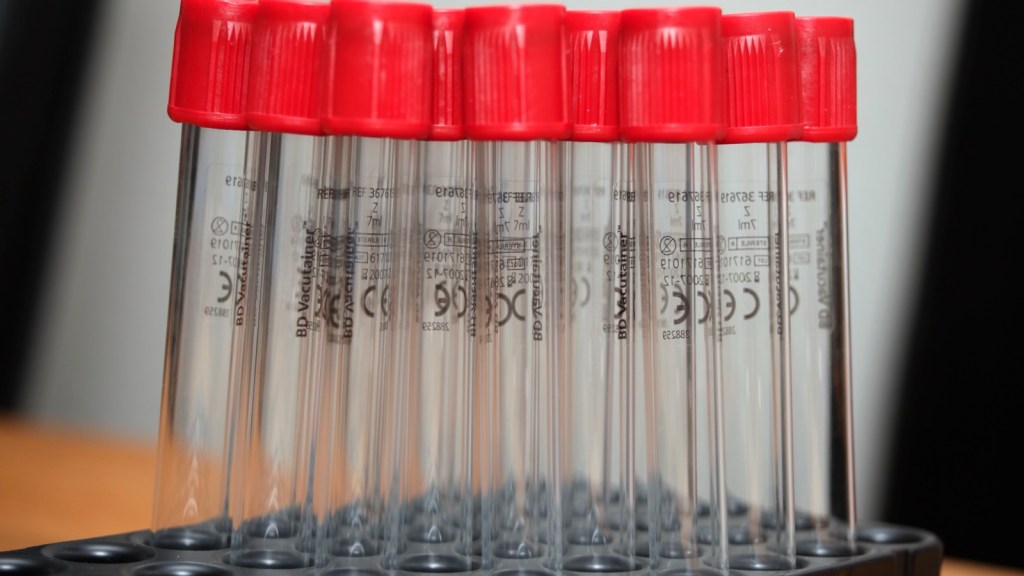
You give one tube of blood. The lab sends back ten or eleven numbers, one age in years for each organ. The usual list covers brain, heart, arteries, kidney, liver, lung, pancreas, gut, immune system, muscle and fat.
The age itself matters less than the distance from your real age. The lab predicts an age from your blood, then subtracts your real one. A brain that reads three years older scores plus three. Researchers call that the age gap.
You may have met the older idea already. Most aging tests you can buy read chemical tags on DNA instead. We covered what those numbers really mean in our piece on the biological age test. Those clocks give you one figure for your whole body.
The protein version differs in two ways. It reads proteins floating in blood rather than tags on DNA. And it answers organ by organ instead of pooling everything into one score.
How a Blood Protein Clock Works
Every organ makes proteins, and some of them slip into the bloodstream. A slice of those come mostly from one place. The largest study of this kind measured 2,916 proteins. About 1 in 7 came mainly from a single organ, and the organ clocks are built from those (Study). Neurofilament light is a good example. It sits inside nerve fibers, so when those fibers fray, more of it turns up in blood.
One blood sample therefore carries small reports from all over the body. Reading them is the hard part.
Researchers start with tens of thousands of samples from people whose ages they know. A computer model learns which organ proteins climb or fall as people get older. Feed it your sample and it guesses your age from your brain proteins alone, then from your heart proteins, and so on. The gap between each guess and your real age is your score for that organ.
Why train the model on age rather than on disease? Everyone has a birthday. Age is known for every person in the data, which makes it a clean and plentiful target. Illness is rarer and often arrives decades later. The working bet is that an organ looking older than its owner may be heading somewhere worse.
One Fast Organ, Not All
Researchers scored 11 organs in 5,676 adults drawn from five separate groups. About 18 in every 100 people had one organ aging fast while the rest of the body looked ordinary. Fewer than 2 in every 100 aged fast across several organs at once (Study). Counting both fast and slow organs, 23 in every 100 stood out somewhere.
That pattern has held up at much larger scale. It was checked in 43,616 UK adults, then in 3,977 adults in China and 800 in the United States. In all three, the organ scores barely tracked each other (Study). Knowing that someone’s kidneys look old tells you little about their lungs.
A separate team then built its own clocks from scratch. They used 3,976 adults in China, two rival ways of measuring proteins, and a different type of model (Study). Sixteen of their 18 organ clocks were linked to dying from any cause. The thyroid and lung clocks were not, though with fewer than 4,000 people those two may be too small to show a signal. A third group built its own organ models from more than 50,000 blood samples across the UK Biobank and other groups (Study).
So a single whole-body age hides most of the picture. The body does not age all at once.
What an Old Brain Predicts
In the 43,616-adult study, every organ age gap was linked to dying from any cause. Of the ten scores, the brain was the strongest (Study). It also predicted dementia after the team allowed for APOE4, a gene-based Alzheimer’s risk score and a memory test. Keep one thing straight: this is a blood protein score, not a brain scan.
Old organs also stack up. Take people with none of them as the starting point. Those with one or two very old organs were roughly twice as likely to die during follow-up. With three or four, the risk was close to four times higher. With five or more, it was nearly eight times higher (Study). Very young organs ran the other way. People with five or more of those had about 60% lower risk, and dementia followed the same ladder in both directions.
A separate look at 44,498 UK adults makes the point plainly. More than 60 in every 100 people with eight or more very old organs died within 15 years (Study).
The brain result is the one drawing attention. Over 17 years of follow-up, about 5 in every 100 people with a very old brain score developed Alzheimer’s disease. Among those with a very young brain score, fewer than 1 in 100 did (Study). The authors put that old-brain risk on a par with inheriting one copy of APOE4, the best known common gene variant for Alzheimer’s. The young-brain protection looked like carrying two copies of the protective APOE2 variant. Both findings held after the team allowed for each person’s actual APOE genes.
Other organs point at other diseases. Old kidney scores tracked later kidney disease and type 2 diabetes. Old artery, heart and kidney scores tracked heart attacks and high blood pressure (Study). Across 11 organs, the scores were also linked to later heart failure and long-term lung disease (Study).
What is the brain clock actually built from? Mostly proteins that spill out of damaged nerve tissue. The ones that count most flag fraying nerve fibers, stressed support cells and the fatty coat around nerve wiring (Study). Others come from the junctions where brain cells pass signals. These proteins drop in Alzheimer’s brain tissue while rising in blood, and the authors suggest the brain may be shedding them (Study). The artery clock leans on proteins from the elastic fibers of vessel walls. In blood, those climb earlier and faster with age than most others the study tracked (Study).
One more detail is worth knowing. A blood-based brain age and an MRI brain age tracked each other only weakly (Study). The authors note the two measurements were taken about nine years apart, which explains part of the gap. The rest may mean the blood picks up something the scan does not.
Not a Diagnosis Yet
A score can predict well across thousands of people and still be shaky for one of them. The measuring tools are the first reason. Two rival technologies read blood proteins, and they often disagree. One study ran the same samples from 1,514 people through both, and agreement across 1,848 shared proteins was poor on average (Study). For neurofilament light, a top brain-clock protein, the two even pointed in opposite directions on Alzheimer’s risk. In a separate comparison of 817 proteins measured on both, only about 15 in every 100 agreed closely (Study).
The readings also drift within one person. In that same work, 40 women gave blood a year apart, and roughly 9 in 10 protein readings cleared a deliberately low bar for repeatability. A separate test on one platform, in 38 other women sampled a decade apart, put that closer to 8 in 10. Handling matters as well. When the sample waited a day or two before being spun and frozen, only about half the readings stayed steady.
Repeat organ scores tell a similar story. Researchers measured 1,176 people about nine years apart. Of those first flagged as a fast ager, 68 in every 100 lost the flag (Study). The direction of the gap held up better than the label did. The authors write that they cannot yet say how much of the drift is biology and how much is the test.
There is also no agreed normal range. A recent expert review sets out what is still needed before doctors use these tests (Review). It names three things: tracking people over time, proteins truly specific to one organ, and reference ranges for the gaps.
The comparison against standard risk factors is thinner than headlines suggest. In the Stanford team’s 2025 paper, the main models allowed only for age and sex (Study). The Alzheimer’s models added APOE genes, but nothing accounted for cholesterol, blood pressure, weight or diabetes. The largest study added ethnicity, how poor the person’s area was, smoking and activity, and left those four out as well (Study). Its own authors report that the organ clocks beat a standard aging measure only slightly. Most training data also comes from people of European descent, and the researchers say the scores may need adjusting for other groups (Study).
One gap is bigger than all of these. No aging blood marker has been proven to stand in for a health outcome. Regulators have issued no guidelines for them. The evidence so far comes mostly from watching groups of people, not from trials that moved a score on purpose (Review).
The tests are arriving anyway. Vero Bioscience says it has built a product on the Stanford work. Its OrganAge panel runs through research partnerships now, and broad consumer access is planned for 2027 (Company statement). Longevity clinics already sell protein aging panels. The senior scientist behind the key papers co-founded that company, a link the paper discloses (Study). In the United States, panels like this reach the market as laboratory developed tests. A court struck down the FDA’s 2024 rule on them, and the agency restored the older regulation in 2025. So nobody reviews the test itself before it is sold (FDA).
What Seems to Move the Score
Some habits do track younger organs. Almost all of that evidence comes from watching people rather than testing them.
In 44,498 UK adults, researchers tested 18 lifestyle and social factors against the organ scores at once. Smoking, alcohol, processed meat, trouble sleeping and living in a poorer area went with older organs. Hard exercise, oily fish, poultry and more schooling went with younger ones (Study).
A second team cast a wider net over 44,610 adults and tested 86 factors (Study). Smoking sped up aging the most, and it hit the lungs hardest. Hours spent sitting in front of a television or computer went with older organs. More days per week of moderate or hard activity went with younger ones. So did a diet built on fruit, vegetables and oily fish, though that showed up in some organs rather than across the board.
Every one of those links comes from a single blood draw at one moment in time. Nobody was assigned to a habit. People who eat oily fish differ from people who do not in a hundred other ways.
The controlled evidence is small. Twenty-six men did 12 weeks of supervised exercise, and their whole-body protein age fell by roughly 10 months (Study). That was a body-wide clock rather than an organ one. There was no comparison group either, and 26 men is a tiny sample. The DNA-tag clocks have a much bigger trial record, which we went through in what 51 trials show about slowing biological aging.
The closest thing to a drug answer has not been peer reviewed. A 2026 conference poster applied organ clocks to samples from three semaglutide trials. In one of them, heart and kidney protein ages came out roughly 1 to 1.5 years lower than placebo at 20 weeks (Conference poster). The whole-body clock stayed put in all three. That is worth following, but it is not proof that pushing a score down protects anyone.
Frequently Asked Questions
Can I Get an Organ Age Test?
Not easily yet, at least not from the group behind the best known version. Vero Bioscience says its OrganAge panel currently runs through research partnerships, with wider consumer access planned for 2027 (Company statement). Some longevity clinics already sell protein aging panels. In the United States these arrive as laboratory developed tests, which the FDA does not review before they are sold (FDA).
Is an Organ Age Test Accurate?
It is good at guessing ages across large groups and much shakier for one person. The two main protein platforms often disagree on the very same sample (Study). And when the same people were measured again about nine years later, most of those first flagged as fast agers no longer were (Study).
What Does an Old Brain Age Mean?
It means your blood carries more of the proteins that usually rise as nerve tissue is damaged. Across large groups, a very old brain score went with more later dementia and a higher chance of dying during follow-up (Study). It is a risk signal for a whole population, not a diagnosis for one person.
Does It Differ From an Epigenetic Age Test?
Yes. An epigenetic test reads chemical tags on DNA and usually returns one number for your whole body. An organ test reads blood proteins and returns a number per organ, and those numbers barely track each other (Study). Neither kind has been shown to change an outcome when the number moves (Review).
Can You Make an Organ Younger?
Nobody has shown it in a trial. Exercise, oily fish, fruit and vegetables and not smoking are all linked to younger organ scores. Those links come from watching people, not from assigning them (Study). One small supervised exercise study nudged a body-wide protein age down (Study).
Key Takeaways
- One blood draw, many ages. Thousands of blood proteins feed models that return a separate age for ten or eleven organs. They were trained in 43,616 adults and checked in China and the US (Study).
- About 1 in 5 age fast in one organ. Roughly 18 in every 100 adults age fast in one organ while the rest looks normal. Fewer than 2 in 100 age fast in several (Study).
- The brain score tracks death most closely. Of ten organ scores, the brain had the strongest link to dying from any cause (Study). An old brain carried Alzheimer’s risk like one copy of APOE4 (Study).
- Old organs stack. More than 60 in every 100 people with eight or more very old organs died within 15 years (Study).
- Personal precision lags the prediction. Rival protein platforms often disagree (Study), and 68 in every 100 fast agers lost that label when retested years later (Study).
- No trial has moved a score and shown benefit. No aging blood marker is yet proven to stand in for a health outcome, so a lower score is not a proven goal (Review).
Useful Signal, Not a Verdict
If you already have an organ age report, use it to start a conversation with a doctor. A high brain or kidney number is a reason to book an appointment. It is not a reason to panic or to buy a stack of supplements.
Bring the report along and ask what standard checks it might justify. Blood pressure, kidney function, blood sugar, hearing and sleep are all cheap places to start. Those tests have decades of evidence behind them, and an agreed normal range, which the organ score still lacks (Review).
If you are considering buying one, know what you are buying. You get a well-built research tool aimed at large groups, sold to you alone. That can still be worth the money if it nudges you toward a check you were avoiding. It is worth much less as a scoreboard to chase, since the number itself wanders between visits (Study).
The plain habits still do most of the work. Do not smoke, move most days, sleep properly, eat plants and fish, and get the standard screens on time. Those are the same habits that track younger organ scores in the big datasets. They are also the only ones with outcome trials behind them.
The science here is good, and it is still young. It is worth following closely and worth spending money on carefully.
This article is for educational purposes and is not medical advice. Talk to a qualified clinician before changing your health regimen.


Leave a Reply