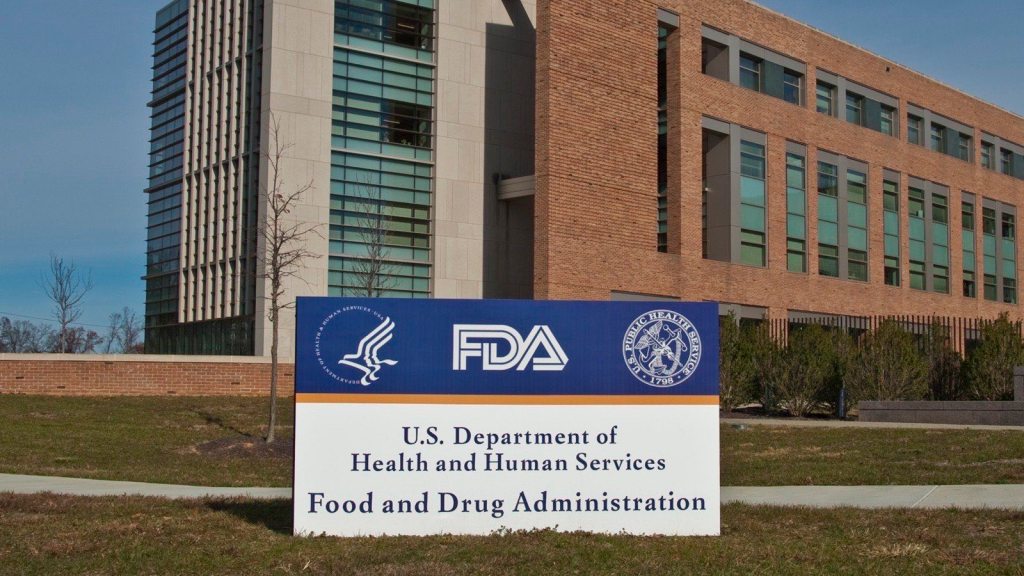
The FDA peptides 2026 news changed no law. None of the seven peptides sits on the list that pharmacies may legally compound from. That regulation has not changed since 2019 (Regulation). FDA’s own briefing papers asked that all 14 forms of those seven substances be kept off it (FDA briefing). An outside panel then voted the other way on six of the seven. The votes do not bind FDA, and some were as close as 8 to 6 (Meeting report).
What FDA Peptides 2026 Changed
Six peptides did come off an FDA watch list in 2026. The coverage mostly skipped the reason.
FDA keeps a page for substances that may present significant safety risks in compounding. People call it Category 2. BPC-157, TB-500, MOTS-c, KPV, semax, epitalon and ipamorelin acetate all used to sit there. They now sit in a second table on the same page, along with ten other substances. Its heading says the nominations were withdrawn by the nominators (FDA safety page).
The nominators were two private firms that had asked FDA to consider these peptides. FDA names Wells Pharmacy Network and LDT Health Solutions, acting for the International Peptide Society (FDA briefing).
So the firms walked away, and FDA cleared nothing. Its safety paragraph for each peptide still sits on that page, word for word as before (FDA safety page).
FDA spelled out the same mechanism for another peptide. Copper peptide, GHK-Cu, “was removed from category 1 on April 22, 2026, because the nominations for GHK-Cu were withdrawn by the nominators” (FDA list). Coming off a list because a sponsor stopped asking is not a safety clearance. Our earlier piece on copper peptides and GHK-Cu covers that compound in full.
The documents carry three dates. FDA’s safety page is dated 22 April 2026. Its list of nominated substances was last updated on 14 May 2026 (FDA list). The advisory panel met on 23 and 24 July 2026 (FDA meeting page).
The record does not give a removal date for each peptide. FDA states 22 April 2026 for copper peptide only. For the seven peptides it gives no date at all (FDA list).
Two of our older posts need a correction here. They described ipamorelin and TB-500 as Category 2 substances. The May 2026 list no longer supports that (FDA list). Ipamorelin acetate does still appear in Category 2 under the separate rules for outsourcing facilities (FDA safety page). Two other names on that watch list have not moved: ibutamoren and kisspeptin-10 (FDA list).
What a Compounding Pharmacy Is
Compounding means making a drug to order for one patient. A pharmacist might mix a liquid version for a child who cannot swallow a pill. It is a real and useful part of medicine.
US law splits compounders in two. A 503A pharmacy is licensed by its state and fills prescriptions one at a time (FDA briefing). A 503B outsourcing facility makes larger batches and registers with FDA.
Neither route produces an FDA-approved drug. FDA puts it plainly: “Compounded drugs are not FDA-approved. This means that FDA does not verify the safety, effectiveness or quality of compounded drugs before they are marketed” (FDA).
Outsourcing facilities must follow federal manufacturing rules. Pharmacies working under 503A do not (FDA). That is a difference in process, not a verdict on any product. FDA does warn that poor compounding can leave a drug contaminated, or holding too much or too little active ingredient (FDA).
Adding a peptide to the list would not change any of that. Using a listed substance is one of the conditions a 503A pharmacy has to meet. Meet them all and the compounded drug stays exempt from three things: approval, labeling with directions for use, and manufacturing rules (FDA briefing). So listing takes requirements away from a pharmacy. It does not add any check on the product.
Which List Actually Counts
The list in question is a regulation, 21 CFR 216.23, not a web page.
Look it up and you find six substances. They are Brilliant Blue G, cantharidin, diphenylcyclopropenone, N-acetyl-D-glucosamine, squaric acid dibutyl ester and thymol iodide. Five of the six are for use on the skin only. None of them is a peptide. The section has not been changed since February 2019 (Regulation).
FDA is working through hundreds of nominated ingredients, and it sorts them into groups while it works. Category 2 is the group it has flagged as possibly risky (FDA safety page). Category 1 is where copper peptide sat until April 2026 (FDA list).
Those groups are a holding pattern, not the list itself. Leaving Category 2 does not move a substance onto the list. It only takes it out of one queue.
The peptides from the July meeting are still not on the list. Only formal rulemaking or an act of Congress can put them there (Law firm analysis).
What FDA’s Reviewers Found
The findings below are FDA’s reading of the evidence, not ours. For TB-500, FDA searched the main medical databases. It “did not identify data, such as clinical studies, on the use of TB-500 in humans” (FDA briefing). The nomination offered three papers, and none of them gave TB-500 to a person.
For KPV, the answer came out the same. FDA found no clinical studies of KPV in humans (FDA briefing). The nomination cited nine papers: eight animal studies, plus one test on skin taken from a body after death.
For MOTS-c, FDA found no studies of it given to humans at all (FDA briefing). The supporting work ran in cells and rodents. FDA also noted that the target this peptide acts on “remains unknown”.
BPC-157 has the largest human record of the seven. That record is five studies, with about 80 people in total actually receiving it (FDA briefing). One was a safety study in 24 healthy men, dosed by enema. One was a two-week trial in 53 people with mild to moderate colitis, published only as a meeting abstract. Another gave two volunteers a dose into a vein on two days. The last two used injections: 17 people with knee pain, and 12 women with bladder pain.
Nobody in any of those studies took it for longer than two weeks. FDA found no study using the routes people actually buy: by mouth, under the skin, in the nose, or on the skin (FDA briefing).
Neither injection study had a group to compare against. In the knee study, patients were phoned six months to a year later and asked to rate their own pain from memory. Fourteen of the sixteen reached said they felt better, and four of those had been given a second peptide alongside it (Study). In the bladder study, ten of the twelve women reported that symptoms cleared completely. The whole result rests on one patient questionnaire (Study).
FDA’s verdict on the colitis trial is blunt: “the data available do not support the use of BPC-157 for the treatment of UC” (FDA briefing).
Each review package ends the same way. On BPC-157, FDA wrote that a balancing of the criteria “weighs against” the substance being placed on the list (FDA briefing). Its umbrella paper carries the same proposal for all seven (FDA briefing). On emideltide, FDA “did not identify any data to support the effectiveness” (FDA briefing).
FDA also judged the raw material poorly described. It called BPC-157 “not well characterized” (FDA briefing). Suppliers’ test certificates left out checks for named impurities, clumped peptide, microbial load and bacterial toxins. FDA said the same on the record in its slides to the panel (FDA slides).
For the evidence on each compound, see our reviews of the BPC-157 human trials, thymosin alpha-1 and TB-500 and epitalon and telomeres.
What the Panel Vote Is Worth
An advisory committee is a panel of outside experts. FDA asks them a question, and they vote. FDA’s own meeting page states the rule. Advisory committees “make non-binding recommendations to the FDA,” which “generally follows the recommendations but is not legally bound to do so” (FDA meeting page).
The question itself was narrow. FDA’s questions document sets out 14 votes, two per peptide. Each one asks only whether the substance should be placed on the list (FDA questions). Nobody voted on whether these peptides work, or on whether they are safe.
The votes were close. Reported tallies give 8 to 6 for BPC-157, KPV and TB-500, with one abstention each. MOTS-c came in at 7 to 5 with two abstentions, semax at 8 to 5, and epitalon at 7 to 4. Emideltide lost 6 to 7 and was not recommended (Meeting report). Treat those figures as provisional. FDA’s meeting page still lists only the briefing papers and slides, with no minutes or transcript (FDA meeting page).
So the panel split almost down the middle, and it split against the agency’s own reviewers. That is not much to base a purchase on.
Because the recommendations do not bind FDA, they “did not result in any change in law” (Law firm analysis). Adding a substance takes a proposed rule, a public comment period and a final rule.
No such rule has appeared. In early September 2026, only 17 documents had ever been published under these compounding rules, and none of them in 2026 (Federal Register). The next step is procedural, and no timeline has been published.
The last round moved slowly. FDA last proposed adding substances to this list in September 2019, and asked for comments by that December. Seven years on, not one of those five has been added (Proposed rule).
Buying These Peptides Now
Most of these peptides are sold as an injection. That makes purity and sterility the things to ask about.
FDA read the supplier paperwork and was not reassured. For TB-500, one certificate left out identity, strength, clumping and bacterial toxin levels (FDA briefing). Unknown single impurities were allowed at up to 1%. For an injection, FDA calls sterility and toxin testing critical safety factors.
The immune system is a separate worry. Peptides built by chemical synthesis can carry slightly altered copies of themselves, with a building block missing or repeated. FDA said it is concerned about immune reactions to injected BPC-157 and TB-500 for that reason (FDA briefing).
Lab work backs that worry up. In one study of a copied peptide medicine, immune cells from 43 in every 100 human donors reacted to the three riskiest altered versions. About 19 in every 100 reacted to the intended peptide (Study). That was a different peptide, tested in a dish rather than in people. It shows a mechanism, not a rate you should expect.
FDA also searched its adverse event database for BPC-157 up to December 2025. It found three reports, all with injected product (FDA briefing). One was a 28-year-old man who developed shortness of breath and went to the emergency room. Another was a woman whose skin and gums darkened, then darkened again when she used the product a second time.
Three reports sounds low, and very little gets reported in the first place. FDA’s own footnote says compounders under 503A “generally do not report adverse events to FDA”. That duty falls only on registered outsourcing facilities (FDA guidance). A National Academies review calls this a gap in surveillance rather than a sign of safety (Review). Even for approved drugs with a known reporting system, a 2006 review of 37 studies put the typical under-reporting rate at 94% (Systematic review).
Then there are the sellers. Peptides sold online usually carry a line saying “research use only”. That line is not a legal shield. FDA sent warning letters through 2026 to sellers who used it (Warning letter). One June 2026 letter named a Florida seller of two “research use only” peptides (Warning letter). A warning letter is FDA’s own allegation, not a court ruling.
The letters follow a pattern. FDA looks past the disclaimer at what the website says and sells. Health claims about appetite, insulin or body weight count against the seller. So does selling bacteriostatic water beside a powder, since that is what you need to mix an injection (Warning letter). Our guide to the research peptide gray market walks through how that trade works.
If you are still considering one of these, do two things. Bring it to a clinician who knows your history and your other medicines. Then ask any pharmacy what it can actually document: where the powder came from, what it was tested for, and who checked sterility.
Frequently Asked Questions
What does the FDA peptides 2026 vote actually change?
Legally, nothing yet. An advisory panel recommended six of seven peptides for the 503A list in July 2026, and its recommendations do not bind FDA (FDA meeting page). The list itself still holds the same six non-peptide substances it has held since 2019 (Regulation). Adding a peptide would take a formal rule, and none has been published.
Is BPC-157 legal to buy now?
Nothing in 2026 made BPC-157 an approved medicine. It is not on the 503A list (Regulation). FDA has treated peptides sold online for human use as unapproved drugs, and has written to sellers about it (Warning letter). Rules also vary by country, so check where you live.
Does a compounding pharmacy mean it is FDA approved?
No. FDA states that compounded drugs are not FDA-approved, and that it does not verify their safety, effectiveness or quality before they are sold (FDA). A pharmacy can be perfectly reputable and still be making something nobody reviewed. Those are two separate questions.
Did FDA say these peptides work?
Its reviewers said the opposite, on the record. FDA found no studies of MOTS-c given to humans at all (FDA briefing), and no clinical studies of KPV in humans either (FDA briefing). For BPC-157 it found five small studies, and said the available data do not support use in colitis (FDA briefing). Its briefing papers proposed leaving all 14 substance forms off the list.
Can I still buy peptides labeled research use only?
Those products are sold, but the label is not a safe harbor. FDA has said that website evidence can show a product is meant for people, whatever the disclaimer claims (Warning letter). Material sold for research is not made, tested or labeled as a medicine. Nobody is checking that a vial is sterile or that its contents match the label.
Key Takeaways
- FDA proposed no on all 14 forms. Its briefing papers asked that every form of all seven peptides be kept off the 503A list (FDA briefing).
- They left Category 2 because sponsors withdrew. The nominations were pulled by two private firms, and FDA’s safety findings still stand (FDA safety page).
- None of them is on the list today. The regulation still names six non-peptide substances and has not changed since 2019 (Regulation).
- Compounded is not the same as approved. FDA does not check the safety, effectiveness or quality of a compounded drug before sale (FDA).
- The human evidence is close to empty. FDA found no human studies of TB-500 (FDA briefing) and none of KPV in people (FDA briefing).
- Injectable quality risk is real. FDA flagged missing purity and sterility testing, and possible immune reactions to altered peptide copies (FDA briefing).
Follow the Record, Not the Headlines
A close vote by outside advisers is not a finding that something works. It is one step in a slow process about which ingredients a pharmacy may use.
If you want the evidence on a single compound, our per-peptide reviews are the place to start: BPC-157, TB-500 and epitalon.
If you want the current status, go to the source. FDA’s list of nominated substances shows what sits in each group and when it moved (FDA list). The regulation shows what a pharmacy may lawfully use (Regulation). Both are free to read, and both carry dates.
Peptide science may still earn its reputation. For now the paperwork moved and the evidence did not. It is worth checking the record again in a year.
This article is for educational purposes and is not medical advice. Talk to a qualified clinician before changing your health regimen.


Leave a comment