No completed trial has tested GLP-1 microdosing for longevity, inflammation or brain health. One trial did test semaglutide across its whole dose range, starting very low. The smallest dose took off about 6% of body weight in a year. The biggest took off about 14%, against about 2% on a dummy shot (Trial).
What GLP-1 Microdosing Means
Nobody has agreed on a definition. In practice, GLP-1 microdosing means taking a quarter to a half of the dose on the label. Some people take a tenth of it. Some skip the shot and use drops under the tongue.
What sets it apart is the goal. These users are not chasing weight loss. They want longevity, lower inflammation, or what sellers call metabolic tuning.
The approved doses are the reference point. Semaglutide for weight management begins at 0.25 mg once a week. It steps up every four weeks to 0.5 mg, then 1 mg, then 1.7 mg, then 2.4 mg (Label). Tirzepatide was tested at 5, 10 and 15 mg a week in its main obesity trial (Trial). A microdose is usually a fraction of the lowest number on either list.
These drugs are widely used now. In a June 2026 Gallup survey of 5,065 US adults, 11 in every 100 said they currently take a GLP-1 drug for weight loss. Among those current users, 18 in every 100 said their version was compounded or custom-mixed (Survey). Gallup calls that second figure a rough estimate.
Clinicians have noticed. A 2026 report in a nurse practitioner journal calls the practice subtherapeutic, meaning below the dose shown to work. It names cost, gut side effects and a wish to lose a few pounds as the reasons people do it. None of those reasons is evidence that it works (Report).
What the Dose Curves Show
The dose question has already been tested, several times, in large trials. The answers run against the microdosing pitch.
One trial took semaglutide right down to very small doses. It gave 957 adults with obesity a daily shot for a year, at five strengths, against a dummy shot. At 52 weeks the dummy group had lost about 2% of body weight. The five dose groups lost about 6%, 9%, 12%, 11% and 14%, from the smallest dose to the largest (Trial).
The pattern climbs almost in a straight line, with one small dip near the top. Each step up in dose took off more weight.
The doses in that trial are not today’s doses. Those were daily shots, from 0.05 mg up to 0.4 mg a day. Today’s weight-loss semaglutide is a weekly shot of up to 2.4 mg. Daily and weekly doses do not convert neatly, so read that trial as a shape rather than a conversion table.
The same trial counted how many people lost a tenth of their body weight or more. On the dummy shots, pooled together, 10 in every 100 managed it. On the smallest dose, 19 in every 100 did. On the largest, 65 in every 100 (Registry).
Give the smallest dose its due. It did beat the dummy shot, and 19 in every 100 is a real result. It simply did less than the bigger doses did.
Comparing separate trials against each other can be unfair, so look at the trials that tested two doses side by side. STEP 2 split 1,210 adults with type 2 diabetes into three groups by coin flip, and ran for 68 weeks. The 2.4 mg group lost about 10% of body weight. The 1.0 mg group lost about 7%. The dummy group lost about 3% (Trial, Trial).
The climb does not stop at the approved dose. STEP UP tested 7.2 mg against 2.4 mg in 1,407 adults over 72 weeks. The higher dose took off about 19% of body weight, against about 16% (Trial). It also caused more side effects. Gut problems hit 71 in every 100 people on 7.2 mg, 61 in every 100 on 2.4 mg, and 43 in every 100 on the dummy shot (Trial). What a bigger dose costs you in muscle is a separate question, and our piece on GLP-1 muscle loss covers it.
Tirzepatide behaves the same way. SURMOUNT-1 gave 2,539 adults 5, 10 or 15 mg a week for 72 weeks. Weight loss came out at about 15%, 20% and 21%, against about 3% on the dummy shot (Trial). Pooled reviews of the tirzepatide trials find the same pattern (Meta-analysis). One review put a rough slope on it. Each extra milligram lined up with about another 0.7% of body weight lost (Systematic review). That figure comes from comparing whole trials with each other, so treat it as a trend rather than a dosing rule.
None of those trials tested a microdose. Every dose in them sat inside a supervised plan that stepped up on a schedule, with weight as the measured outcome.
For longevity, inflammation or thinking, there is almost nothing to read. A search of the public trials registry for microdosed GLP-1 turns up one study (Registry). It is an early-phase study with a planned 150 people, run by the telehealth company that sells the product. Only the participants are kept in the dark about who got what. Its main measures include self-reported pain and routine blood tests. No results have been posted, and its own estimated finish date passed in December 2025.
The other GLP-1 aging trials in that registry are not microdosing studies, though one does use a low dose. A university team is recruiting for a trial of tirzepatide at 2.5 mg a week for 24 weeks. That sits below every dose in the big obesity trial, and it stays flat for the whole study. The researchers and the assessors are kept in the dark, and the study measures biological age from DNA (Registry). Its results are not in yet.
The Anti-Inflammatory Claim
Inflammation is the main longevity selling point. It rests on a real finding, measured at a dose almost no microdoser takes.
C-reactive protein is a blood marker of inflammation. Across three large semaglutide trials, it fell by roughly 40% to 48% more than it did on a dummy shot over 68 weeks. All of those results came from the full 2.4 mg weekly dose (Trial).
Two details in that same paper matter more than the headline. In one trial the marker fell 49% at 2.4 mg and 42% at 1.0 mg, a gap small enough that chance could explain it. The fall in the marker also tracked the fall in body weight more closely than anything else did, though even that link was loose (Trial).
The authors then point back to an earlier dose-ranging trial. There, the drop in the marker no longer stood out once weight change was taken into account. They warn that this kind of adjustment is hard to read, and that the two effects are difficult to separate (Trial).
That is the awkward part for microdosing. The inflammation signal may be mostly a weight-loss signal, and a microdose is chosen to avoid losing weight.
Pooled work across the whole drug class points the same way. A 2026 review pooled five studies that used a dummy shot for comparison, all in people with type 2 diabetes. The marker fell on these drugs. The authors say those drops came alongside drops in weight, blood sugar and belly fat. They report no analysis of dose at all (Meta-analysis).
The heart and kidney results follow the same pattern. SELECT split 17,604 adults into two groups by coin flip: semaglutide 2.4 mg a week, or a dummy shot. Everyone in it already had heart disease. Heart attacks, strokes and heart deaths hit about 6.5 in every 100 people on the drug, against 8.0 in every 100 on the dummy shot (Trial). The big kidney trial used 1.0 mg a week in 3,533 people. It counted 331 first major kidney or heart-death events against 410 (Trial). SELECT’s own kidney result also came from 2.4 mg, reached by stepping up over 16 weeks (Trial).
A result at the full dose does not carry over to a quarter of it. A low dose may still turn out to help. Nobody has measured whether it does.
The brain claims need more room than this. Our piece on GLP-1 drugs and longevity covers what those trials did and did not show, including the ones that came back empty.
Where the Drug Comes From
Dose is not the main safety issue here. Where the drug comes from matters more. Almost none of this supply is approved product.
It is compounded, which means a pharmacy mixes it to order. The company that ran the trials did not make it. About 18 in every 100 current GLP-1 users say they take a compounded or custom-mixed version (Survey).
For two years that was routine, because both drugs were in shortage. That window has closed. The FDA declared the tirzepatide shortage over on 19 December 2024, and the semaglutide shortage over on 21 February 2025. The wind-down deadlines for pharmacies ran through the first half of 2025 (FDA). In April 2026 the agency proposed keeping all three main GLP-1 drugs off the list that larger outsourcing facilities may compound from. As of September 2026 that proposal is not final (FDA).
That describes what is allowed, which is a separate question from quality. Three hazards show up in the public record.
The first is the safety record itself. Researchers went through the FDA’s adverse event reports from 2018 to 2024 and found 81,078 involving GLP-1 drugs. Of those, 707 named a compounded product. Compared with approved product, compounded versions came up more often for preparation errors, prescribing errors, contamination and product-quality problems. They were also linked to a hospital stay more often (Analysis). These counts cannot prove cause and effect, and nobody knows how many people used each product.
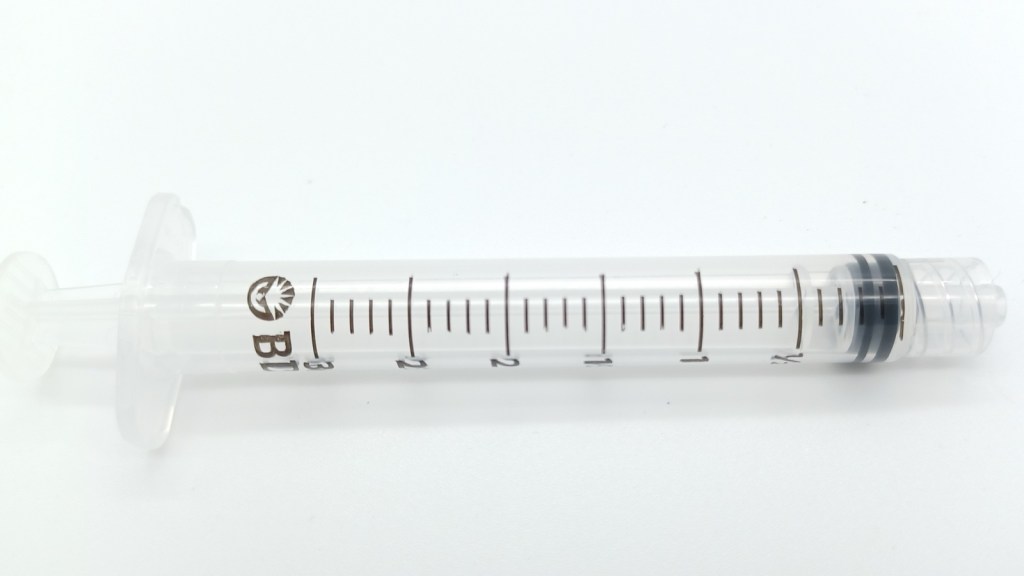
The second hazard is measurement. Approved semaglutide comes in a pre-filled pen dosed in milligrams. Compounded semaglutide often arrives as a vial and a syringe, with instructions written in units. In the reports the FDA received, people drew up five to 20 times the dose they meant to take. Prescribers made the mirror-image mistake, ordering 25 units when they meant 5, or 20 units when they meant 2 (FDA). Reported effects included vomiting, belly pain, fainting, dehydration, an inflamed pancreas and gallstones. Some people needed hospital care.
A poison control center published three of these cases in detail. Two patients gave themselves ten times the dose they intended. One had been handed a vial and syringes with no counseling at all. Another was dosing in milliliters and units rather than milligrams (Case series). Three cases cannot tell you how often this happens, but they do show how it happens.
Microdosers are the most exposed to that hazard. Drawing a small custom amount out of a vial is the whole method.
The third hazard is the ingredient. Some compounders have used salt forms called semaglutide sodium and semaglutide acetate. The FDA states plainly that these are different active ingredients from the ones in the approved drugs. It adds that it knows of no lawful basis for using them in compounding (FDA). Some products also add vitamin B-12, B-6, L-carnitine or NAD. The agency says the safety of those mixtures has not been established (FDA).
The reports keep coming. By 31 May 2026 the FDA had received 990 reports of harm tied to compounded semaglutide, and more than 730 tied to compounded tirzepatide. Many pharmacies are not required to report at all, so the real number is higher (FDA).
The same database offers some context. Across all of it, administration problems make up 63 in every 100 GLP-1 reports, against 39 in every 100 insulin reports. Those reports began climbing in late 2022, as the shortage spread. The authors caution that rising numbers may simply reflect rising use (Analysis).
Low Doses Do Have a Place
Every GLP-1 label starts low on purpose. Wegovy begins at 0.25 mg once a week and steps up every four weeks. The label gives the reason in plain words: to reduce the risk of gut side effects (Label). Those effects are common early on. In the adult weight-loss trials, severe gut reactions hit about 4 in every 100 people on the drug, against about 1 in every 100 on a dummy shot. Most came while the dose was still climbing (Label).
The label also lets people stay lower for good. Maintenance is either 2.4 mg or 1.7 mg a week. Prescribers are told to weigh how well a patient responds and how well they tolerate the drug (Label). In the big heart trial, at two years, 77 in every 100 patients were on 2.4 mg, 7 in every 100 on 1.7 mg, and 17 in every 100 on something lower (Label).
So staying low is normal. Plenty of people do well there, and nobody should be talked out of it.
The difference is what you are buying, and why. A prescribed low dose is approved product, used for an approved purpose, with a clinician watching. The trials measured the outcome it aims at. A microdose is usually a compounded fraction, bought for an outcome nobody has measured. The same word covers both, but they are different practices.
Frequently Asked Questions
Does GLP-1 microdosing work for longevity?
Nobody knows, because nobody has tested it. A registry search turns up a single study of microdosed GLP-1 for health and longevity, and it has posted no results (Registry). The longevity-adjacent findings people quote, on heart events and inflammation, all come from full doses (Trial). Untested does not mean unsafe. It also gives you no reason to expect a benefit.
Is a quarter dose of semaglutide enough to lower inflammation?
No study has measured that. The inflammation drop people quote was measured at 2.4 mg a week, and it tracked weight loss more closely than anything else (Trial). A dose picked to avoid weight loss may not move the marker much. It might help a little, but nobody has shown that yet.
Is compounded semaglutide the same as Ozempic or Wegovy?
Not necessarily. Compounded products are mixed by a pharmacy, and they are not the products used in the trials. Some have used salt forms that the FDA says are different active ingredients from the approved drug (FDA). Strength and packaging vary too, and that is where the measuring errors start (FDA).
Can I stay on a low GLP-1 dose long term?
That is a question for your prescriber, and the answer is often yes. The Wegovy label allows 1.7 mg a week as a lasting dose, not only a step on the way up (Label). In the big heart trial, about 1 in 4 patients sat below the top dose at two years (Label). Staying low with a clinician is a different thing from microdosing on your own.
Key Takeaways
- No finished trial has tested a microdose for longevity. The only registered study is early phase, run by a company that sells the product, and has posted no results (Registry).
- Both drugs did more at higher doses. More semaglutide meant more weight lost, from about 6% at the smallest dose to about 14% at the largest (Trial).
- Head-to-head tests agree. Inside one trial 2.4 mg beat 1.0 mg, and a later trial saw 7.2 mg beat 2.4 mg (Trial).
- The inflammation and heart results came from full doses. The inflammation marker fell most where weight fell most (Trial).
- The documented harm sits in the supply. Compounded products draw more reports of preparation errors and contamination than approved ones do (Analysis).
- Starting low with a clinician is not microdosing. The label builds a slow climb in on purpose, to spare your gut (Label).
What to Ask Before You Start
If you are weighing this up, three questions will tell you most of what you need.
First: what exactly is in the vial, and who made it? Ask for the ingredient name and the name of the pharmacy. If the answer is semaglutide sodium or semaglutide acetate, the FDA says that is a different ingredient from the approved drug (FDA).
Second: what is my dose in milligrams, and how do I measure it? Milligrams, not units. Units mean different amounts at different strengths, and that confusion has sent people to hospital (FDA).
Third: which trial measured the outcome you are promising me? For weight loss at full doses, there are several good answers (Trial). For longevity at a quarter dose, there is no answer yet.
A low dose may turn out to be a reasonable idea. Today it is an untested one, bought mostly through a supply chain that keeps showing up in safety reports. Ask those three questions, and keep your own notes while the trials catch up. The evidence here is still being built, and it is worth watching closely.
This article is for educational purposes and is not medical advice. Talk to a qualified clinician before changing your health regimen.


Leave a comment