In Stanford’s 17-week randomized trial, the fermented foods gut microbiome effect was real but narrow: 36 healthy adults working up to about six servings a day steadily raised gut microbial diversity and saw 19 of 93 measured blood inflammatory proteins fall, including IL-6, while a high-fiber arm eating 45 grams a day held diversity flat (Trial). That is the cleanest experiment in this literature so far. It is also one small, single-center study: 18 people per arm, no true control group, and a pre-registered primary outcome that moved in neither arm.
Fermented Foods and Your Gut Microbiome
Start with the definition, because marketing has blurred it.
An expert panel from the International Scientific Association for Probiotics and Prebiotics defines fermented foods as “foods made through desired microbial growth and enzymatic conversions of food components” (Consensus). That is a manufacturing description, not a health claim, and it promises nothing about a live microbe reaching your gut.
The same panel drew the line the rest of this article depends on: “the terms ‘fermented food’ and ‘probiotics’ cannot be used interchangeably” (Consensus). A probiotic is “live microorganisms which when administered in adequate amounts confer a health benefit on the host” (Consensus), and earning that word takes a strain defined down to its genome, proven safety, a strain-specific benefit shown in a well-controlled human study, and enough of that strain in the product through shelf life (Consensus). A jar of sauerkraut meets none of those, which is why the panel expects most commercial fermented foods do not qualify.
Hold onto a second split. Whether a food was fermented and whether it still contains live cultures are different questions: the definition explicitly “includes foods and beverages that are produced by fermentation but might not have living microorganisms at the time of consumption” (Consensus). That decides what is worth buying.
Inside the Stanford Trial
The study is the FeFiFo trial, run by Stanford’s Gardner and Sonnenburg labs and registered as NCT03275662 before it began, with one primary outcome and microbiota composition listed only as secondary (Registration). Thirty-nine people enrolled, 37 were randomized, and 18 per arm reached the final analysis (Trial). The 17 weeks split into a 3-week baseline, a 4-week ramp, 6 weeks of maintenance at full dose, and a 4-week free-choice phase.
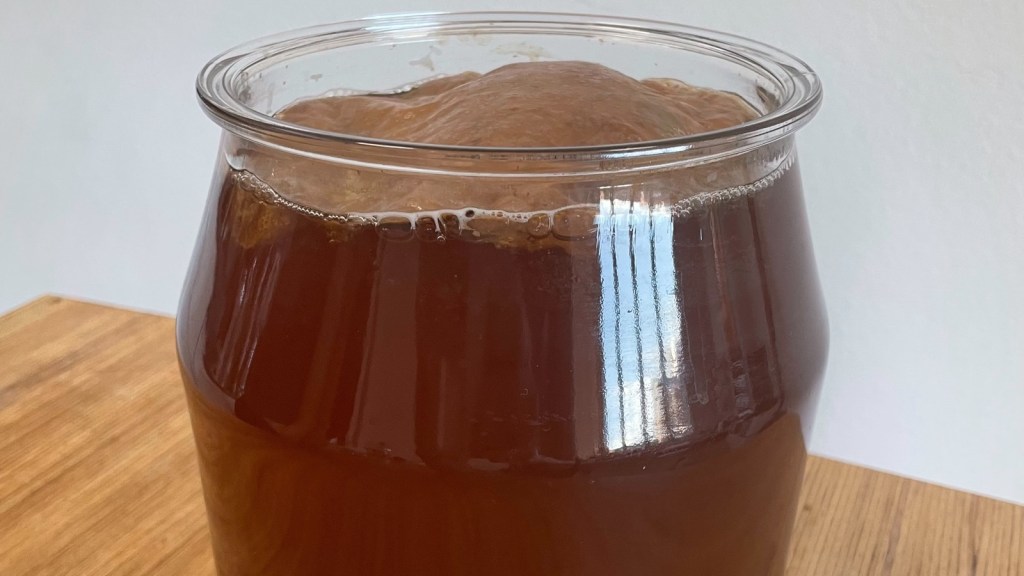
The menu was ordinary supermarket food: yogurt, kefir, fermented cottage cheese, kimchi and other fermented vegetables, vegetable brine drinks, and kombucha. This was no token serving: intake climbed from 0.4 servings a day at baseline to 6.3 by the end of maintenance, and the other arm was pushed just as hard, from 21.5 grams of fiber a day to 45.1 (Trial). Both diets were large and well adhered to, which makes the contrast interpretable.
Measurement was deep: stool sequencing plus metagenomics, 93 blood inflammatory serum proteins, and cell-type-specific immune signaling. One registration detail sets expectations, though: the pre-registered primary outcome was a composite called the Cytokine Response Score, scored from baseline to week 10 (Registration).
Diversity Climbed, Inflammation Fell
Alpha diversity, the measure of how many microbial types share a gut, rose in the fermented arm on all three metrics used: observed sequence variants (p = 2.3e-3), Shannon diversity (p = 1.4e-3) and phylogenetic diversity (Trial). Worth flagging: the paper reports direction and statistics but no percentage gain, so any “X% more diverse microbiome” figure you see is invented.
The more interesting part came after the diet stopped being enforced: diversity kept climbing through the free-choice phase, when intake had dropped well below the maintenance peak. The authors read that slow, steady rise as remodeling that takes time, “consistent with the relative recalcitrance of the human microbiota to rapid diet-induced remodeling” (Trial). The new diversity was not simply the yogurt’s own bacteria passing through.
On the immune side, a paired analysis at a false discovery rate of 0.05 or below found 19 of the 93 inflammatory serum proteins decreased over the intervention, with IL-6, IL-10 and IL-12b named in the paper (Trial). IL-6 is one of the most-used markers of chronic inflammation. Read it as a broad quieting of immune signaling rather than a tidy anti-inflammatory sweep: IL-10 is usually classed as anti-inflammatory and it fell too. Cells looked calmer as well, with reduced activation in 14 of 60 signaling responses across four cell types (Trial).
The sharpest contrast in the paper is that none of those 19 proteins changed in the high-fiber arm. An independent commentary published alongside it credited both diets with “the potential to increase microbial diversity and reduce markers of immune-mediated inflammation”, which is generous to an arm the trial found flat (Commentary).
Why Fiber Did Not Budge
This is where most coverage goes wrong.
The fiber arm did not fail to comply. They more than doubled intake to 45.1 grams a day, roughly twice what most adults manage. Their microbiomes did change, just not in a way diversity captures: metagenomics showed 11 carbohydrate-active enzyme families rising, and of the 10 with unambiguous substrate predictions, all 10 were predicted to break down plant cell walls (Trial). The community retooled itself to digest what it was fed. What stayed flat was cohort-wide alpha diversity.
Responses were not uniform either. High-fiber eaters split into three immune trajectories, one with rising inflammatory signaling and two with falling, and the split tracked where people started: the lowest-inflammation cluster had significantly higher baseline diversity (p = 0.037) (Trial). Fiber may need a starting ecosystem able to use it, or simply longer than 10 weeks.
A null on one short-window microbiome endpoint does not touch fiber’s long-term outcome data, which is among the strongest in nutrition. A WHO-commissioned Lancet review found that, across its pooled cohort data, the highest fiber consumers had 15% lower all-cause mortality (RR 0.85, 95% CI 0.79 to 0.91) and 16% lower colorectal cancer incidence, with the benefit greatest at 25 to 29 grams a day (Meta-analysis). A separate dose-response pooling of 14 cohorts and 1.37 million people linked each extra 10 grams a day to 10% lower all-cause mortality, though that curve was not a straight line (Meta-analysis). We covered dietary fiber and gut health separately. These are not competitors: one trial measured one endpoint over 10 weeks. Fruit fiber counts too, and the evidence on kiwifruit is strongest for staying regular.
Promising, Not Proven
The limitations stack: 18 people per arm, healthy adults only, one center, about 10 weeks of core intervention, and no true control group, since every comparison sets one active diet against the other. Most importantly, the pre-registered primary outcome “was not significant for either arm of the study” (Trial). The headline findings are secondary and exploratory: not false, but not what the trial set out to prove.
Corroboration is thinner than the coverage suggests. A trial in 24 obese Korean women found split, modest results over 8 weeks and no significant clinical differences between fresh and fermented kimchi (Trial, Scoping review). A crossover trial in 22 overweight adults did favour fermented kimchi over fresh on blood pressure, body fat, fasting glucose and cholesterol (Trial), but that compares fermented against fresh, not kimchi against nothing.
The one direct replication attempt is sobering. A Dutch citizen-science trial randomized 147 healthy adults to high-fiber, high-fermented-food or a control group for 8 weeks, with a pre-specified hypothesis that fermented foods would raise microbial diversity (Protocol). Its fermented arm matched Stanford’s dose. Diversity did rise within that arm, but it rose within the control group too, leaving no difference between them, and several blood immune markers including T-cell activation markers went up rather than down (Preprint). That is an un-peer-reviewed preprint, but it is four times Stanford’s size with its hypothesis registered in advance.
Longer-horizon data on fermented foods is observational: across 22 cohorts and 43,118 diabetes cases, eating about 80 grams of yogurt a day was associated with 14% lower type 2 diabetes risk than eating none (Meta-analysis). The same analysis flagged a similar curve for ice cream, a reminder of the confounding in food-specific cohort data. The honest verdict: a real, biologically coherent signal on a surrogate endpoint, not yet cleanly replicated, with no hard outcome data behind it.
Finding Real Live Cultures
Here is the gap almost nobody closes: several foods people buy specifically to “eat more fermented” deliver no live microbes at all.
The consensus panel sorted products three ways (Consensus). Live microbes at the point of eating: yogurt, kefir, most cheeses, miso, natto, tempeh, non-heated fermented vegetables, most kombuchas. Fermented but no live microbes: bread, because baking kills the culture, which takes out sourdough; heat-treated or pasteurized fermented vegetables, soy sauce and vinegar; wine and most beer. Not fermented at all: vegetables pickled in brine or vinegar, which is nearly every shelf-stable jar of pickles.
The retail counts back this up. Cultured dairy runs highest, up to 10^9 lactic acid bacteria per gram: yogurt spans under 10^4 to 10^9 CFU/g, kefir 10^5 to 10^9, kimchi generally 10^7 to 10^8, sauerkraut 10^3 to 10^8 (Review). That enormous sauerkraut range is processing showing up in the data: shelf-stable versions are heated. Researchers now bin foods as high (over 10^7 CFU/g), medium or low, and in national US dietary recalls only about 26% of adults ate any high-tier food on a given day, mostly fermented dairy (Analysis).
Four rules follow. Shop the refrigerated aisle, not the shelf. Look for “live and active cultures”, the phrase the panel recommends for undefined-culture foods not processed to kill them (Consensus). Put back anything reading “pasteurized after fermentation” or “heat treated”. And take the easy wins first: plain yogurt and kefir are the highest-count, lowest-effort options.
On dose, be realistic. Stanford’s participants took four full weeks to ramp to six servings a day. A serving is small: a cup of yogurt, a glass of kefir, a few forkfuls of kimchi.
Who Should Be Careful
Fermented foods are among the highest dietary sources of histamine. A 2021 review pooling published analytical data put sauerkraut at an average 43.74 mg/kg and fermented soy products at 73.95 mg/kg, with individual soy samples far higher (Review). Histamine intolerance, driven by low intestinal diamine oxidase activity, is estimated to affect 1% to 3% of people and shows up mostly in the gut, with abdominal distension reported by 92% of those surveyed in one Austrian series (Review). That overlaps with the mild bloating many people get while ramping up, so if discomfort persists past a couple of weeks, histamine is a plausible explanation. Blanket avoidance is still likely overkill: only 32% of the foods excluded by published low-histamine diets could be justified by their measured content (Review).
Sodium is the other real issue, and it is about salt, not fermentation. Across 26 prospective cohorts covering nearly 5 million people, the highest salt intakes were associated with 25% higher gastric cancer risk (RR 1.25, 95% CI 1.10 to 1.41) and high pickled-food intake with 28% higher risk (Meta-analysis). The dose-response is modest, RR 1.15 per extra 40 grams a day of pickled vegetables, and in two large Korean cohorts where that intake is dominated by kimchi the association was not clear (Meta-analysis). A 2025 commentary in Preventive Medicine Reports puts it well: “current evidence does not show that kimchi causes gastric cancer”, while high sodium “remains an important, modifiable concern”, with the authors estimating a side-dish habit adds roughly 500 mg of sodium a day (Commentary).
Live microbes are not risk-free for everyone. A systematic review collected 93 published cases of invasive infection after live-culture products were eaten; 63.5% of those patients had central venous access and 15% were on immunosuppressive drugs (Systematic review). Case reports carry no denominator, so that describes who was affected, not how often it happens. If you are immunocompromised, pregnant or on immunosuppressants, ask a clinician first.
Frequently Asked Questions
Do fermented foods really change your gut microbiome?
In one 17-week randomized trial, yes. The fermented foods gut microbiome effect showed up as a significant rise in diversity across all three metrics measured, sustained even after intake dropped in the free-choice phase (Trial). But that is a single small study, and a larger 2025 trial found no diversity difference between its fermented arm and its control group (Preprint). Treat it as a promising signal, not a settled fact.
How many servings of fermented food do I need a day?
Nobody knows the minimum effective dose, because it has not been tested. Stanford’s participants reached an average of 6.3 servings a day at peak, after a deliberate four-week ramp from a baseline of 0.4 (Trial). Six a day is a lot for most people, so starting at one and building slowly is the practical read.
Are fermented foods better than probiotic supplements?
They are different products with different evidence, not better and worse versions of one thing. Expert consensus states that the two terms “cannot be used interchangeably”: a probiotic is a defined strain at a defined dose with a demonstrated benefit, while most commercial fermented foods carry undefined mixed cultures at variable levels (Consensus).
Does sourdough bread or store-bought sauerkraut count?
Sourdough delivers no live cultures, because baking kills the fermentation microbes, and most shelf-stable sauerkraut is heat treated after fermenting (Consensus). Measured counts show it plainly: sauerkraut spans 10^3 to 10^8 bacteria per gram depending on processing (Review). Buy refrigerated and check for “live and active cultures”.
Is kombucha worth drinking for gut health?
Most kombuchas do contain live microorganisms, at roughly 10^6 to 10^7 acetic acid bacteria per millilitre, though some are heat treated (Review). It was on the Stanford trial’s menu, so it counts, but it is not a standout and sweetened versions carry sugar.
Key Takeaways
- Diversity climbed for 17 weeks. Diversity rose on all three metrics in the fermented arm and kept rising through the free-choice phase, which the authors attribute to slow ecosystem remodeling rather than passing bacteria (Trial).
- Nineteen inflammatory proteins fell. Of 93 serum proteins, 19 fell in the fermented arm including IL-6, alongside calmer signaling across four immune cell types; none of the 19 shifted on the fiber diet (Trial).
- The fiber null is narrow, not damning. Intake more than doubled and the microbiome retooled with 11 extra plant-degrading enzyme families, yet diversity stayed flat (Trial). Cohort data still links the highest fiber intakes to 15% lower all-cause mortality (Meta-analysis).
- One small trial, primary outcome unmet. Eighteen people per arm, healthy adults, one center, no true control, and the pre-registered cytokine score did not move (Trial). A larger 2025 trial has not reproduced the contrast (Preprint).
- Buy live, not just fermented. Sourdough, vinegar pickles and pasteurized sauerkraut deliver no live cultures, so shop refrigerated and look for “live and active cultures” (Consensus).
- Go slow if you are salt- or histamine-sensitive. Kimchi and sauerkraut carry a genuine sodium load (Meta-analysis), and fermented foods are among the highest dietary histamine sources (Review).
Start With One Live Jar
Fermented foods are cheap, ancient and low-risk for most people, and unlike most things marketed as biohacks they have a real randomized trial behind them rather than a mechanism story.
They also have exactly one good trial, in 36 people, on a surrogate endpoint, which a bigger study has not yet reproduced. Both things are true at once, and the reasonable response is neither a shopping spree nor a shrug: buy one genuinely live thing, a tub of plain kefir or a refrigerated jar of kimchi, eat a serving a day, and add a second when that feels normal.
The evidence here is real but early, and the honest version is more useful to you than the hyped one.
This article is for educational purposes and is not medical advice. Talk to a qualified clinician before changing your health regimen.


Leave a Reply