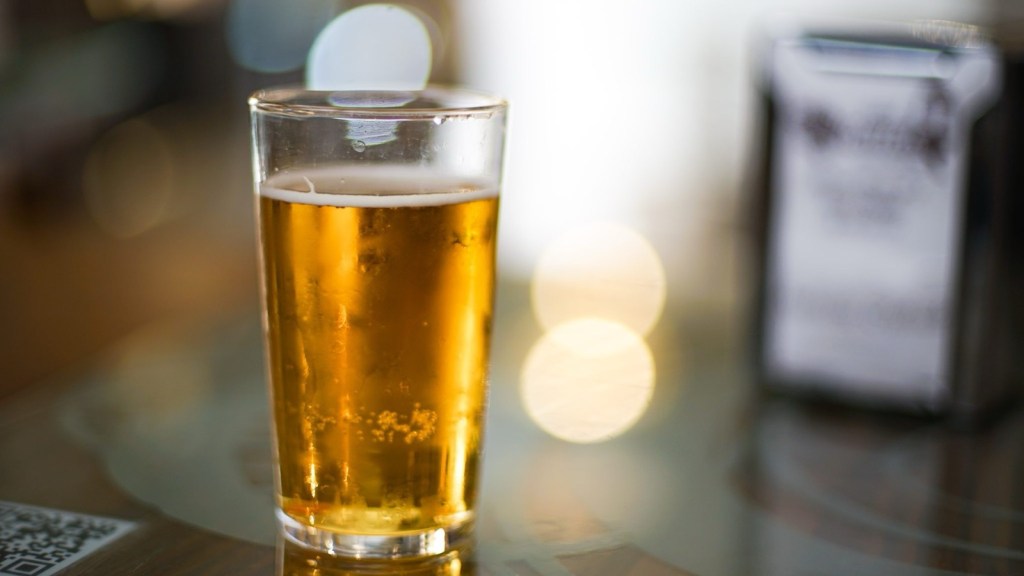
Ozempic may reduce heavy drinking and, in some tests, alcohol cravings, but the effect is modest and the trials so far are short. The biggest one enrolled 108 adults with alcohol use disorder and obesity. For 26 weeks, they got weekly semaglutide, the drug in Ozempic, or a placebo (Trial). Heavy drinking days fell by about 41 percentage points on the drug and 26 on placebo.
Ozempic is not approved for alcohol use disorder in the US or the EU, so this use is still experimental (Review; EPAR).
What Ozempic Does in the Brain
Ozempic is a brand name for semaglutide, a GLP-1 drug. GLP-1 is a gut hormone your body releases after you eat. It helps control blood sugar and tells your brain you have had enough. Semaglutide copies that hormone but lasts much longer, so it can be taken once a week. Wegovy is a higher-dose version sold for weight management (EPAR). There is also a daily pill.
Why would an appetite drug change drinking? In rats, a tagged version of semaglutide turned up in the nucleus accumbens, a hub of the brain’s reward system (Study). That check used just four animals.
The reward system runs largely on dopamine, a chemical messenger tied to wanting and pleasure. The idea is that a drug that turns down the pull of food might do the same for alcohol.
Animal studies back this up. In a 2023 study, semaglutide cut how much alcohol both male and female rats drank (Study). Rats that get alcohol back after a break tend to drink more than before. Researchers use this as a model of relapse. Semaglutide blocked that rebound in males. Females had a weaker rebound to begin with, and the drug made it smaller.
In male mice, the drug also blunted the dopamine rise that alcohol sets off in the reward hub (Study). Most of these experiments have not been repeated, and animal results often fail to carry over to people.
The first look inside human brains came from an older GLP-1 drug, exenatide. In a 26-week trial, 127 people seeking help for alcohol use disorder got talk therapy. Each also got a weekly shot of either exenatide or a placebo (Trial). Both groups drank much less, and the drug added no clear extra drop in heavy drinking days.
Brain scans in about 33 of them did pick up a change. When shown reminders of alcohol, people on exenatide had weaker responses in the brain’s reward area. A second scan, in just 16 people, found less of a protein that clears dopamine there (Trial). The drug seemed to quiet the brain’s response to alcohol, but that did not turn into a bigger drop in drinking.
The First Big Trial
The strongest test so far was published in The Lancet in 2026 (Trial). Researchers in Copenhagen enrolled 108 adults, 53 women and 55 men, who wanted help with their drinking. All had moderate to severe alcohol use disorder, and all had obesity.
A coin flip decided who got a weekly 2.4 mg shot of semaglutide and who got a dummy shot, the placebo. Neither the volunteers nor the staff knew who had which. Everyone also got cognitive behavioral therapy (CBT), a structured talk therapy that teaches practical skills for changing a habit.
The main measure was heavy drinking days, the share of days a person spent drinking heavily. On semaglutide, that share fell by about 41 percentage points from where it started. On placebo, it fell by about 26 points over the same 26 weeks (Trial).
Percentage points are a simple subtraction. Going from heavy drinking on 50% of days to 40% is a 10-point drop.
The placebo group improved a lot too, likely thanks to the therapy and the support of being in a trial. So the drug added about 14 points on top of what therapy and the placebo achieved. That gap was large enough that chance is an unlikely explanation. That 14-point gap is the drug’s own effect, much smaller than the 41-point headline.
Of the 108 who started, 88 finished the full treatment, or 81% (Trial). Side effects were mostly mild to moderate stomach problems that did not last long. They were more common on semaglutide.
The Novo Nordisk Foundation helped fund the trial. Three authors report ties to Novo Nordisk, the company that makes Ozempic. The trial also ran at a single clinic, so other centers still need to repeat it.
Does Ozempic Reduce Alcohol Cravings?
Two smaller trials looked closely at craving, and their results are mixed. The first, published in 2025, enrolled 48 adults with alcohol use disorder who were not seeking treatment (Trial). For nine weeks they got low weekly doses of semaglutide or a placebo. The dose started at 0.25 mg and could reach 1 mg only in the final week.
The main test came at the end. In a lab, people were offered alcohol and could choose how much to drink. People on semaglutide drank less there, and their breath alcohol peaked lower. In daily life, they had fewer drinks on the days they drank, and their weekly craving scores fell (Trial).
But they drank on just as many days as the placebo group. Their average drinks per day, the trial’s planned everyday measure, did not clearly change. Heavy drinking days did tend to fall more over time on the drug.
The authors call the craving result exploratory, which means it is a hint that needs testing in a new trial. The same goes for drinks on drinking days and heavy drinking days (Trial).
The second trial, from 2026, tested the daily pill in 50 adults who were seeking treatment (Trial). For eight weeks they took 3 mg, then 7 mg, or a placebo. Its main question was about craving: how strong was the urge to drink after reminders of alcohol in a lab?
On that main measure, semaglutide made no clear difference (Trial). The authors note that a single question may not capture craving well. Other measures did move. A longer craving questionnaire in the lab came out lower on the drug, and so did everyday craving, tracked week by week.
In the last four weeks, people on semaglutide also had fewer heavy drinking days and fewer drinks on the days they drank (Trial). Again, the number of drinking days did not change, and total drinks per day did not clearly drop. Of the 50 people, 47 finished. All three who left were on semaglutide, and one had an allergic reaction judged probably due to the drug.
The two craving trials share a pattern. People on semaglutide drank on as many days as the placebo group, but they drank less once they started. And in all three semaglutide trials, heavy drinking days fell more on the drug than on placebo.
Semaglutide may help people drink less when they do drink, and that may matter more than a craving score. Whether it reliably quiets craving itself is still an open question.
Who Was Actually Studied
The trials were short and small. They ran 8 to 26 weeks and enrolled 48 to 127 people each. None ran long enough to show whether people keep drinking less for years, or whether the effect lasts after stopping.
Body weight may matter a lot. The Lancet trial enrolled only people with obesity. In the exenatide trial, a look added after the fact found that only the 30 people with obesity drank less on the drug (Study). Obesity there meant a body mass index (BMI), a weight-for-height score, over 30.
In the 52 lean people, with a BMI under 25, heavy drinking days went up on exenatide (Study). The authors call these results preliminary.
Health records add a different kind of evidence. A Swedish study followed about 228,000 people with alcohol use disorder (Study). The typical person was tracked for almost nine years. The study compared each person’s time on a GLP-1 drug with their own time off it.
Time on semaglutide was linked to about 36% lower risk of a hospital stay for alcohol (Study). For liraglutide, an older GLP-1 drug, it was about 28%.
But only 6,276 of those people ever used a GLP-1 drug, and many of them had diabetes or obesity (Study). The study counted hospital stays, not craving or drinks. The authors stress that it shows a link, not proof of cause and effect, and they call for trials.
Two 2025 reviews pooled the evidence. One combined three small trials with six studies of health records (Meta-analysis). In the pooled trials, the drop in drinking and craving was small enough that chance could explain it. In the records, GLP-1 use was linked to about a third lower risk of alcohol-related events.
That review rated the trial evidence as low certainty, meaning new studies could easily change the picture (Meta-analysis). Its authors see the health-record results as a reason for more research, not as proof.
A second review of 11 studies, mostly health records, reached the same split verdict (Meta-analysis). Pooled across studies, drinking showed no clear change. But GLP-1 use was linked to fewer alcohol-related events and fewer liver problems.
Neither review included the two 2026 trials. Even counting them, the trial evidence rests on a handful of small, short studies.
Drinking While on Ozempic
A small 2025 pilot study gave 20 adults with obesity a matched dose of vodka, served as three drinks over an hour (Study). Ten were already on a GLP-1 drug, mostly semaglutide, and ten were not. In the drug group, breath alcohol rose more slowly at first. At 20 minutes, it was under half the other group’s level. By 35 to 60 minutes, the two groups no longer differed.
People on the drugs also said they felt less drunk early in the session, though the gap was small and uncertain (Study). Nausea did not explain it. Their urge to drink was lower across the session too. The authors suspect the drugs slow how fast the stomach empties, but they did not measure that.
Our reading, not the paper’s: breath alcohol caught up, so a slower start does not mean less alcohol in your body overall. Whatever you take, do not drive after drinking.
The pilot was tiny, and nobody was assigned by coin flip. People were already on the drugs when they joined. All were White, and only 4 of the 20 were men.
The Ozempic label has no specific warning about alcohol (Label). Three of its warnings still matter for anyone who drinks.
The first is pancreatitis, a painful inflammation of the pancreas. The label reports cases with GLP-1 drugs, some of them fatal. In its diabetes trials, pancreatitis struck about 3 in every 1,000 people a year on Ozempic, against 2 on comparison drugs (Label). Heavy drinking is a well-known cause of pancreatitis on its own. The warning sign is severe belly pain that may spread to the back. It needs prompt medical care.
The second is low blood sugar. Ozempic taken with insulin or a sulfonylurea, an older type of diabetes pill, can push blood sugar too low. Sometimes the drop is severe. With a sulfonylurea, about 1 in every 100 people had a severe low in the trials (Label). If you use either, ask your prescriber how alcohol fits in.
The third is stomach trouble. In the diabetes trials, about a third of people on Ozempic had stomach side effects, against about 15 in 100 on placebo. Nausea hit 16 to 20 in every 100, mostly while the dose was going up (Label).
Where the drug comes from may be the bigger risk. Compounded drugs are versions mixed by a pharmacy rather than made by the drug’s maker. The FDA does not review them for safety, effectiveness or quality before they are sold (FDA). By the end of May 2026, it had 990 reports of harm tied to compounded semaglutide, and the true count is likely higher. The FDA also knows of fake Ozempic sold in the US. A fake could hold the wrong ingredient, the wrong amount or none at all.
Dosing mistakes add to the risk. The FDA has reports of people injecting 5 to 20 times the intended dose from compounded vials. Often they had mixed up milligrams, milliliters and units (FDA). Reported problems included vomiting, fainting, pancreatitis and gallstones. Some people needed hospital care.
Treatments That Already Exist
Alcohol use disorder already has medicines made for it. In the US, three are approved: acamprosate, disulfiram and naltrexone, which comes as a pill or a long-acting shot (NIAAA). In the EU, a fourth, nalmefene, is also approved (Meta-analysis).
A doctor can help pick one that fits a person’s health and goals. Therapy and peer support count as treatment too.
In the two biggest GLP-1 trials, everyone also got talk therapy, so the drugs were tested as an add-on. None of these trials compared a GLP-1 drug with naltrexone, acamprosate or disulfiram, so there is no way to rank them yet.
Cutting back is worth doing with or without a new drug. Our look at the alcohol J-curve explains why the old idea of a protective daily drink has largely fallen apart.
If drinking feels out of control, talk to a doctor or call a helpline. In the US, the SAMHSA National Helpline (1-800-662-4357) is free, confidential and open around the clock.
Frequently Asked Questions
Is Ozempic Approved for Alcoholism?
No. Neither Ozempic nor any other GLP-1 drug is approved in the US for alcohol use disorder, so that use is still experimental (Review). In the EU, Ozempic is authorized only for type 2 diabetes (EPAR), and Wegovy only for weight management (EPAR).
Does Ozempic Affect Alcohol Tolerance?
It may change how alcohol hits you, at least at first. In a pilot of 20 adults with obesity, breath alcohol rose more slowly in people on GLP-1 drugs. They also felt somewhat less drunk early on (Study). Levels caught up within the hour, so a slow start does not mean less alcohol overall. The study was tiny, and nobody was assigned by coin flip.
Is Ozempic Safe With Alcohol?
The label has no specific alcohol warning. It does warn about pancreatitis, low blood sugar with insulin or sulfonylureas, and stomach side effects (Label). A 9-week trial in 48 people on low doses found no harmful interactions with alcohol (Trial). Ask your prescriber how much drinking is reasonable for you.
Does Ozempic Cure Alcoholism?
No. The biggest trial gave 108 adults with alcohol use disorder and obesity semaglutide or a placebo, on top of talk therapy (Trial). Over 26 weeks, the drug cut heavy drinking days by about 14 percentage points more than placebo did. Pooled trial evidence is still rated low certainty (Meta-analysis). No trial has run long enough to show whether any benefit lasts.
Key Takeaways
- A real but modest effect: In the biggest trial, heavy drinking days fell about 41 percentage points on semaglutide and 26 on placebo (Trial). The trial ran 26 weeks.
- Craving results are mixed: One trial saw weekly craving fall (Trial). Another found no change on its main lab craving test, but less everyday craving (Trial).
- Mostly people with obesity: The biggest trial enrolled only people with obesity. Exenatide seemed to help only that group (Study).
- Known risks still apply: The label warns about pancreatitis, low blood sugar with some diabetes drugs and stomach effects (Label). Fake and compounded versions add quality and dosing risks (FDA).
- Not approved, but options exist: In the US, no GLP-1 drug is approved for alcohol use disorder, so this use is experimental (Review). Naltrexone, acamprosate and disulfiram already are (NIAAA).
Where This Leaves You
The trials so far show a modest effect. They were short, and most people in them had obesity. Researchers say larger trials are still needed, including in people who have alcohol use disorder without obesity or diabetes (Review).
If you want to drink less, you do not have to wait for those results. Talk to a clinician about the options that exist today. If you already take Ozempic, tell your prescriber how much you drink so you can weigh the risks together.
The early signal is real and worth watching, but it is not yet a treatment you can count on.
This article is for educational purposes and is not medical advice. Talk to a qualified clinician before changing your health regimen.


Leave a Reply