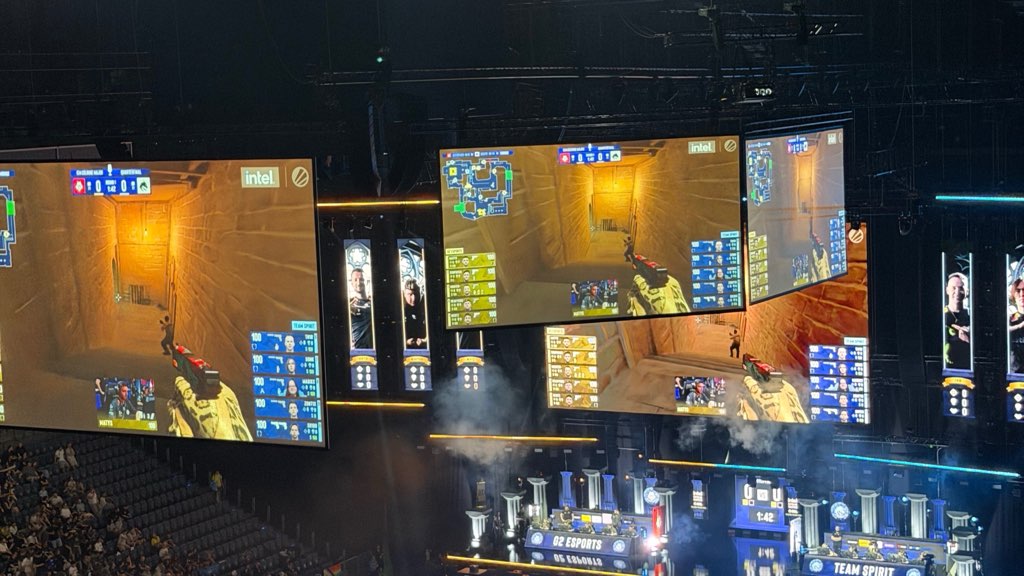
Sit perfectly still, hands frozen on a keyboard, and your body can still behave as if you are mid-sprint. You will often hear competitive gaming described in vivid terms — heart rates climbing toward 160–180 bpm, cortisol spikes likened to a race-car driver’s — and while those exact figures are popular lore more than settled science, the physiology underneath them is real and measurable. That is the heart of esports biology: what high-stakes gaming actually does to your heart, hormones, sleep, and brain. The headline is uncomfortable for anyone who thinks gaming is “just sitting”: parked under a headset, you are running a genuine stress response and a heavy cognitive workload at the same time. The upside? Once you can see the load, you can train for it. Here is the science — and here are the fixes.
What Esports Biology Reveals
Competitive gaming looks sedentary, and metabolically it mostly is — but esports biology treats it as something stranger: a sustained psycho-physiological stressor stacked on top of an elite attention task. Your large muscles barely move, yet your sympathetic nervous system, your stress hormones, and your visual-attention circuitry all run hot for hours. That combination — low physical output, high autonomic and cognitive load — is exactly what makes serious gaming worth studying like a sport rather than dismissing like a hobby.
Four threads run through the rest of this guide: the acute stress surge during play, the sleep and circadian disruption that shadows late-night gaming, the two-sided brain story (sharpened attention at one end, addiction-like changes at the other), and the biohacks that turn all of it into an edge.
One honest caveat up front. The most-cited esports physiology studies are small and observational — the flagship stress study followed 22 players, the flagship sleep study 27. They are suggestive, not definitive. So read every esports-specific number here as a strong hint about direction, not a fixed constant — and notice how often the better-evidenced general science (on light, caffeine, hydration, and the gamer brain) lines up with what those small samples are pointing at. When weak and strong evidence agree, you can act on it.
The Acute Stress Surge
Here is the finding that reframes “just sitting.” In a 2023 field study, 22 recreational male CS:GO players each played two tournament matches while researchers tracked their physiology in real time. The verdict was unambiguous: heart rate, systolic blood pressure, and blood cortisol all rose significantly during competition, while DFA-alpha1 — a nonlinear heart-rate-variability index where a lower number signals more sympathetic “fight-or-flight” drive and less vagal calm — dropped (Study). In plain terms, the players’ bodies shifted toward stress mode and their HRV complexity collapsed, all while they sat nearly motionless.
Two details make the result more interesting, not less. Testosterone and blood lactate did not change — this was a neuroendocrine stress signature, not a metabolic one, which fits a body that is alarmed but not actually exercising. And the surge did not separate winners from losers: the physiology of competing was costly whether or not you won (Study). The body pays the entry fee regardless of the scoreboard, which means the goal is not to feel calm — it is to recover well from a load you cannot fully avoid.
Crucially, this is not an argument that all gaming is hard on the heart — context is everything. When the same kind of play is casual rather than competitive, the picture flips. In a separate cohort, 30 minutes of relaxed amateur CS:GO or FIFA actually lowered heart rate (roughly 82 to 74 bpm) and salivary cortisol, with no negative cardiovascular signal at all (Study). The stress surge is a feature of the tournament, the stakes, and the sustained focus — not the controller in your hand. That distinction is the first lever you can pull: not all screen time bills your nervous system equally.
Late Nights, Slower Reflexes
If the daytime story is acute stress, the nighttime story is chronic sleep debt. Tracked objectively over 56 days, 27 competitive CS:GO players slept a respectable-sounding 7 hours 12 minutes on average — but the timing and quality told a darker tale: a roughly 2:09 AM sleep onset, a 57-minute sleep-onset latency (the time it actually takes to fall asleep), and just 67.7% sleep efficiency, despite nearly 11 hours in bed (Study). They were spending the night fighting for sleep, not banking it.
And that sleep mattered for the game. In the same cohort, total sleep time correlated with weekly in-game performance at r = 0.55 — a moderate, very real link between more sleep and a better kill-to-death record — while a higher NREM respiration rate tracked with worse performance (r = –0.44) (Study). The practical read flips the usual hierarchy: for a competitor, sleep is not recovery overhead bolted onto practice — it sits inside the skill loop, quietly setting the ceiling on how much of each grind session actually sticks. The pattern holds at the top, too: a multi-national study of 17 professional esports athletes found a median 6.8-hour sleep, a 3:43 AM onset, and 47% scoring above the clinical insomnia cutoff (Study). Late, short, fragmented sleep is practically an occupational hazard.
Why so late and so broken? The screen itself is part of the problem. Reading on a light-emitting device for four hours before bed suppressed evening melatonin by about 55%, delayed the body’s natural melatonin onset by about an hour and a half, and lengthened sleep-onset latency — exactly the circadian phase delay you would engineer if you wanted to wreck a gamer’s sleep (Trial). Stack a 1 AM ranked grind, bright and adrenalizing, on top of that biology, and a 2 AM bedtime starts to look less like a choice and more like a forecast.
Two Faces of the Gamer Brain
Now the part that resists a simple verdict, because the gamer brain genuinely cuts both ways.
Start with the upside, which is well-earned. A large meta-analysis of action-video-game players found they outperform non-players on attention, perception, and spatial cognition by about half a standard deviation in cross-sectional comparisons (Hedges g ≈ 0.55), and — the harder test — randomized training studies showed a smaller but real causal effect of roughly a third of a standard deviation (g ≈ 0.34) (Meta-analysis). The strongest gains land in top-down attention and spatial skills: the very abilities competitive play hammers every match. The same analysis was refreshingly honest that published effects ran about 30% larger than the full literature — a textbook case of publication bias — but even discounted, the signal survives. Trained attention is the legitimate trophy of serious gaming.
The other face appears only at the far end of the spectrum, and it is worth taking seriously. Neuroimaging in internet gaming disorder (IGD) points to changes that rhyme with substance addiction: lower striatal dopamine D2-receptor and dopamine-transporter availability — a blunted dopamine reward system — alongside altered ventral-striatal volume and lower white-matter density in regions governing decision-making and inhibition, with the dopamine shifts described as similar in magnitude to drugs of abuse (Review). PET and structural work converges on the same fronto-striatal story: low striatal D2 availability, reduced prefrontal glucose metabolism, and thinning of the lateral orbitofrontal cortex that tracks with poorer cognitive-control performance (Review). A pooled meta-analysis confirms gray-matter loss across the anterior cingulate and frontal control regions, with cingulate shrinkage correlating with impulsivity at r = 0.725 (uncorrected) (Meta-analysis).
The essential framing: this is a spectrum, not a sentence. What defines the disorder is not the hours logged but the loss of control over them — play that continues despite real damage to sleep, mood, relationships, school, or work. A disciplined competitor grinding long but scheduled sessions is a different animal from someone whose play has quietly hijacked the rest of their life. Gaming disorder is a real but minority phenomenon — pooled global prevalence sits around 3% (and closer to 2% under stricter sampling) (Meta-analysis), and even that figure swings with the rulebook: DSM-5 criteria yield about 7.9% while the WHO’s stricter ICD-11 criteria yield about 3.0% (Meta-analysis). For the overwhelming majority of competitive players, the brain story is the attention upside. The addiction end is the tail risk you respect — and a reason to protect the prefrontal control circuitry with sleep and recovery — not the destiny you assume.
Biohacks for Competitive Gamers
Here is where the science becomes a training plan. Ranked roughly by how strong the evidence is, these are the levers worth pulling — each tied back to a mechanism above.
Protect sleep and tame evening light (strong). Since sleep tracks with performance (Study) and screens delay your clock (Trial), the highest-value move is defending the hour or two before bed: dim the room, drop screen brightness, and put a hard stop on late ranked sessions. One caveat keeps the advice honest — the gadget fix is weaker than the behavior fix. Pooled trials of evening blue-light reduction show only small, mixed sleep benefits (Meta-analysis), and a 2025 meta-analysis of randomized crossover RCTs found blue-light-blocking glasses produced no significant improvement in objectively measured sleep onset (a non-significant –4.86 minutes) (Meta-analysis). Translation: amber glasses are not magic — less light, earlier beats blocked light, late.
Time your caffeine (strong, and esports-specific). This is the rare hack tested directly on gamers. In a randomized crossover trial, 3 mg/kg of caffeine an hour before play improved elite FPS players’ shooting accuracy, kill ratio, and time-to-target, plus visual-search reaction time (Trial). A dose-response study went further: both 1 and 3 mg/kg sped psychomotor reaction time and improved aim-trainer accuracy versus a water control — with the low dose roughly as effective as the high one (Trial). The actionable nuance: a modest pre-match dose (and often the lower end is plenty) sharpens reflexes, but late-day caffeine collides head-on with the sleep you just worked to protect. Dose early, not at 9 PM.
Stay hydrated (moderate, contested). A meta-analysis of 33 studies found mild-to-moderate dehydration impairs cognition most where gamers live — attention took the biggest hit (ES = –0.52), with motor coordination and executive function close behind, while simple reaction time was largely spared; impairment grew once fluid loss passed about 2% of body mass (Meta-analysis). Be fair to the counter-evidence: a separate meta-analysis restricted to active hypohydration found no significant overall cognitive impairment (Meta-analysis). Net read: a water bottle at the desk is cheap insurance for the exact attention competition demands, even if the effect is modest and method-dependent. In practice that means sipping toward steady hydration across a long session rather than chugging between maps.
Train recovery with HRV (modest, borrowed). Given that competitive play crushes HRV in the moment (Study), tracking morning HRV to gauge readiness is a sensible idea — held to realistic expectations. In endurance athletes, HRV-guided training was not clearly better than fixed schedules for raw performance, but it improved vagal-mediated HRV and produced fewer negative responders (Meta-analysis); a second meta-analysis found a small but significant edge on submaximal markers and, again, fewer non-responders (Meta-analysis). The esports translation is unproven, but the principle — let your nervous system, not your ego, decide a heavy practice day — is sound.
Move and reset posture (sensible, low-evidence). No esports RCT prescribes micro-breaks, so grade this honestly as biologically reasonable rather than proven. But given that a competitive match parks you in a sustained stress state with shallow breathing and a frozen frame (Study), brief standing, walking, and slow-breathing breaks between rounds are a low-cost way to discharge some of that sympathetic load. Treat it as hygiene, not a miracle.
Frequently Asked Questions
How much caffeine should I take before gaming?
A randomized trial found that about 3 mg of caffeine per kilogram of body weight, taken roughly an hour before play, improved elite shooter players’ accuracy, kill ratio, time-to-target, and visual-search reaction time (Trial). A separate dose-response study found a lower 1 mg/kg dose was roughly as effective as 3 mg/kg. The article suggests dosing early rather than late in the day, since late caffeine may collide with the sleep that also drives performance.
Do blue light glasses actually help gamers sleep better?
According to the article, a 2025 meta-analysis of randomized crossover trials found blue-light-blocking glasses produced no significant improvement in objectively measured sleep onset (a non-significant 4.86-minute change). The takeaway is that dimming your room, dropping screen brightness, and cutting off late sessions may help more than amber glasses do. In short: less light, earlier, tends to beat blocked light, late.
Does competitive gaming raise your heart rate even though you are just sitting?
A field study of 22 recreational CS:GO players found that tournament matches significantly raised heart rate, systolic blood pressure, and cortisol while the players sat nearly motionless, and this stress response hit winners and losers alike (Study). Casual play showed the opposite pattern: 30 minutes of relaxed gaming actually lowered heart rate, roughly 82 to 74 bpm, along with cortisol. So the stress surge appears tied to the stakes and sustained focus of competition rather than the controller itself.
Does getting more sleep actually make you better at gaming?
In a 56-day study of 27 competitive CS:GO players, more total sleep was associated with better weekly in-game performance, with a moderate correlation of r = 0.55 (Study). The same players tended to sleep late, around 2 AM, and inefficiently. The article frames sleep as sitting inside the skill loop rather than being optional recovery overhead, quietly setting a ceiling on how much practice actually sticks.
How common is gaming addiction, or internet gaming disorder?
The article reports a pooled global prevalence of gaming disorder of around 3%, and closer to 2% under stricter sampling. It stresses that the disorder is defined by loss of control, meaning play that continues despite real damage to sleep, mood, relationships, school, or work, rather than by hours logged alone. For the large majority of competitive players, the brain story is the sharpened-attention upside, and the addiction end is described as a minority tail risk to respect, not a likely outcome.
Key Takeaways
- The acute stress surge is real. Tournament CS:GO drives up heart rate, systolic blood pressure, and cortisol while crashing HRV — and it taxes winners and losers alike (Study).
- Sleep is a performance stat. Competitive players sleep late and inefficiently (~2 AM onset, ~68% efficiency), and more total sleep tracks with better play at r = 0.55 (Study).
- Attention is the upside. Action gamers beat non-players on top-down attention and spatial cognition by ~0.55 SD, with a real ~0.34 SD causal effect in training studies (Meta-analysis).
- Gaming disorder is the tail risk. At the extreme, IGD shows addiction-like striatal dopamine and prefrontal-control changes — but it affects only ~3% of players, not the typical gamer (Review).
- Caffeine timing works. ~3 mg/kg before a match improves reaction time and shooting accuracy in RCTs; dose early so it does not wreck your sleep (Trial).
- Less light beats blocked light. Evening screens suppress melatonin and delay sleep, so dimming and earlier cutoffs help — while blue-blocker glasses show no significant objective benefit (Trial).
Play Long, Play Sharp
The throughline of esports biology is liberating: the same body that betrays you under pressure can be coached. Treat your setup like an athlete’s training environment, not a couch. Train the attention that competition rewards, defend the sleep that quietly sets your ceiling, time caffeine and water for the match instead of against your recovery, and let your nervous system — read through HRV and honest fatigue — call the heavy days. None of it requires a prescription, a clinic, or a miracle supplement; it requires noticing the load and recovering on purpose. Play long, play sharp, and let the data — not the dopamine — run your practice schedule.
This article is for educational purposes and is not medical advice. Talk to a qualified clinician before changing your health regimen.


Leave a Reply