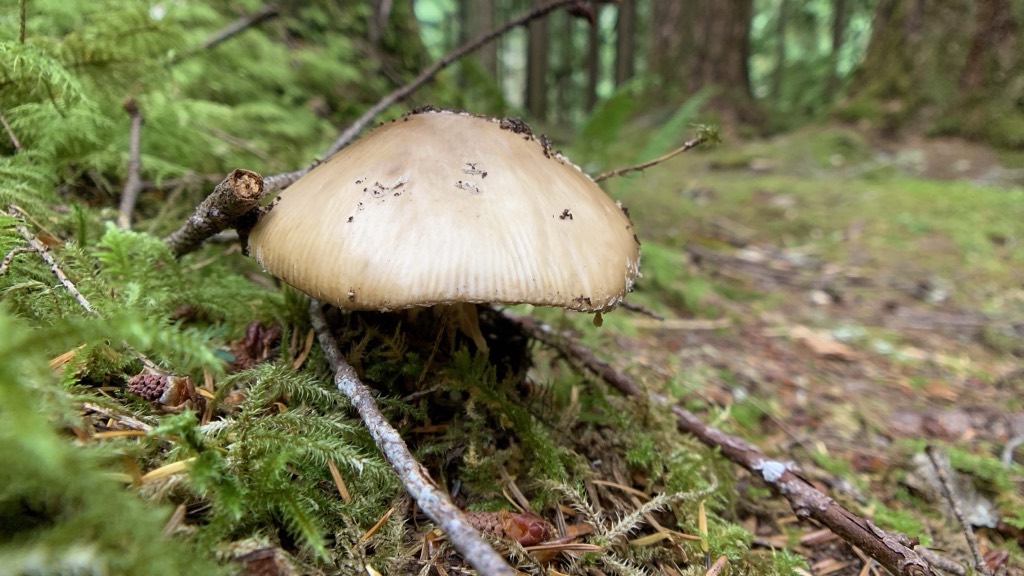
An 80-year-old woman with a decade of Alzheimer’s disease — monosyllabic, incontinent, and dependent on others for five years — reportedly began speaking in full sentences about her own life roughly 19 hours after swallowing a single 5-gram dose of psilocybin-containing mushrooms (Study). That sentence is why psilocybin Alzheimer’s research suddenly made headlines in June 2026. It is also exactly the kind of sentence that should make a careful reader slow down. Because this is one case report — a single patient, no control, no comparison — and what it offers is not an answer. It is a question worth asking properly.
A Case That Made Headlines
The paper landed in Frontiers in Neuroscience with a title that is, to its credit, unsentimental: “Transient multidomain functional improvement in advanced Alzheimer’s disease following high-dose psilocybin-containing mushroom administration: a case report” (Study). Note the words doing the load-bearing work: transient, functional, and case report. None of them say cure. None of them say reversal.
The coverage that followed was more breathless than the paper deserved — and more breathless than the authors themselves were. So the honest frame has to come first, before any of the remarkable specifics: a single startling outcome in one person is the weakest kind of medical evidence there is. It can spark a hypothesis. It cannot prove one. Everything below should be read through that lens.
What the Case Report Says
Let’s lay out the primary source plainly, because the details are genuinely striking. The patient was an octogenarian Japanese-American woman with roughly 10 years of clinically established Alzheimer’s disease, including about 5 years of what the authors call “marked hypofunction” — predominantly monosyllabic speech, chronic urinary incontinence, executive dysfunction, dysphagia, dependent mobility, and flat affect (Study). This was advanced disease, not a borderline case.
The intervention was a single 5-gram oral dose of Enigma-strain psilocybin-containing mushrooms, followed by a smaller 3-gram dose one month later (Study). Five grams of dried mushrooms is a high, fully psychoactive dose — this was not microdosing.
The reported timeline is what made the story travel. Spontaneous autobiographical speech emerged around 19 hours after administration. Urinary continence was restored after more than five years of incontinence. By day 2, the patient walked independently; by days 2–3, she began dressing herself and showing spontaneous initiative. By days 6–7, the authors describe sustained eye contact, reciprocal smiling, and contextual memory retrieval (Study). The report states that “several clinically meaningful improvements persisted for weeks following the first intervention” (Study). Independent news coverage corroborated the same specifics — the speech that had been “limited to one or two words at a time” returning to hourlong conversations, the diapers abandoned after five years — while stressing that the gains were temporary and the treatment “did not reverse the disease” (News report).
Read descriptively, it is a compelling vignette. Read scientifically, it is a single uncontrolled observation. Both things are true at once, and the rest of this article is about holding them together.
Why One Case Proves Nothing
Here is the spine of the whole piece, stated without hedging: a single case report cannot establish that psilocybin caused this improvement. It is structurally incapable of it.
In the hierarchy of medical evidence, a single case report (N=1) sits at the bottom. Public-health teaching puts it bluntly: “At the other end of the spectrum lie individual case reports, thought to provide the weakest level of evidence” (Review). In Sackett’s widely used scheme, case reports and case series occupy the lowest level — valuable, the authors note, because they “are important for hypothesis generation and can lead to more controlled studies,” but “often biased by the author’s experience or opinions” with “no control of confounding factors” (Review). A dedicated review of the case-report format is even more pointed: “Causality cannot be inferred from an uncontrolled observation. An association does not imply a cause-effect relationship” (Review). The proper role of such a report, it concludes, is to let new hypotheses “be formulated” and then tested in comparative research (Review).
The most credible voices on this point are the authors themselves, and their caveats are worth quoting because they are unusually candid. They write that “causality cannot be established, and spontaneous fluctuations inherent to neurodegenerative disease cannot be completely excluded” (Study). They concede that “formal biomarker confirmation and advanced neuroimaging were not available” — meaning the Alzheimer’s diagnosis itself was never confirmed by the gold-standard tests, and mixed or vascular contributions “cannot be fully excluded” (Study). They list the missing tools: “single-case design, absence of formal polysomnographic monitoring, quantitative electrophysiology, neuroimaging biomarkers, and standardized cognitive scales” (Study). No MMSE, no MoCA, no formal cognitive testing to anchor the “before” and “after.”
And then the sentence that ought to headline every responsible write-up of this paper: “The findings should not be interpreted as reversal of Alzheimer’s pathology” (Study). The amyloid plaques and tau tangles did not go away. What the authors propose instead is far more modest — that “latent functional capacities may persist in advanced neurodegeneration and become temporarily accessible under specific neuromodulatory conditions” (Study). The report, they say plainly, is “intended to generate hypotheses for future controlled investigation” (Study). That is the whole claim. Not more.
The Plausible Mechanism
So why isn’t the idea simply absurd? Because the underlying biology of psilocybin is real, well-studied, and genuinely interesting — even if its link to this one patient’s recovery remains pure speculation. It is worth separating the two: the mechanism below is solid science; the claim that it explains this case is a hypothesis, nothing more.
Start with the receptor. Psilocin, the active metabolite of psilocybin, is a 5-HT2A serotonin receptor agonist, and the intensity of the psychedelic experience tracks directly with how much of that receptor it occupies. Brain-imaging work in healthy volunteers found that psilocybin produced dose-related 5-HT2A occupancy up to roughly 72%, with subjective intensity correlating tightly with both occupancy and plasma psilocin levels (Study). That is the engine.
What that engine does to the brain at scale is striking. A 2024 precision-fMRI study in Nature showed that psilocybin “desynchronizes” the brain — producing whole-brain functional-connectivity change more than three times larger than an active control drug, dissolving the usual boundaries between networks and hitting the default mode network hardest (Study). The spatial pattern of that disruption matched 5-HT2A receptor density across the cortex, and a reduction in hippocampus–default-mode connectivity persisted for about three weeks (Study). In plain terms: psilocybin transiently increases global brain integration and loosens rigid network segregation — and some of those changes outlast the trip.
The third strand is structural. In animals, serotonergic psychedelics behave as what researchers have dubbed psychoplastogens: they increase dendritic branching, spine density, and synapse number, with the effects blocked by 5-HT2A, TrkB/BDNF, and mTOR inhibitors — implicating those exact pathways (Study). For psilocybin specifically, a single dose in mice produced roughly 10% increases in dendritic spine size and density in the frontal cortex within 24 hours, persisting at one month and mediated by the 5-HT2A receptor (Study). It is tempting to draw a straight line from “grows new dendritic spines” to “woman starts talking again.” Resist it. That line has never been demonstrated in a human with Alzheimer’s, and the case-report authors themselves flag that “mechanistic interpretations remain speculative” (Study). The mechanism is a plausible story for why this might be worth testing — not evidence that it worked here. A 2026 rat study made a similar structural claim about psychedelics and myelin repair, and it has not been shown in people either.
The Risks Are Real
Now the part that headlines tend to bury, and the part that matters most for any reader tempted to act. High-dose psilocybin is not benign, and in a frail elderly person with dementia, the danger multiplies.
Even in this single, apparently “successful” case, the acute phase was not smooth. The authors document “clinically suspected hyperthermia, profuse sweating, and a prolonged deep sleep-like state” during dosing, with exact temperature measurements unavailable (Study). Hyperthermia — a dangerously elevated body temperature — in an 80-year-old is not a footnote; it is a potential medical emergency. The authors describe overall safety here as the absence of catastrophe rather than the presence of robust safety data, noting that no “severe persistent adverse effects, prolonged agitation, clinically significant cardiovascular instability, persistent psychotic symptoms” were observed (Study). “Nothing terrible happened to one patient” is not a safety profile.
The broader data sharpen the concern. A 2024 meta-analysis of six randomized trials (528 participants, median age about 40) found that therapeutic-dose psilocybin significantly raised the risk of acute adverse effects versus placebo: nausea (risk ratio 8.85), dizziness (RR 5.81), elevated blood pressure (RR 2.29), anxiety (RR 2.27), and headache (RR 1.99) (Meta-analysis). Those effects mostly resolved within 48 hours — in healthy adults half this patient’s age. Now layer on advanced age. A 2024 review on psilocybin for Alzheimer’s notes that no trials in actual AD patients have been completed, flags psilocybin-induced blood-pressure elevation and case reports of takotsubo (stress) cardiomyopathy after self-administration, and catalogs psychiatric adverse events from trials including suicidal ideation, self-injury, and a manic episode (Review). The same review stresses that real trials deliberately excluded high-risk patients, and that cognitive impairment itself makes both safe administration and genuine informed consent enormously harder (Review).
Put it together: cardiovascular strain, psychiatric destabilization, disorientation, and fall risk — in someone frail, with dementia, who cannot meaningfully consent to or navigate an intense hours-long altered state. This is dangerous to attempt outside a controlled medical setting. Full stop.
What Real Trials Would Need
If the case is a question, what would it take to actually answer it? The bar is well understood, and the case report falls short of every rung of it.
A real test would need a biomarker-confirmed diagnosis (so we know it’s truly Alzheimer’s), a control group (so improvement isn’t just the natural day-to-day fluctuation of neurodegeneration), standardized cognitive scales administered before and after, neuroimaging, controlled and known dosing, and rigorous safety monitoring. Crucially, the field is not silent on this. A registered pilot trial — NCT04123314, run by Johns Hopkins — is already studying psilocybin in people with depression plus mild cognitive impairment or early Alzheimer’s, using two sessions and tracking the Cornell Scale for Depression in Dementia, with completion estimated for late 2026 (Trial). It is open-label and small (about 20 participants), and it targets depression, not cognitive reversal — but it is exactly the kind of controlled work the case report calls for.
Even so, the honest summary is that the area is barely mapped. A 2024 review identifies that single Johns Hopkins study as essentially the one registered psilocybin-in-AD trial and concludes the territory “remains largely uncharted,” with “a substantial journey” ahead before psilocybin could be used in AD care (Review).
And then the reality that overrides everything: legality. Psilocybin is a Schedule I controlled substance under both the US Controlled Substances Act and the UN 1971 Convention on Psychotropic Substances — legally defined as having no accepted medical use and high abuse potential — with only narrow, recent exceptions like Oregon’s 2020 supervised program and Australia’s 2023 prescription approval (Analysis). Under US federal law its manufacture and administration remain illegal nationwide; even Oregon’s pathway is a tightly licensed, supervised exception rather than general legalization (Review). This is not a substance a reader can — or should — obtain.
Frequently Asked Questions
Can magic mushrooms reverse Alzheimer’s disease?
No. This story comes from a single case report in which an 80-year-old woman with advanced Alzheimer’s temporarily regained speech and other abilities after taking psilocybin mushrooms, but the authors state plainly that the findings should not be interpreted as reversal of Alzheimer’s pathology. The improvements were temporary, and the amyloid plaques and tau tangles of the disease did not go away. The authors suggest only that dormant functional abilities may have become briefly accessible, not that the disease was undone.
What happened to the 80-year-old woman who took psilocybin for Alzheimer’s?
According to a single case report, a woman with roughly 10 years of Alzheimer’s, who had been largely limited to one or two words at a time and incontinent for years, reportedly began speaking in full sentences about 19 hours after a single high dose of psilocybin mushrooms. Over the following days she regained urinary continence, walked independently by day 2, and started dressing herself, with some gains said to persist for weeks. The article stresses these improvements were temporary and did not reverse the underlying disease. Study
How much psilocybin did the Alzheimer’s patient take?
The report describes a single 5-gram oral dose of Enigma-strain psilocybin-containing mushrooms, followed by a smaller 3-gram dose one month later. Five grams of dried mushrooms is a high, fully psychoactive dose, not microdosing. The article emphasizes that psilocybin is illegal and physiologically risky, and it strongly warns against self-administration at home.
Is it safe for an elderly person with dementia to take psilocybin?
The article makes clear that high-dose psilocybin is not benign, and the danger multiplies in a frail elderly person with dementia. Even in this single case the patient had suspected hyperthermia (a dangerously high body temperature), heavy sweating, and a prolonged deep sleep-like state during dosing. Broader research links therapeutic-dose psilocybin to raised blood pressure, nausea, dizziness, and anxiety, and no trials have been completed in actual Alzheimer’s patients. The article says this is dangerous to attempt outside a controlled medical setting.
Are there any clinical trials of psilocybin for Alzheimer’s?
The article notes that no trials in actual Alzheimer’s patients have yet been completed. It points to one registered pilot study, NCT04123314 run by Johns Hopkins, which is looking at psilocybin in people who have depression plus mild cognitive impairment or early Alzheimer’s, using two sessions and tracking a depression scale, with completion estimated for late 2026. That trial is small (about 20 participants), open-label, and targets depression rather than reversing cognitive decline. Trial
Key Takeaways
- It is one N=1 case report — hypothesis-generating only. A single uncontrolled observation sits at the bottom of the evidence hierarchy, where “causality cannot be inferred”; it can only suggest a question for controlled study (Review).
- The improvements were transient, and this is NOT pathology reversal. The authors state outright that the findings “should not be interpreted as reversal of Alzheimer’s pathology” — latent function was temporarily reactivated, not the disease undone (Study).
- The diagnosis was never confirmed and no cognitive scales were used. There was no biomarker or neuroimaging confirmation and no standardized testing, so the “before” and “after” rest on clinical description alone (Study).
- The mechanism is plausible but speculative for this case. Psilocin’s 5-HT2A agonism desynchronizes brain networks (Study) and drives dendritic-spine growth in animals (Study) — real biology, but never shown to explain recovery in a human with AD.
- The safety risks are real, including in this patient. The case involved suspected acute hyperthermia and profuse sweating (Study), and high-dose psilocybin raises blood pressure, anxiety, and more — dangers amplified in frail elderly people with dementia (Meta-analysis).
- It is illegal almost everywhere — do not self-administer. Psilocybin is a Schedule I substance under US and UN law, with only narrow supervised exceptions; talk to a clinician, not a dealer (Analysis).
Curiosity, Not a Prescription
It is easy to understand why this story moved people. Anyone who has watched a parent or partner disappear into advanced dementia knows the specific cruelty of it — the silence, the not-being-recognized. The image of a woman who hadn’t spoken in sentences for years suddenly telling stories about her own life is the kind of thing families pray for. That hope is human and it is real, and it deserves respect rather than mockery.
But respect for that hope means being truthful about what this is. It is a single, fascinating, well-caveated case report — a signal, not a finding; a hypothesis, not a treatment. The authors did the responsible thing by publishing it honestly, with every limitation on the page. The responsible thing for the rest of us is to read it the same way: as a reason to fund and run rigorous, controlled trials, not as instructions. Psilocybin in this setting is illegal, physiologically risky, and entirely unproven for dementia — and self-experimentation at home is dangerous for anyone, most of all a frail elderly person with dementia. If your family is facing Alzheimer’s, the move is not the mushroom; it is a frank conversation with a qualified clinician about evidence-based care and, where appropriate, enrollment in a real clinical trial.
So follow this one closely — with genuine curiosity and clear eyes. Cheer the controlled trials when they read out. Stay skeptical of anyone selling the destination before the map exists. The science here is worth being excited about precisely because it is still a question.
One mushroom that might, just might, teach us something new about the sleeping capacities of an injured brain — but please, leave this one to the labs.
This article is for educational purposes and is not medical advice. Talk to a qualified clinician before changing your health regimen.


Leave a Reply