The fisetin senolytic case is strong in mice and unproven in people. The largest finished human trial gave 74 adults with knee arthritis the full senolytic dose for a year. Their pain, walking distance and cartilage marker came out the same as the dummy pill group (Trial). The animal work looks better. Fisetin beat nine other plant compounds in a lab dish, and old mice fed it lived longer (Study). The two Mayo Clinic trials everyone quotes started in 2018 and have posted no results (Trial).
What Senolytics Actually Do
Damaged cells have a kind of emergency brake. They stop dividing for good, but they do not die off either. Scientists call these senescent cells, and they pile up as we get older. From there they leak inflammatory signals into the tissue around them, which ages that tissue too.
A senolytic is a compound that kills those worn-out cells and leaves the healthy ones alone. The dosing schedule is unusual: you take a short, hard course, then stop. Worn-out cells do not come back overnight, so the benefit is meant to outlast the pills. Researchers call this hit-and-run dosing, and the mouse results fit that pattern (Study).
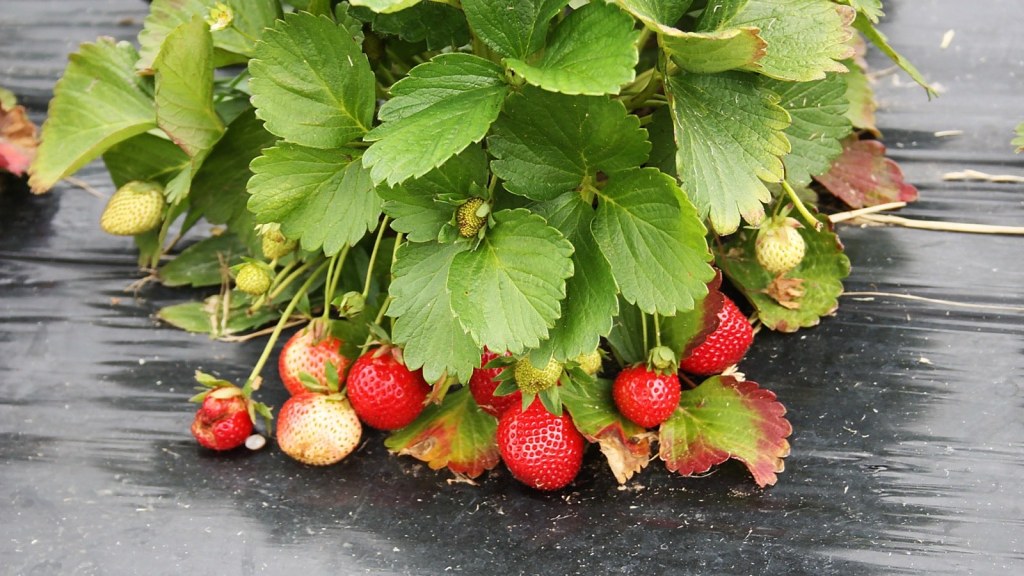
Fisetin is a yellow plant pigment found in strawberries and apples. The other well-known senolytic is dasatinib and quercetin, a prescription combination that needs a doctor. Fisetin comes in a capsule with no doctor involved, which explains a lot of the appeal.
The Fisetin Senolytic Case in Mice
The fisetin senolytic story starts with a single paper from 2018. Researchers put 10 flavonoids, the plant-pigment family fisetin belongs to, onto worn-out cells in a dish. Fisetin killed the most of them (Study). In live mice it also lowered the signs of worn-out cells across several tissues.
The lifespan result is the famous one. The team moved mice onto a fisetin diet at 85 weeks old, roughly age 75 in a person. Those mice outlived the untreated ones (Study). Both the typical lifespan and the longest lifespan went up.
Two details usually get left off. That lifespan test used 8 or 9 mice per group. The paper also never prints a number for how much longer they lived, so the result exists only as a graph (Study).
The newer muscle work is cleaner. In 2025 a team put old mice on an on-and-off fisetin schedule: a week on, two weeks off, a week on. Their frailty scores fell by about 15% and their grip strength rose by about 14% (Study). Wiping out the worn-out cells with a genetic switch moved those numbers about as much. Those were separate experiments with their own controls, so the comparison is loose. Young mice on the same schedule did not change (Study). The on-and-off schedule also improved artery function in old mice (Study).
One test rarely makes it into the marketing. The National Institute on Aging runs a lifespan program that repeats each drug at three separate labs at once. The point is to catch results that only work in one lab. Fisetin went through it in genetically varied mice, fed both continuously and in cycles. The treated mice lived about as long as the untreated ones, in males and in females (Study). Their liver, kidney and brain tissue held about as many worn-out cells too.
The doses do not match either. Mouse studies used far more fisetin than human trials do. The lifespan test used a fisetin-laced diet, and a separate short course used 100 mg per kilo of body weight (Study). People in trials get 20 mg per kilo, which copies neither one.
So the mouse picture is real but mixed. Fisetin does something to aging muscle and arteries. The lifespan claim held up in one lab and not in the three-lab program.
You Cannot Eat Your Way There
Fisetin does come from food, and strawberries are the best source. A Japanese survey measured 40 foods and put strawberries on top, at 160 micrograms of fisetin per gram of dried fruit (Study). Apples hold about six times less, persimmons about fifteen times less. The same team logged three days of meals for 50 women. Their average worked out at 0.4 mg of fisetin a day (Review). A 2026 review repeats the strawberry figure, but it traces back to that same 1990s survey (Review).
The arithmetic below is ours, not the study’s. Human trials use 20 mg of fisetin per kilo of body weight. For a 70 kg adult that comes to 1,400 mg in a single day. At 160 micrograms per gram, you would need roughly 8.75 kilos of strawberries, close to 19 pounds (Study). Then the trial schedule repeats the dose the next day. That is about 3,500 times a normal day’s intake, so no amount of fruit gets you there.
The second gap is worse. Swallowed fisetin barely reaches the blood. In the only published human absorption study, 15 volunteers took a single 1,000 mg dose of plain fisetin powder. The peak blood level was around 10 nanograms per milliliter, and it cleared within a few hours (Trial). The authors called poor absorption a real problem in people, just as it is in animals. Fisetin dissolves badly in water, and the body tags it and removes it fast (Review).
The same study tested a version built to absorb better and got about 27 times more fisetin into the blood (Trial). That capsule carried only 192 mg of fisetin, against 1,000 mg of the plain powder. Check who paid for the number, though. An ingredient company funded the work, and the authors include staff from that company and from the firm that sells the finished product. They measured blood levels and nothing else. Nobody tracked whether anyone got healthier.
What Human Trials Show
Four finished trials carry most of the human story.
The first ran in Gulf War veterans with long-term illness. Twenty-one men took all three options in turn. Each did a month on a dummy pill, a month on 200 mg of fisetin a day, then a month on 800 mg. Their symptom scores started near 41 and sat near 40 on the higher dose (Trial). Pain and fatigue scores stayed flat as well. The study could pick up a real effect, because resveratrol beat the dummy pill in the same men. This was daily supplement-style dosing, though, not the short senolytic burst.
COVFIS-HOME did use the senolytic schedule. It gave 55 at-risk COVID outpatients either fisetin at 20 mg per kilo or a dummy pill, on days 0, 1, 8 and 9. A coin flip decided who got which. At 60 days, 26 of the 27 fisetin patients assessed had no limits on daily life, against 22 of 24 on the dummy pill (Trial). The two groups came out even. It was a small pilot, built to check safety rather than to prove the drug works. Safety did look clean: no serious side effects on fisetin, two on the dummy pill.
The nursing-home version never got that far. COVID-FIS set out to enroll 150 residents (Study). It reached 20 before its safety board closed it early, judging that it would not answer the question (Trial). The two groups scored the same at every visit, from day 2 through six months. With only 20 people, that tells you very little either way.
The knee trial is the biggest completed test. It used the senolytic schedule, tracked symptoms people actually feel, and ran for a full year. A Colorado clinic split 74 adults with knee osteoarthritis by coin flip: fisetin or a dummy pill (Trial). Each took 20 mg per kilo on two days in a row, waited a month, then repeated the pair. Safety was the main question, and fisetin passed. Some side effect turned up in 82 of every 100 on fisetin, against 83 of every 100 on the dummy pill.
The benefit numbers all landed in the same place. At 12 months the fisetin group walked 544 meters in six minutes. The dummy-pill group walked 544 meters. A timed stand-and-walk test came in near six seconds for both. A cartilage-breakdown marker called COMP matched, and so did the knee MRI scans. Pain scores, logged every few days for three months, tracked each other the whole way (Trial).
Two more trials get quoted constantly. AFFIRM opened in February 2018 in women aged 70 and over (Trial). AFFIRM-LITE opened that November in older adults of both sexes (Trial). Each aims for 40 participants and a two-day course at 20 mg per kilo. Both are still listed as enrolling by invitation, and neither has posted a result. Completion is now estimated for November 2027, which would make them nearly ten years old.
The researchers themselves are not overselling it. A 2024 review co-written by the senolytics team behind AFFIRM says fisetin’s safety, absorption and effectiveness in humans all still need to be established (Review). If AFFIRM-LITE had produced a finding, its own investigators would have cited it. In August 2026 a registry search for fisetin returns 36 studies, and only 6 have posted results (Registry). Neither AFFIRM trial is among those 6.
No completed human trial has yet shown fisetin working as a senolytic in people.
What the Labels Claim
Capsule pages lean on the mouse lifespan paper first. They lean next on the 20 mg per kilo schedule, quoted as though it were a settled human dose. Some affiliate sites go further and cite AFFIRM-LITE findings. Those findings have never been published anywhere (Registry).
One claim does get quoted fairly. In the 2018 paper, researchers treated human fat tissue with fisetin in a dish, and its worn-out cells dropped (Study). That is a real result in real human tissue. It is still a dish, not a person, and nobody in that experiment swallowed anything.
The two claims are not the same thing. Fisetin has been shown to clear worn-out cells in mouse tissue, and in human tissue in a dish. What gets sold is an anti-aging effect in your own body.
The practical gaps are just as wide. Nobody yet knows the right human dose, the right schedule or the right formula (Review). Trials use 20 mg per kilo because it worked in animals, not because anyone compared doses in people. Supplements are also never tested for the senolytic activity they are sold on. A capsule only has to contain fisetin. It does not have to prove it clears any worn-out cells.
The same pattern runs through longevity supplements generally. It fits spermidine too, where the food research looks promising and the capsule trials have not matched it.
Safety and Long-Term Unknowns
Short courses look well tolerated. In the knee trial, side effects were as common on the dummy pill as on fisetin, and nobody died (Trial). The COVID outpatient trial logged no serious side effects at all in the fisetin group (Trial).
Daily dosing looks rougher. On 800 mg a day, veterans reported worse fatigue, migraines, headaches, diarrhea, upset stomach and nausea. One man stopped after a week because of nausea and reflux (Trial). Some of those complaints turned up in the dummy-pill month too. The absorption study logged two mild gut problems, bloating and lost appetite, on both versions it tested (Trial).
These trials share one weakness. All of them were short, and most enrolled fewer than 80 people. Nobody has studied long-term daily supplement use at all.
Interactions with medicines are a genuine unknown. In human liver samples, fisetin blocked an enzyme called CYP2C8, which the body uses to clear certain drugs (Study). That was a lab test on tissue, not a test in people. Plain fisetin powder probably never reaches the blood level that blocked the enzyme (Trial). High-absorption formulas get closer on a much smaller dose. Your gut wall also sees more of the compound than your blood does. Nobody has run the interaction study in humans.
The trial teams treat this as a live risk. Both Mayo studies exclude anyone taking a drug with a narrow safe window that these enzymes handle. They also make participants hold a long list of common medicines for two days before and during dosing. That list includes all statins, phenytoin, colchicine and methotrexate (Trial). The trial in older women adds warfarin and other blood thinners (Trial). If a research team will not dose you while you take those, that is worth weighing before you dose yourself.
Talk to a clinician before trying fisetin, especially if you take blood thinners, seizure medicines or chemotherapy.
Frequently Asked Questions
Does Fisetin Work as a Senolytic in Humans?
No completed human trial has shown that it does. The clearest test so far gave 74 adults with knee arthritis the full senolytic dose. It met its safety goal, but walking distance and a cartilage marker sat unchanged at 12 months (Trial). Pain scores tracked the dummy pill the whole way. The researchers running the main fisetin trials say its effectiveness in people is still unestablished (Review).
How Much Fisetin Is in Strawberries?
About 160 micrograms per gram, which makes strawberries the richest food source measured (Study). Apples and persimmons hold far less. In that survey, a typical day’s diet supplied around 0.4 mg in total (Review). Strawberries are good for you, but a bowl of them is nowhere near a senolytic dose.
What Is the Fisetin Senolytic Dose in Trials?
Trials use 20 mg per kilo of body weight, taken on two days in a row, then stopped (Study). For a 70 kg adult that is about 1,400 mg on each of those days. Some studies repeat the two-day course a week or a month later. The dose carries over from animal work, and no human trial has compared it against another dose.
Is Fisetin Safe to Take Long Term?
Nobody knows, because nobody has tested it. Short courses at trial doses were tolerated about as well as dummy pills (Trial). Every study so far lasted months at most. Daily use at 800 mg brought nausea, headaches and worse fatigue for some people (Trial). Fisetin may also interfere with drugs that have a narrow safe range.
Key Takeaways
- The mouse case is real but mixed. Fisetin beat nine other flavonoids and extended lifespan in old mice (Study). In a three-lab repeat program, treated mice lived about as long as untreated ones (Study).
- The human result is still missing. The two Mayo trials have been enrolling since 2018 with nothing posted, and completion is now estimated for 2027 (Trial).
- You cannot eat your way to a trial dose. A 20 mg per kilo dose is roughly 9 kilos of strawberries, about 3,500 times a normal day’s intake (Study).
- Absorption is the unsolved problem. A 1,000 mg dose of plain fisetin barely registered in the blood, and the better-absorbed version has only ever been tested for blood levels (Trial).
- Short courses look safe, long-term use is untested. Side effects matched dummy pills in the knee and COVID trials (Trial), and fisetin may block a drug-clearing enzyme (Study).
Keep an Eye on Fisetin
None of this makes fisetin a scam. The mechanism is plausible, and the animal record is the strongest of any natural senolytic. Registered trials with real names and numbers are running. That puts it ahead of most things sold for longevity. The honest position in 2026 is that the answer has not arrived yet.
So watch fisetin rather than buy on mouse data. The AFFIRM readouts are the ones worth waiting for, because they ask whether a two-day course moves inflammation and walking speed in older adults (Trial). If you want a senolytic story where a human trial did read out, read up on dasatinib and quercetin instead.
Fisetin may yet earn its reputation. Right now that reputation is running about nine years ahead of the evidence, which is worth knowing before you spend money on it.
This article is for educational purposes and is not medical advice. Talk to a qualified clinician before changing your health regimen.


Leave a comment