Exogenous ketones do not appear to make anyone faster. Researchers pooled eight coin-flip trials in 80 people. The ketone drinks did not improve endurance, in time trials or in rides to exhaustion (Meta-analysis). One serving costs about $5 to $39. In ten elite professional cyclists, a ketone drink made a 31 km time trial about 2% slower (Trial).
Blood ketone readings go up. Finishing times usually do not change. The trials below include the ones that favor the supplement.
What Exogenous Ketones Are
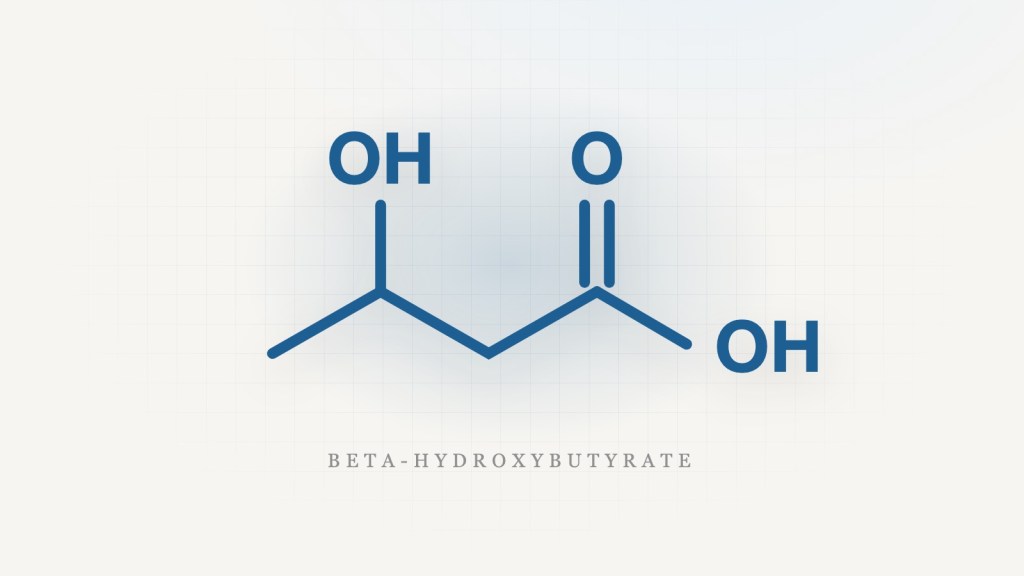
Your liver makes ketones whenever carbs run short. The main one is beta-hydroxybutyrate, usually shortened to BHB.
Exogenous ketones skip that step. They are drinks or powders that put ketones straight into your blood, with no low-carb diet attached. Two forms are sold, and they do not work alike.
Ketone esters bind BHB to an alcohol backbone. Ketone salts bind it to minerals such as sodium, potassium and calcium.
The gap between them is large. In 15 healthy adults given matched doses, the ester raised usable blood ketones about three times as high as the salt (Trial). Across 43 trials in 586 people, esters raised blood ketones roughly five times more than salts (Meta-analysis).
A second catch sits inside the salts. BHB comes in two mirror-image forms, and commercial salts are usually a 50:50 mix of both (Review). The enzyme that burns ketones will not take the mirror form, so it adds little energy. In a small follow-up it was still in the blood eight hours later. The authors judged that it may build up with repeat doses (Trial).
A home ketone meter reads only the usable form (Review). So a salt buyer pays for half a product the meter never shows.
Then there is the price. Checked in August 2026, one ester seller lists about $30 for a 30 gram bottle (Product listing), and about $5.80 for a 5 gram shot (Product listing). A sports brand sells a single 25 gram bottle for $39 (Product listing). Per gram of ketones, that is roughly $1.00 to $1.60.
Compare that with the fuel it is meant to beat. A carb gel for the same session costs about $2, or roughly 9 cents per gram of carbs (Product listing).
There is a free route too. Your own body makes ketones when food is scarce. That is the state people hope to borrow with a 16:8 eating window. It costs nothing.
What the Endurance Trials Found
Researchers screened 569 papers. They kept eight coin-flip trials that measured endurance after a ketone drink. Together those trials held 80 people. Pooled, the ketone drinks did not beat the control drink, in time trials or in rides to exhaustion (Meta-analysis).
Two details matter as much as the headline. The whole pooled evidence base was 80 people. Only three of them were women.
Every trial in the pool confirmed the drink worked chemically, since blood ketones went up. The riding did not get faster.
An earlier review reached the same verdict. The US Army funded it, and its authors declared no industry ties. It pulled 10 trials in 112 people, holding 16 performance results. Three favored ketones, ten showed nothing, and three went the wrong way (Systematic review). The studies disagreed with each other too much to pool.
A 2024 review looked only at endurance runners. It covered 12 studies in 132 runners, and 131 of them were men. Seven tested ketone supplements, and the rest tested keto diets. None of them found a gain in aerobic performance, and none found clear harm (Systematic review).
Sellers all point to one paper. Cox and colleagues published it in Cell Metabolism in 2016, and it is a real study. It ran five separate studies in 39 high-performance athletes, who each tried both drinks (Trial). Only one of the five measured performance, in eight athletes. Those eight rode about 411 meters further in a 30-minute time trial. The authors put that at about 2%.
Then read the disclosures. Patents covering ketone esters are held by a group that includes a university, a government institute and a spin-out company. Five authors are named inventors who could share royalties. The senior author directs that spin-out, and three more authors worked there (conflict of interest statement). The paper states all of it openly. The trials were not registered as clinical trials.
None of that makes the result wrong. It does mean other teams need to repeat the work. Later time-trial studies did not find the same gain. In the review above, Cox is one of only three positive results out of 16 (Systematic review).
There is also the “you have to take it for weeks” defense. Someone tested that. Eighteen recreational runners took either 30 grams three times a day or a matched placebo, for 31 days. Their 5 km time did not improve, and neither did mood or quality of life (Trial). At the listed ester price, that daily dose would cost roughly $90.
The honest summary is short. These drinks raise blood ketones reliably, and the trials have not shown them making anyone faster.
The Trial Where Cyclists Slowed
Researchers recruited 11 riders from a professional World Tour cycling team. Each rode a 31 km laboratory course modeled on a world championship route. They rode it twice, once after a ketone diester and once after a placebo that tasted the same. A coin flip set the order, and nobody was told it (Trial).
Ten riders finished both rides. Every one of them was slower on the ketone drink. The average penalty was about 2%, close to a minute over the full distance.
It did not feel easier either. Effort ratings climbed the same way in both rides, so the riders worked just as hard for less speed.
One detail rarely survives into the marketing. The drink went down on top of a full carb breakfast, which is how a real athlete eats before a race (Trial). That is exactly the setting where a fuel switch has least to offer.
It was not a one-off. A later trial gave 23 trained cyclists the newer, better-tasting ketone monoester before a 20-minute time trial, and each rider tried both drinks. Their average power came out about 2% lower than on placebo (Trial). The researchers had set 2% in advance as the smallest gap that would matter to a rider. The result landed on the wrong side of that line.
Gut Trouble Is Common
Researchers pooled the symptom logs from three studies of ketone drinks in healthy adults, where each person tried both drinks. Across 134 study visits, roughly 55 in every 100 brought at least one symptom (Trial). The symptoms were mild, and they had cleared by the end of each study.
Dose and product decided how bad it got. A high dose of ketone salts, taken on an empty stomach, caused by far the biggest symptom load. Reports there included severe nausea, cramps and diarrhea. The same salts at a low dose were mostly uneventful.
So the cheaper product is not the gentler one. Across 43 trials, about 85 in every 100 salt comparisons reported side effects. For the ester the figure was about 40 in every 100 (Meta-analysis). Gut trouble was the main complaint either way.
The ester has one fair point in its favor. During more than three hours of cycling, an ester taken with carbs caused no more trouble than carbs alone (Trial). At rest it was clearly worse than carbs.
The elite cyclists had a harder time. All ten finishers reported gut discomfort on the diester, from mild nausea up to dry retching (Trial). An eleventh rider vomited after the warm-up, could not start, and left the study. Every rider correctly guessed which drink was the ketone one, from the symptoms alone.
A drink you cannot keep down during a race is not much use.
The Hidden Acid Load
Ketones are acids. That is not a selling point, so nobody advertises it.
Twelve trained people rode a rising-intensity test to exhaustion, twice. Once after a ketone ester, and once after a control drink that tasted the same (Trial). Before a pedal turned, the ester had already made their blood measurably more acidic. Bicarbonate, the body’s main acid buffer, had dropped.
The body answered the way it always does. Breathing ramped up sooner. The point where breathing climbs steeply arrived at a workload about 22 watts lower.
Performance did not differ between the two rides. The drink bought an acid load and gave nothing back.
The researchers call this nutritional ketoacidosis. It is mild and it corrects itself, and it is not the diabetic emergency of the same name. In a diabetic crisis, ketone levels run several times higher and the blood turns far more acidic (Trial). The authors describe the two states as clearly different. So do not panic about a ketone drink, and do not assume it does nothing.
There is an odd footnote here. When nine well-trained cyclists took a ketone ester together with bicarbonate, time-trial power rose about 5%. The ester alone did nothing (Trial). One small trial in nine men is not a plan to copy. It does hint that the acid load is part of what holds the ester back.
Two cautions before anyone experiments. If you have type 1 diabetes or kidney disease, or you are pregnant, do not try these without a clinician. And the salt and mineral load in ketone salts is one reason the dose cannot simply be raised (Review).
Do They Sharpen Thinking?
This is where the skeptics push too far. The thinking claim is not simply false.
A 2026 systematic review gathered the cognitive testing. It covered 38 studies in 1,602 people, and pooled the results from about 1,100 of them (Meta-analysis). Exogenous ketones produced a small average improvement on tests of thinking. The studies also disagreed with each other a great deal.
Now read the disclosure, because it changes how much the result is worth. One author owns a stake in one ketone company, holds stock options in another, and holds patents on the use of ketone bodies. Two co-authors worked for a ketone-ester firm while the review was done (Meta-analysis).
The tests are the second limit. Most gave a single dose in a laboratory, often alongside a stressor such as hard exercise. The authors flag short trials, few long-term studies, and no standard set of thinking tests. That is a long way from being sharper at work for a month.
Industry money does not explain all of it. A review funded by the US National Institute on Aging looked at fat drinks that raise ketones. The people tested had memory problems. Across 12 publications in 422 people, it found a similarly small gain in thinking (Meta-analysis). Those authors declared no competing interests. Their cognitive estimate pools only four trials, though.
One longer test exists in healthy people. Over 31 days, runners on a high dose responded faster on two attention tasks than the placebo group (Trial). That trial ran nine people per group, so treat it as a hint rather than a result.
A small, mostly short-lived laboratory effect may well be real. It is not what a $39 bottle is being sold as.
Where Ketones Look Promising
The strongest results are not in athletes at all, and they come from a different product.
A six-month trial gave a ketogenic drink to older adults with mild cognitive impairment. That is the stage before dementia. The comparison group drank a placebo oil with the same calories. The drink improved word-finding on two tests, and errors on a pen-and-paper attention task. Recall improved too, on the first trial of a memory test (Trial). On one word-finding test the drink group named about two more words, while the placebo group named about one fewer.
Now the catch. The drink was not a ketone ester or a ketone salt. It was a medium-chain triglyceride drink, a cheap fat, at 15 grams twice a day (Trial). Those fats make your liver produce ketones. They are not ketones themselves, and the 2026 review counts them as their own category (Meta-analysis).
That difference is worth money. Medium-chain triglyceride oil sells in supermarkets. A ketone ester is a specialty chemical at about $1 per gram.
Be careful with the trial’s strength too. It enrolled 122 people and 83 finished, so about a third dropped out. About three in four people on the drink had stomach side effects (Trial). This is a promising line of research, not a treatment.
The working idea is fuel. A brain in trouble may still use ketones when it uses sugar less well. That is why the useful evidence sits with patients rather than with athletes.
So the tally is short. There is little here for healthy people chasing performance, and maybe something for patients inside a supervised trial. Nobody gets a proven brain upgrade for $39.
Frequently Asked Questions
Do exogenous ketones actually improve endurance performance?
The pooled evidence says no. Eight coin-flip trials in 80 people found no endurance gain, in time trials or in rides to exhaustion (Meta-analysis). In elite professional cyclists, a ketone drink made a 31 km time trial about 2% slower (Trial). Blood ketones do rise, so the product works chemically. The stopwatch just does not agree.
Are ketone salts as good as ketone esters?
No, and the gap is wide. At a matched dose, an ester drink raised usable blood ketones about three times as high as a salt drink (Trial). About half the BHB in a typical commercial salt is a mirror-image form the body barely burns (Review). Salts also carry a mineral load, and across the research they brought more reported side effects (Meta-analysis).
Will exogenous ketones put me in ketosis or burn fat?
They raise blood ketones for a few hours, which is not the same as burning your own body fat. In a head-to-head study, levels peaked and then fell back over the following hours (Trial). The ketones in that drink came from a bottle, not from your fat stores. A meter reading is a snapshot of what you drank.
Are exogenous ketones safe?
In healthy adults they have generally been tolerated, and the problems were mild and short-lived. Gut symptoms are common. Across three studies where each person tried both drinks, roughly 55 in every 100 visits after a drink brought at least one symptom (Trial). An ester also makes the blood mildly more acidic before exercise. That corrects itself, and it differs from the diabetic emergency (Trial). If you have type 1 diabetes or kidney disease, or you are pregnant, ask a clinician first.
Key Takeaways
- No endurance edge. Eight pooled trials in 80 people showed no gain on time trials or on rides to exhaustion (Meta-analysis).
- Sometimes worse. Ten elite professional cyclists all rode slower after a ketone drink, by about 2% over 31 km (Trial).
- Gut symptoms are common. About 55 in every 100 study visits brought at least one, and high-dose salts were the worst offender (Trial).
- Salts are the weaker buy. Half their BHB is a mirror form the body barely burns, and they raise blood ketones far less than esters (Trial).
- The promising brain research uses a different product. The six-month trial that helped memory used a cheap fat drink, not an ester or a salt (Trial).
Fuel That Actually Works
If you were about to spend $39 on a bottle, spend it where the evidence is better.
For long efforts, carbs are what the trials above fed their riders anyway, and a gel costs about $2 (Product listing). Sleep and steady training are free and boring, which is part of why they keep winning. And if it is ketones you want, your own liver makes them whenever carbs run short.
None of this means the science is junk. The clinical work in mild cognitive impairment is genuinely interesting, and it deserves bigger and longer trials (Trial). It is not a reason for a healthy 35-year-old to drink $39 of chemistry before a training ride.
These drinks do change your blood chemistry. The benefit has not turned up yet, and that is worth knowing before you spend.
This article is for educational purposes and is not medical advice. Talk to a qualified clinician before changing your health regimen.


Leave a Reply