A C15:0 supplement rests on one published human trial. Thirty young adults took 200 mg a day for 12 weeks. Nobody lost weight, and only one liver marker moved (Trial). The rest of the case for fatty15 comes from stored blood samples, cells in dishes and lab animals. People with more C15:0 in their blood do tend to be healthier. The capsule has not been shown to deliver it.
What C15:0 Actually Is
C15:0, or pentadecanoic acid, is a saturated fat. Its molecules have an odd number of carbon atoms. Fifteen, to be exact. That sounds like trivia. It matters because nearly every fat in your food has an even number.
Odd-chain fats are rare on a plate, and most of what people get comes from dairy fat. C15:0 makes up roughly 1 to 2 percent of milk fat. So your intake tracks how much full-fat dairy you eat (Review).
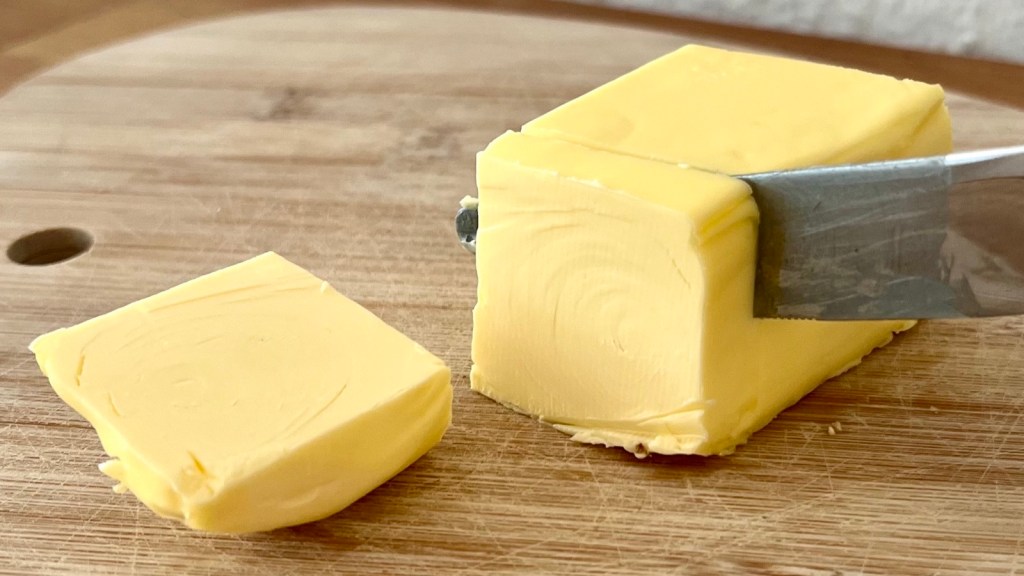
A French lab measured C15:0 in 93 supermarket foods. Butter was by far the richest source, with cheese second and beef a distant third. Fish supplied almost none (Study).
The interest started with dolphins. A vet who studies patterns of disease worked with US Navy dolphins. She noticed that the healthiest older animals carried more C15:0 in their blood. She later co-founded Seraphina Therapeutics, the company that sells fatty15 (Study). That is a fair place to start looking. It is also where the sales pitch begins.
The Only Randomized Trial
One published trial has tested the capsule on its own. It ran at a single center in 30 young adults aged 18 to 25, all of them overweight or obese. A coin flip decided who got 200 mg of C15:0 a day and who got a dummy capsule. Neither the volunteers nor the staff knew which was which. It ran 12 weeks and 29 people finished (Trial).
Most coverage skips what the trial actually set out to measure. Its main question was not whether people got healthier. It was whether the capsule raises C15:0 in the blood (Registry). It does. That answers a question about absorption, not about health.
Everything else was a side question, and those answers came back flat. Body weight, blood sugar, insulin, cholesterol and inflammation all stayed put. A liver enzyme called GGT did fall, by about 11 units on average. The authors asked readers to treat that gently. It was not the question the trial was built to answer (Trial).
The eye-catching liver numbers came from somewhere else. After the trial ended, the team split the 20 supplemented people by their final blood level. Ten cleared the level the company calls optimal and ten did not. The ten who cleared it had better liver enzymes (Trial). Splitting people into groups after you have seen their results is a way to find ideas, not to test them.
No serious side effects were reported, which is worth saying plainly.
A second trial gives the fairer test: TANGO studied 88 women in Singapore with fatty liver disease. Chance decided which of three groups they joined. Two groups ate a Mediterranean-style diet, and one of those also got 300 mg of C15:0 in a daily soy drink. The third group ate as usual (Trial).
The diet did the work. Over 12 weeks the two diet groups lost about 4 kg and 3.4 kg. The comparison group lost 1.5 kg. Liver fat fell by about a third in both diet groups, and by about a tenth in the comparison group (Trial). Adding C15:0 changed little on top of the diet. It did push LDL cholesterol down a bit further, and it shifted the gut bacteria (Trial).
Both trials were small, ran 12 weeks, and measured markers rather than illness.
Why Blood Levels Look Good
The other kind of evidence is much bigger, and it comes from following people for years to see who gets sick.
Researchers pooled 16 long-running studies from 12 countries. They had stored blood from 63,682 adults who were free of diabetes at the start. Over about nine years, 15,180 of them developed type 2 diabetes. People with more C15:0 in their blood at the start had roughly 20% lower risk (Pooled analysis).
A second team ran the same exercise for heart disease. Across 18 studies and about 42,700 people, higher C15:0 again went with less heart disease. It was not clearly linked to dying from any cause, and only a few studies looked at that (Meta-analysis).
Why measure blood instead of asking what people eat? Food questionnaires are unreliable, especially about fat, and a blood level is harder to misremember.
Now the problem. A blood level tells you what is in a person. It does not tell you that adding more will help.
C15:0 in blood does track dairy fat (Study). But dairy may not be the only source. In a small crossover trial, 16 adults took inulin for a week. Inulin is a fiber that gut bacteria feed on. Their C15:0 rose by about 17%. Propionate, the compound those bacteria make from the fiber, nudged it up about 13% (Trial). That was 16 people over seven days, so treat it as a hint. Part of the reading may be reporting your dietary fiber, not your butter.
The body can also build odd-chain fats itself. It shaves one carbon off an ordinary even-chain fat, a step called alpha-oxidation. In mice missing the enzyme for that step, about three quarters of one odd-chain fat in the brain vanished (Study).
That argument has an honest limit. One large study looked across mice, rats, dogs and people. In mice, gut bacteria did not drive blood C15:0. There, C15:0 tracked what the animals ate almost perfectly. And the odd-chain fat the body made itself was mostly C17:0, its longer cousin (Study). The two lines of research disagree, and that is where things stand.
Either way, a high reading may be describing a whole way of eating. The pooled-cohort authors make the point themselves. They write that the fat may be a marker for other useful things in dairy foods. They call for trials to settle cause (Pooled analysis).
The closest thing to a test of cause did not help the capsule’s case. Researchers followed 3,196 US adults, then checked their work in 3,889 more, each group tracked for about 10 years. Higher C15:0 went with slightly lower blood pressure. Those people were also somewhat less likely to develop high blood pressure. It was not clearly linked to heart attacks or strokes. The team also ran a genetic analysis, which uses inherited differences to test cause. It found no sign that C15:0 does the work (Study).
What “Essential” Really Means
In nutrition, essential is a technical word, not a compliment.
A fat earns it by passing two tests. Your body cannot make enough of it to stay healthy, so it has to come from food (Review). And going without it causes a specific problem that clears up when you add it back.
Linoleic acid got on the list that way, roughly 90 years ago. Take it out of the diet and clear signs of deficiency appear. Put it back and they go.
C15:0 struggles on both counts. Humans do make odd-chain fats internally, so the first test is not clearly met. And no C15:0 deficiency has been produced and reversed in people. The closest experiment is in rats, and those animals were made short of the classic essential fats, not of C15:0. Giving them C15:0 partly restored their early growth. The authors say the mechanism still needs working out (Study).
The academic group that reviewed all this would not make the call. Their title describes the essentiality as controversial. They conclude that C15:0 might meet both conditions, and that more work is needed on each (Review).
No nutrition authority has designated it. Europe’s food safety body sets intake figures for four fatty acid entries. Those are linoleic acid, alpha-linolenic acid, EPA plus DHA, and DHA on its own. Pentadecanoic acid appears nowhere in that document (Reference).
So “the first essential fatty acid discovered in 90 years” is a company’s proposal, not a designation. The deficiency state behind it is marketed as cellular fragility syndrome. It was named in a paper with a single author, who works for the company that sells the product (Review). The capsule is sold as a dietary supplement. That is a legal category, not a verdict on whether it works.
Who Paid for the Research
This is disclosure, not accusation. The C15:0 literature splits neatly by who produced it.
The papers proposing that C15:0 is essential come from the company. So does the deficiency syndrome, and the blood level that defines it. That paper had one author, an employee of Seraphina Therapeutics, and no outside funding (Review).
The line about three times the benefits of omega-3 comes from cells in dishes. Researchers ran C15:0 and the fish oil fat EPA through 12 human cell systems. C15:0 produced 36 useful-looking changes. EPA produced 12 of those same changes, at the highest dose both were given. That is where 36 against 12 comes from (Study). No animals and no people were involved. The authors say these results need testing in living bodies and in trials. The first author co-founded the company, and the work sits on patents licensed to it.
The same cell panel produced the comparison with rapamycin and metformin, two compounds studied for longevity (Study). One detail rarely travels with that headline: metformin had to be used at roughly 300 times the C15:0 concentration. The authors accept that a dish may not capture real healthspan.
Independent money does appear. The 30-person trial was part-funded by the National Institutes of Health, and the company supplied the capsules and the dummy pills (Trial). TANGO was paid for by a Singapore government research grant, and its authors declared no competing interests (Trial). Its meals and soy drink came from an agribusiness, listed as a partner on the trial record (Registry). One author works for that company, so the food supplier was not fully at arm’s length. The French academic group behind the essentiality review also runs the rat work. Its lead author’s doctorate is funded by the country’s dairy industry body (Study).
None of that makes the findings false. It does mean the important ones still need repeating by people with nothing riding on the answer.
Food Versus the Capsule
For most people, the arithmetic settles it. Fatty15 delivers 100 mg of C15:0 in one capsule, and one capsule is the labeled daily serving. On subscription that runs about $40 a month, checked in September 2026 (Product page). The trial used 200 mg a day, twice that serving (Trial).
Now food. In the French analysis, a 15 g pat of butter supplies about 196 mg of C15:0. A 40 g piece of cheese supplies about 129 mg. A 70 g serving of beef gives about 67 mg, and fish almost nothing. Yogurt swings with its fat content. A low-fat pot holds roughly 13 mg, a full-fat one well over 100 mg (Study).
So a piece of cheese roughly matches the capsule, and a pat of butter beats it. The company’s own scientific case uses a typical daily intake of around 220 mg, drawn from a survey of women in the 1990s (Study). A normal Western diet may already supply more than the pill does.
That is not a reason to pour on butter. The blood signal comes from ordinary dairy eaters, not from people loading up on saturated fat. And those studies cannot tell you which dairy food did the work, or whether it was the fat at all (Meta-analysis).
Then there is the test. An at-home C15:0 blood test is sold alongside the supplement for $199 with the physician fee, checked in September 2026 (Test page). The lab prints a healthy adult range of 0.14 to 0.30 percent of total fatty acids. The company’s proposed optimal level starts above 0.4 percent (Review). So you can sit in the middle of the lab’s normal range and still read as low by the seller’s target.
There is no agreed clinical target here. Researchers measured fatty acids in 826 healthy young adults, and they put the general problem well. A spread of values in healthy people is not a target, because nobody has tied it to disease risk (Study).
Is a C15:0 Supplement Worth It?
For most people who eat any dairy, probably not. You would be buying an amount you already get from a piece of cheese.
The case is thinner but real for someone who eats no dairy, no meat and no fish. Their intake genuinely is low. Whether topping it up does anything is the exact question no trial has answered.
One study would change this verdict. It would need to be large and run by people with no financial stake. It would need to last long enough to measure health, not a blood number. It would name its main question in advance. And it would test something a person would notice, such as liver disease, diabetes or a heart attack.
No such trial appears in the public registry. A search there for pentadecanoic acid returns eight records, and only the 30-person pilot gives C15:0 as a supplement (Registry). TANGO is registered as a diet trial, with liver fat as its main measure (Registry). Neither ran longer than 12 weeks, and neither measured illness, aging or survival.
That is an unfinished field, not a debunked one. The capsule looks safe, it gets absorbed, and the signal it aims at is real.
Frequently Asked Questions
Does a C15:0 supplement actually work?
Not in the way the marketing suggests, on the evidence we have now. The one trial of the capsule alone asked whether blood levels rise, and they did. Weight, cholesterol, blood sugar and inflammation did not budge over 12 weeks in 30 people (Trial). No trial has tested whether it prevents any disease.
Is C15:0 really an essential fatty acid?
No nutrition authority says so. An essential fat is one your body cannot make in the amounts it needs. Its absence has to cause a problem that food then fixes. Academic reviewers say C15:0 might meet those conditions, but that the evidence is not there yet (Review). Europe’s food safety body sets intakes for four fatty acid entries, and C15:0 is not among them (Reference).
Can I get enough C15:0 from food?
For most people who eat dairy, easily. A 15 g pat of butter supplies roughly 196 mg and a 40 g piece of cheese about 129 mg. A capsule holds 100 mg (Study). Fish supplies almost none, and yogurt depends on its fat content. People who avoid dairy completely will take in much less.
Is fatty15 better than fish oil?
Nothing has compared them in people. The claim comes from a screen of human cells in dishes, where C15:0 changed more markers than the fish oil fat EPA (Study). Fish oil has been through many large human trials, and C15:0 through one small one. Our guide to omega-3 benefits covers who fish oil actually helps.
Are there side effects of taking C15:0?
None were reported in the trial. Over 12 weeks, no serious side effects turned up among the 30 people studied (Trial). That is reassuring, but the group was small, young and followed briefly. Long-term safety has not been tested.
Key Takeaways
- One human trial, and it measured a blood level. 30 young adults, 12 weeks, no change in weight, cholesterol or blood sugar (Trial).
- The good news comes from watching, not testing. People with more C15:0 in their blood develop less type 2 diabetes across 16 pooled studies, which cannot show cause (Pooled analysis).
- The marker may not be the molecule. Blood C15:0 rises with dairy fat, and may also rise with fiber and with what your own body builds (Trial).
- Essential is a proposal, not a designation. No authority lists C15:0, and the deficiency syndrome behind the claim was named by the seller’s own scientist (Review).
- Much of the supportive science is company science. The essentiality papers and the cell screens behind the omega-3 comparison come from the founders (Study).
- Food already supplies as much. A pat of butter or a piece of cheese matches the 100 mg capsule, which costs about $40 a month (Study).
What Would Change the Verdict
The question underneath all this is a good one. Can one fat carry the benefit of a whole way of eating? It is answerable, and nobody has run the trial that answers it.
The cheap version is available today. Eat fermented dairy if you enjoy it. Eat plants and fiber, which feed the bacteria that make propionate. Lean on eating patterns that already have trials behind them. The Mediterranean-style diet did nearly all the work in TANGO (Trial).
Keep an eye on this one. C15:0 is a real molecule with a real signal behind it, and a proper trial could settle it. Until someone runs that trial, the honest answer is that we do not know yet. We would rather tell you that than sound sure.
This article is for educational purposes and is not medical advice. Talk to a qualified clinician before changing your health regimen.


Leave a comment