There is no proof that hyperbaric oxygen therapy can reverse aging. The famous “telomeres grew 20%” claim comes from one study of 35 older adults with no comparison group (Study). When a trial of 155 older adults compared it with a fake session, it did not improve thinking or brain scans (Study).
Several authors of the telomere paper work for, or hold shares in, Aviv Scientific (Study). That company is building a chain of hyperbaric clinics for aging adults (Source). The risks are real, too. In January 2025, a 5-year-old boy died when a chamber caught fire in Troy, Michigan (Source).
What Hyperbaric Oxygen Therapy Is
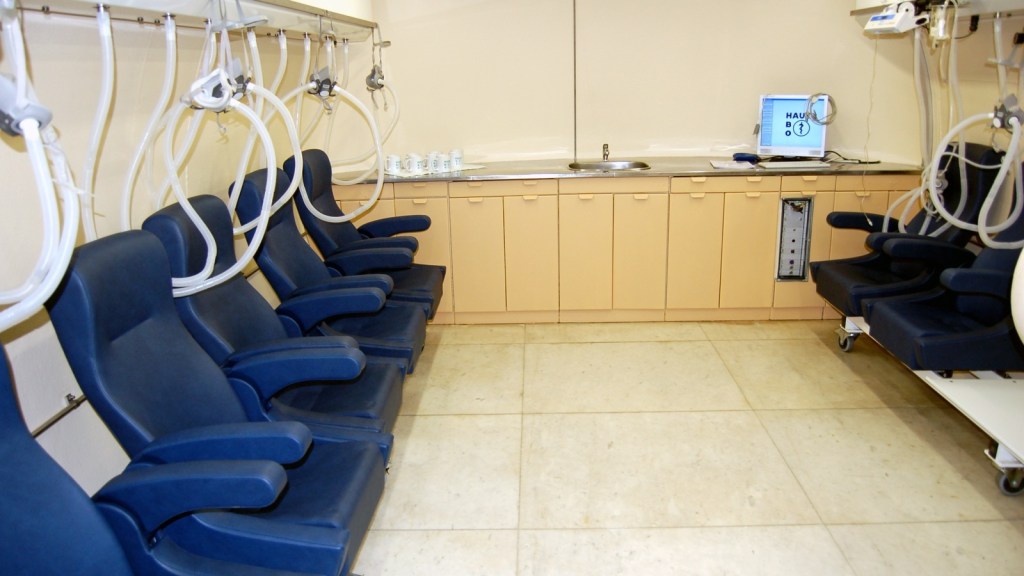
Hyperbaric oxygen therapy (HBOT) means breathing pure oxygen inside a sealed chamber at higher than normal air pressure. In the aging studies, people breathed 100% oxygen through a mask at 2 ATA, which is twice the air pressure at sea level. Each session lasted 90 minutes, and the course ran 60 sessions over about three months (Study). That adds up to roughly 90 hours under pressure.
As of July 2021, the FDA had cleared hyperbaric chambers for 13 conditions (Source). The list includes decompression sickness in divers, carbon monoxide poisoning and gas bubbles in the blood vessels. It also covers severe burns, radiation injury and diabetic foot ulcers that will not heal. Aging, longevity and “age reversal” are not on it.
That FDA page is no longer on the agency’s website, so treat it as a 2021 snapshot. The agency’s August 2025 notice says HBOT chambers are Class II medical devices, cleared through a route called 510(k) (Source). A clearance applies only to the uses it names, and slowing aging is not one of them.
The Telomere Study Behind the Pitch
Telomeres are the protective caps on the ends of our chromosomes. In blood cells, they tend to get shorter with age. So a test showing them longer makes a great headline.
The headline study came out in 2020 from Shamir Medical Center in Israel (Study). It enrolled 35 healthy adults aged 64 and older who lived on their own, and 30 finished the course. The team drew blood before the sessions, during them and one to two weeks after.
Telomeres in four types of immune cell were more than 20% longer at some point during the study (Study). B cells changed the most, at about 37% longer after the course. But the results were patchy. The gains came and went between blood draws. Only the B cell gain held up when all the time points were weighed together.
The share of worn-out, or senescent, T helper cells fell by about 37% in the last sample, taken after treatment ended. Earlier samples showed no clear drop. Only 25 people made it into the telomere analysis, and only 20 into the senescent-cell count. The rest were dropped because of poor blood samples or technician error (Study).
The bigger problem is the design. Everyone in the study got oxygen, so there was no untreated group to compare against. The authors themselves list “the lack of control group” as a limitation (Study). Without one, there is no way to know what caused the change. Chance, the season or a drift in the lab’s test could all move a blood marker over three months.
The volunteers were enrolled under the same trial registration as the team’s brain study (Study). That brain study had a comparison group (Trial). The telomere paper reported only the people who got oxygen.
One Lab, One Clinic Chain
The positive aging papers we found all come from one group, at the Sagol Center for Hyperbaric Medicine and Research (Trial).
In the telomere paper, three authors work for Aviv Scientific, and the senior author, Shai Efrati, is a shareholder (Study). The company says it is rolling out a global network of hyperbaric clinics through an exclusive partnership with the Sagol Center. It also says a team led by Efrati developed its medical program (Source).
The brain study lists six authors who work for the company (Trial). A 2024 paper from that same trial calls Efrati a co-founder of Aviv Scientific (Trial).
None of this proves the data are wrong. But it is a good reason to wait for an outside team to repeat the work. We searched PubMed and the wider web. We found no outside group that has repeated the telomere or senescent-cell result.
Do Longer Telomeres Mean Longer Life?
Even if the result held up, a longer telomere in a blood cell is only a lab number. No one has shown that it means a longer life.
Short telomeres do go with a somewhat higher risk of death. A 2018 review pooled 25 studies covering 121,749 people (Meta-analysis). People with the shortest telomeres had about a quarter higher risk of dying from any cause than those with the longest. But a link like that does not prove cause and effect.
Genetics offers a sharper test. Some people are born with gene variants for longer telomeres, which works like a natural experiment. Across 35 cancers and 48 other diseases, genetically longer telomeres went with more of several cancers, most of all a brain tumor called glioma (Study). They also went with less heart disease.
A 2019 study of 379,758 UK Biobank volunteers found the same trade-off (Study). Longer telomeres showed little link with how long people’s parents lived, thinking skills, grip strength or falls. The authors wrote that lengthening telomeres “may offer little gain in later-life health status” while raising cancer risk.
There is also a simpler reason a blood test can show longer telomeres after three months: the tests are noisy. In long-term studies, 50% of people seemed to “gain” telomere length over 6 months, but only 3% did over 13 years (Study). Those authors blamed most, if not all, of the apparent gains on measurement error. A 2017 reply argued that the data cannot yet rule out some real lengthening (Study). Either way, a 2021 review found no agreed best method for measuring telomeres (Study).
The cell mix matters too. “Naive” T helper cells have not yet fought an infection. In the same person, they carry longer telomeres than “memory” T cells (Study). So a shift toward naive cells could raise the average with no single cell getting younger. We hit the same biomarker trap in our look at the epitalon peptide and telomeres.
The Brain Trials and the Sham
The brain claims rest on a 2020 trial from the same team (Trial). It enrolled 63 healthy adults aged 64 and older. Chance decided who got 60 HBOT sessions over three months and who got nothing at all.
That second group got no sham, meaning a fake session built to feel like the real thing. They knew they were untreated. Only the people scoring the tests were kept in the dark (Trial). The trial’s registry entry lists its blinding as “none” (Source).
On paper, the oxygen group did better. Its overall thinking score rose more than the other group’s. Gains in attention and processing speed held up best (Trial). Memory and word-fluency gains did not survive a standard check for running many tests at once. Blood flow across the whole brain showed no clear difference between the groups.
The missing sham matters, and the authors list it as a limitation. People who know they are being treated may try harder or feel sharper.
A sham was clearly possible. In a long COVID trial, the same team gave the comparison group ordinary air at close to normal pressure. The authors judged that volunteers could not reliably tell the groups apart (Trial).
There has also been a proper sham test in older adults. Mount Sinai in New York led it, with Sheba Medical Center in Israel (Source). It enrolled 155 people with type 2 diabetes and mild memory problems (Study). About half got real HBOT. The rest got ordinary air at barely above normal pressure, made to feel the same (Study). Neither the volunteers nor the researchers knew who got what (Source).
Memory improved in both groups, with no difference between them. At three months, the sham group scored better on overall thinking and planning skills. That result did not get the standard check for running many tests at once. Later on, the groups did not differ. Brain scans of blood flow and sugar use showed no gain from oxygen. The authors concluded that HBOT “did not improve cognitive or brain imaging outcomes compared to sham” (Study).
The oxygen group also had about three times as many serious health events during the trial: 25, against 8 on sham (Study). The trial registry counts people instead: 18 of 77 on oxygen had at least one, against 6 of 78 on sham (Source). The events on oxygen included two detached retinas and two strokes. These counts alone do not show which events the treatment caused.
So far, the results are out only as a short conference summary, not a full peer-reviewed paper. The trial also took only older adults with diabetes and memory problems, so the result may not carry over to healthy people.
Still, it is the only HBOT test in older adults we found that used a sham and kept both sides in the dark. Its sessions ran at the same Sagol Center behind the positive trials (Study). Efrati and his colleague Amir Hadanny are co-authors of the results (Study).
Ears, Seizures and Fire
For its cleared uses, the FDA calls HBOT generally safe, with rare serious complications (Source). But 60 sessions is a long course, and small risks add up.
Side effects are common. A 2023 review pooled 24 trials with 1,497 people. About 30 in every 100 people on HBOT had side effects, against about 10 in every 100 in the comparison groups. Ear trouble topped the list (Meta-analysis).
Pressure squeezes the middle ear, a bit like a fast plane descent, and it can injure the ear. This is called ear barotrauma. In one group of 782 patients, more than 17 in every 100 had ear pain or trouble clearing their ears. About 4 in every 100 had a visible ear injury (Study). Among 2,334 patients at the Sagol Center itself, about 9 in every 100 had this kind of middle-ear injury (Study).
In rare cases, breathing pure oxygen under pressure can also trigger a seizure. Doctors call this oxygen toxicity. At the Sagol Center, 7 of 2,334 patients had a seizure, about 1 in every 8,945 sessions. Only one of those seven was clearly caused by oxygen toxicity, and most patients there had long-term brain conditions (Study).
Another center logged nearly 190,000 sessions over 20 years, at somewhat higher pressures. Seizures came at about 2 in every 10,000 sessions, usually about 21 sessions into a course (Study). After the center added a 5-minute air break, the rate fell from about 4 to about 1 in every 10,000. That compares two stretches of time, though, so it does not prove the break caused the drop.
Long courses can also blur distance vision for a while. After 40 sessions, 45 of 58 eyes in 29 patients became more nearsighted (Study). Most went back to normal within 12 weeks. The lens of the eye also became slightly cloudier, which the authors call a possible effect of the treatment. The FDA’s list adds sinus pain, a burst eardrum and, rarely, a collapsed lung (Source).
Fire is rare, but it is the deadliest risk. In August 2025, the FDA told health care providers it knew of recent chamber fires that caused serious injuries and deaths. It said the root cause was not yet known. It added that high levels of oxygen raise the risk of fire (Source).
The Michigan case made headlines. On January 31, 2025, 5-year-old Thomas Cooper was in a chamber at the Oxford Center in Troy. The chamber caught fire from the inside and exploded (Source). He died, and his mother was also hurt (Source).
On February 10, 2026, the center’s owner and three staff members were sent to trial on felony charges (Source). In July 2026, the former safety director pleaded no contest to involuntary manslaughter, and his murder charge was dropped (Source). In August, he was sentenced to 19 months to 15 years in prison (Source).
The other three have not been convicted and are presumed innocent. In July, a judge refused the owner’s request to drop her murder charge, then paused the case while she appeals (Source). As of November 1, 2026, we found no reported appeal ruling or trial date.
Frequently Asked Questions
Can Hyperbaric Oxygen Therapy Reverse Aging?
No one has shown that it can. The telomere result came from 35 people with no comparison group (Study). Longer telomeres in blood cells have also not been shown to mean a longer life (Study).
Is Hyperbaric Oxygen Therapy Safe?
For its cleared uses, the FDA calls it generally safe, with rare serious complications (Source). Side effects are still common. In a review of 24 trials, about 30 in every 100 people on HBOT had one, most often ear trouble. In the comparison groups, it was 10 in every 100 (Meta-analysis). Seizures and fires are rare but serious.
Is Hyperbaric Oxygen Therapy FDA Approved?
The FDA’s word for these chambers is “cleared”, not “approved”. They are Class II medical devices, cleared for specific uses (Source). As of July 2021, those uses covered 13 conditions, such as decompression sickness, and aging was not among them (Source).
Does Hyperbaric Oxygen Therapy Increase Stem Cells?
It seems to raise certain stem cells in the blood, at least for a while. In 26 patients who had head and neck radiation, blood cells carrying a stem cell marker called CD34+ rose about eightfold over 20 sessions (Study). That study did not measure whether anyone’s health improved. A small stroke study tied bigger rises to better short-term recovery. But patients picked their own group, so it is unclear what caused what (Study).
Is Hyperbaric Oxygen Therapy Legit?
Yes, for the right problem, such as decompression sickness or carbon monoxide poisoning (Source). For aging, it is unproven. A sham-controlled test of 155 older adults found no brain benefit, and the oxygen group had more serious health events (Study).
Key Takeaways
- No control group: the “telomeres grew 20%” result comes from 35 older adults who all got oxygen (Study).
- One clinic-linked lab: several authors work for Aviv Scientific, and the senior author is a shareholder (Study).
- Telomeres are not lifespan: genetically longer telomeres show little link to living longer and go with a higher cancer risk (Study).
- The sham trial found no brain benefit: HBOT did not beat a fake session in 155 older adults with diabetes and memory problems (Study). The oxygen group also had about three times as many serious health events.
- The risks are real: ear injury is common and seizures are rare (Meta-analysis). Chamber fires have caused deaths (Source), including a 5-year-old’s in 2025 (Source).
- Cleared uses only: the FDA has cleared chambers for conditions such as decompression sickness, not for aging (Source).
Spend Your Budget on Proven Basics
If you are weighing a 60-session course, think about what else those 90 hours could buy. Exercise and fitness have far larger human studies behind them than any chamber does. See our guides to VO2max, the longevity biomarker you can train and strength training for longevity.
If you still want to try a chamber, talk to your own doctor first, as the FDA advises. Then ask the clinic three questions. Has it been inspected and accredited by the Undersea and Hyperbaric Medical Society, as the FDA recommends (Source)? What fire-safety checks happen before every session? And what condition is the clinician treating, with what evidence?
If the answer to the last one is “aging”, you now know how thin that evidence is.
Hyperbaric oxygen is a real treatment for a short list of problems. For aging, the best-run test so far came up empty. That is worth knowing before you book.
This article is for educational purposes and is not medical advice. Talk to a qualified clinician before changing your health regimen.


Leave a Reply