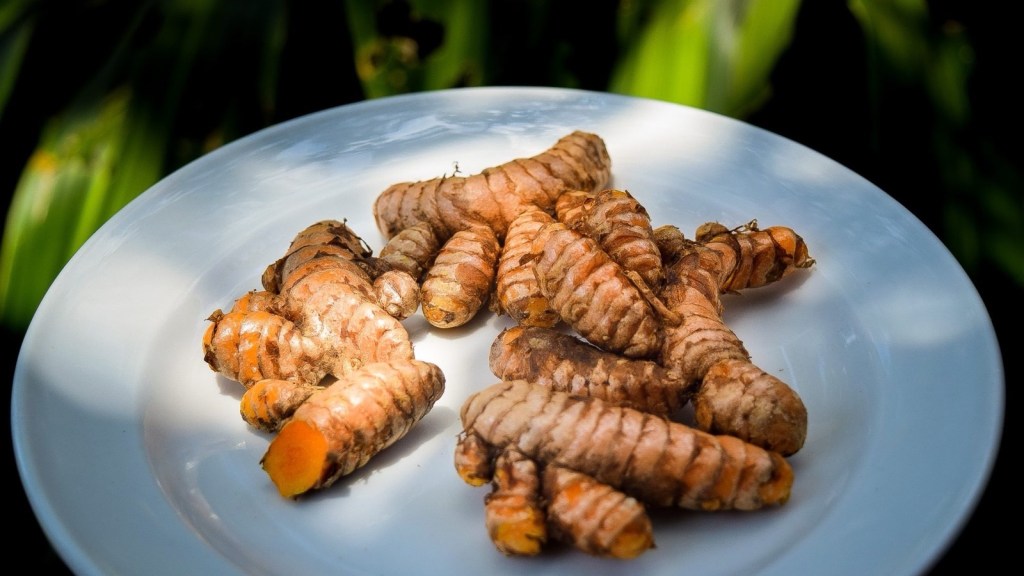
Turmeric can be bad for your liver, but only rarely. The reported cases involve concentrated supplements, not the spice in your curry. A US network that tracks drug-related liver damage has tied 10 cases to turmeric products: 5 people needed a hospital stay and 1 died (Study). The risk is real but hard to predict, and turmeric in normal food amounts does not seem to play a part (Source).
What Turmeric Supplements Are
Turmeric is the yellow root behind curry and golden milk. Its active compounds are called curcuminoids, and the best known is curcumin. In the kitchen, you get small amounts mixed into a meal.
A turmeric supplement is a different product. Capsules hold a concentrated extract or purified curcumin. In clinical trials, people took anywhere from 50 to 6,000 mg a day (Review).
Curcumin has one big weakness: your body barely absorbs it. In a small 1998 study, 2 grams of curcumin left blood levels very low or too low to measure. Then the team added 20 mg of piperine, the compound that gives black pepper its bite. Absorption rose about 20 times, mostly in the first hour (Study).
That boost has not held up well. In a 2021 trial, 30 adults tried several products in turn. A curcumin-plus-piperine product put no more curcumin into the blood than a plain extract. Two newer forms, called micellar and colloidal, absorbed better milligram for milligram. The maker of the colloidal one paid for the trial, though (Trial). A 2020 review lists piperine among early add-ins that raised absorption only slightly (Review).
Whatever the add-in, “high absorption” products aim to get more curcumin into your body than a plain capsule would. Australia’s drug regulator says the liver risk may be higher with them. It could not yet say which products are riskiest (Source).
Turmeric supplements are also very popular. A large US health survey ran from 2017 to 2020. Using it, researchers looked at six herbs that can rarely harm the liver. They estimated that 15.6 million adults had taken at least one of them in the past month (Study). Turmeric was the most common of the six, taken by roughly 11 million of them (Study).
The Liver Injury Cases
The strongest evidence comes from the Drug-Induced Liver Injury Network (DILIN). It is a group of US medical centers that studies liver damage from drugs and supplements. Between 2004 and 2022, its experts judged 10 cases to be linked to turmeric. All 10 joined the study in 2011 or later, and 6 of them since 2017 (Study).
Eight of the 10 were women, and their typical age was 56. Trouble usually began 1 to 4 months after they started the supplement (Study). Five needed a hospital stay, and one died of acute liver failure (Study).
The cases left two clues. First, the team tested 7 of the products. All 7 contained turmeric, and 3 also contained piperine. A fourth product, never tested, listed piperine on its label (Study).
The second clue was a gene. Seven of the 10 patients carried HLA-B*35:01, one version of an immune gene (Study). That version was roughly 6 to 8 times as common in the patients as in US comparison groups (Study). HLA genes help the immune system decide what looks foreign. So a gene link like this suggests an immune reaction rather than a simple poison effect (Review).
Apart from the one death, the follow-up was mostly good news. No one needed a transplant. None of the 9 patients followed for 5 months or more had lasting liver damage. The authors write that most cases got better quickly once people stopped the turmeric (Study).
Italy saw the same pattern. A reporting system for herbal products in Tuscany logged 7 cases of acute hepatitis, a sudden inflammation of the liver, up to September 2019. All 7 involved a high-dose curcumin formula built for high absorption. Most patients got better after stopping. The team also reviewed 23 earlier published cases. Most of those people were taking at least one other medicine too, so turmeric alone is harder to blame (Study).
Doctors call this kind of reaction idiosyncratic, meaning it depends on the person more than the amount. Health Canada says the risk does not seem tied to the dose or to how long you take the product. It also strikes without warning (Source). Most people take turmeric with no liver trouble. A small number react, possibly because of how their immune system responds (Review).
How Rare Is the Risk?
Nobody knows for sure. There is no reliable rate for turmeric liver injury, and the evidence we have cannot produce one.
Case reports count only the people who got sick. They miss everyone who took the product without a problem. DILIN’s authors say the way they collected cases makes it hard to tell even whether cases are rising (Study). The national survey has the opposite problem: it counts users but cannot see who got hurt (Study). And reports to regulators depend on someone noticing the link and sending it in.
The NIH’s LiverTox reference calls the rate “not known” but probably very rare. It gives a rough figure of 1 in 10,000 to 1 in 100,000 people who take turmeric (Review). It names no study or method behind that range, so treat it as an educated guess. LiverTox also says turmeric now appears to be the most common herbal cause of noticeable liver injury in the US (Review). That may partly reflect how many people take it.
What Regulators Have Done
Even without a firm rate, regulators have acted. In August 2023, Australia’s Therapeutic Goods Administration (TGA) said it had received 18 Australian reports of liver problems in people taking turmeric or curcumin. In 9 of them the product may have caused the injury, and 1 of those 9 people died (Source). The TGA called the risk rare.
A label warning came next. In Australia, any medicine taken by mouth with turmeric or curcumin as an active ingredient must now carry one. It says the product may harm the liver “in very rare cases” (Source). The rule was phased in from March 2024 to March 2025. The TGA applied it at every dose, and its advisers thought absorption probably mattered more than dose (Source).
Canada followed in late 2025. Health Canada reviewed 12 Canadian cases and more than 60 international reports. These included 3 deaths, 2 of them blamed on turmeric liver injury. Health Canada called the link possible and the cases rare (Source). It now expects licensed products to list the warning signs and tell people to stop if symptoms appear (Source). Its standard licensing rules cap the daily dose at 1,500 mg of curcuminoids, and extra-absorption formulas need a separate review (Source).
In the US, a nonprofit called the United States Pharmacopeia (USP) sets quality standards for supplements. In late 2025 it recommended a warning statement (Review). The statement opens: “Liver problems have been reported very rarely in people taking supplements containing turmeric and/or curcuminoids” (Review).
A warning label only tells you that a rare risk exists. It is not a sign of quality, and a missing label does not mean a product is safe.
Roughly 11 million US adults take turmeric in a given month. LiverTox counts several dozen cases of clear liver injury tied to turmeric products (Review). For any one person, the odds are low. But a reaction can be serious, and nobody can tell in advance who will have one.
What Turmeric Does Well
The liver risk does not make turmeric useless. Its best evidence is for knee arthritis.
A 2021 review pooled 16 trials with 1,810 adults who had knee osteoarthritis, the wear-and-tear kind (Meta-analysis). In 11 of them, a coin flip decided who got turmeric extract and who got a dummy pill. In trials lasting up to 16 weeks, people on turmeric had less knee pain and moved more easily.
Five trials compared turmeric with NSAIDs, the drug family that includes ibuprofen. Pain relief was about the same. Side effects were about as common with turmeric as with a dummy pill, and a bit less common than with NSAIDs (Meta-analysis).
This review has real limits. The trials disagreed a lot with each other, and people with a higher body weight improved less. The studies also had flaws that can make a treatment look better than it is. Blood markers and joint scans showed no clear difference between groups, so the gain was in how the knee felt. The authors say turmeric looks safe and effective in the short term. But they call the true size of the benefit uncertain (Meta-analysis).
An earlier review of 8 small trials came to a similar verdict. It saw benefits at about 1,000 mg of curcumin a day. But its authors called the evidence too thin for firm conclusions (Meta-analysis).
The trials also look reassuring on safety. USP’s summary of the trial reviews found no organ damage and no serious side effects (Review). The usual complaints were mild: stomach upset, headache, rash and dizziness. One pooled look at 20 trials did find abnormal liver tests in about 5 in every 100 turmeric users. All of those were in trials longer than a month. Those 20 trials had only 526 users in all, far too few to catch a reaction this rare (Review).
In trials on fatty liver disease, curcumin may even lower liver enzymes a little. These are blood markers that rise when liver cells are under stress. A 2025 review of 14 trials with 778 patients found small drops in two common liver enzymes, ALT and AST (Meta-analysis). But the trials disagreed a lot. All of them were also run in Iran, so the results may not apply everywhere.
A 2024 review of 15 trials found a drop in AST but no clear change in ALT. Longer trials and higher doses were linked to smaller gains, and adding piperine gave no extra benefit (Meta-analysis).
So the compound that rarely injures a liver may nudge liver tests the right way in other people. That does not make turmeric a treatment for fatty liver. Australia’s regulator advises anyone with current or past liver problems to avoid these supplements (Source).
Warning Signs to Watch For
If you take a turmeric supplement, learn the signs of liver trouble. The main ones are dark urine, yellow skin or yellowing in the whites of the eyes, and unusual tiredness. Belly pain, nausea, loss of appetite and itching are on Australia’s required label too (Source).
Problems usually start 1 to 4 months after someone begins taking the product (Review). So a few weeks without trouble do not mean you are in the clear.
If any of these signs appear, stop the supplement that day. Then see a doctor and tell them which turmeric product you took. A simple blood test can show whether your liver is under strain. In most cases the injury clears up after you stop the product (Source).
Some people should talk to a doctor before taking turmeric capsules at all. If you have, or have had, liver disease, Australia’s TGA advises avoiding these supplements (Source). Canada’s product rules say to ask a health professional first if you have a liver problem or take medicines, including blood thinners. The same goes during pregnancy or breastfeeding (Source). Many published cases also involved other medicines or supplements (Review). So tell your doctor and pharmacist about every supplement you take, just as you would a prescription.
Turmeric is not the only herb linked to rare liver injury. Ashwagandha has its own separate record, covered in our look at ashwagandha’s benefits and risks. It was one of the six herbs in the same US survey (Study).
Frequently Asked Questions
Does Turmeric Cause Liver Damage?
Rarely, and the reported cases involve supplements, not food. A US network linked 10 cases to turmeric between 2004 and 2022, with 5 hospital stays and 1 death (Study). Most people recovered after stopping. Turmeric in normal food amounts does not appear to be involved (Source).
Is Turmeric Good for Liver?
Possibly a little, but it is not a liver treatment. In trials on fatty liver disease, curcumin may slightly lower some liver enzymes, but the results were mixed (Meta-analysis). People with liver disease are told to avoid these supplements or check with a doctor first.
Is Too Much Turmeric Bad for Your Liver?
No safe cutoff is known, because this injury does not seem to depend on dose. Health Canada calls it hard to predict and not tied to how much you take or for how long (Source). Still, Australia’s regulator says the risk may be higher with higher doses and with products built for extra absorption (Source).
Is Curcumin Liver Toxic?
Not in the usual sense of a poison. Reviews of clinical trials found no organ damage or serious side effects (Review). But in a rare few people it seems to trigger liver injury, usually 1 to 4 months after starting. This may be an immune reaction, and it usually clears once the product is stopped (Review).
Key Takeaways
- Spice vs supplement: Turmeric in normal food amounts does not appear to harm the liver. The reported cases involve concentrated products (Source).
- Rare but real: A US network linked 10 cases to turmeric, with 5 hospital stays and 1 death (Study).
- Gene and pepper clues: Seven of 10 patients carried the HLA-B*35:01 gene variant, and 3 of 7 tested products contained piperine from black pepper (Study).
- No reliable rate: Case reports and surveys cannot measure the risk. The NIH’s range of 1 in 10,000 to 1 in 100,000 users is a rough estimate (Review).
- A modest benefit: Across 16 trials with 1,810 adults, turmeric eased knee arthritis pain better than a dummy pill. It worked about as well as NSAIDs (Meta-analysis).
- Know the warning signs: Stop and see a doctor for dark urine, yellow skin or eyes, unusual tiredness or belly pain (Source).
Spice Freely, Supplement Carefully
Keep cooking with turmeric. The liver cases came from supplements, not from a curry, a soup or a cup of golden milk.
If you take a capsule, know why. Knee pain is the best-supported reason. If you have liver trouble, the advice is to skip turmeric supplements or ask a doctor first. If you take several medicines or just want the lowest risk, consider skipping “high absorption” formulas and those boosted with piperine. Both turn up often in the case reports. And stop at the first warning sign, then get your liver checked.
Turmeric is a modestly useful herb with a rare but serious side effect. You can learn its warning signs and stop the capsules if they show up.
A small risk is easiest to handle when you know what it looks like.
This article is for educational purposes and is not medical advice. Talk to a qualified clinician before changing your health regimen.


Leave a Reply