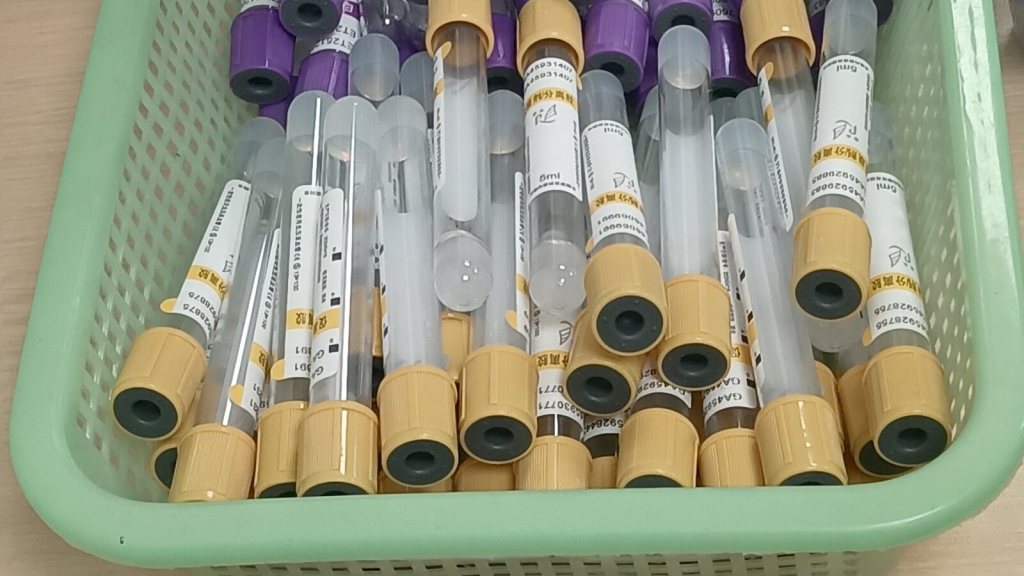
In a 142,250-person NHS trial, a yearly Galleri blood test did not reduce late-stage cancers, which was its main goal (Trial). So for most healthy people, the Galleri test is not yet worth it as a stand-alone cancer screen. About half of its positive results turn out not to be cancer. It also misses most cancers, so a negative result does not mean you are in the clear (Trial).
What the Galleri Test Is
Galleri is a blood test made by the US company GRAIL. It looks for signs of many cancers in a single blood draw. Tumors shed tiny pieces of their DNA into the bloodstream. The test reads chemical tags on that DNA, called methylation patterns, to spot a cancer signal (Trial). When it finds one, it also guesses which part of the body the signal comes from.
In GRAIL’s own studies, the test picked up signals from more than 50 types of cancer (Study). It is sold as a lab-developed test, meaning one lab designs and runs it. The FDA has not cleared or approved it (Source).
How well it works depends on how far a cancer has grown. Cancers are graded in stages from I to IV. Stage I is the earliest, when a cancer is small, and stage IV is the most advanced. In a GRAIL study of 4,077 people, the test found about 90 in every 100 stage IV cancers (Study). It found only about 17 in every 100 stage I cancers. Overall, it caught about half of the cancers in that study. But most people in it had already been diagnosed with cancer. So the test may do worse when it screens healthy people.
Small, early tumors shed less DNA into the blood, so any blood test finds them less often. A 2014 study that used a different kind of blood test saw the same pattern. Tumor DNA showed up in just under half of stage I cancers and in 82% of stage IV ones (Study). GRAIL’s own data point the same way. The cancers its test missed tended to be slower-growing ones that people survived longer. The amount of tumor DNA in the blood may be what ties the two together (Study).
So Galleri is good at finding advanced cancer. Whether it finds cancer early enough to change anyone’s outcome is still unknown.
The 142,000-Person Trial
Before 2026, the evidence was thin. A publicly funded UK review looked at multi-cancer test studies up to September 2023 (Review). It found no finished trial that decided by coin flip who got tested. Most studies had flaws that make a test look better than it is. The biggest was poor follow-up of people who tested negative.
The NHS-Galleri trial was set up to fix that. Researchers in England signed up 142,250 people aged 50 to 77 (Trial). A coin flip decided who got the test. Half had their blood tested once a year for three rounds. The other half gave blood too, but it was stored, not tested.
The main goal was fewer late-stage cancers, meaning stage III and IV, among 12 deadly types. These include lung, bowel, pancreas, ovary and stomach cancer. The trial missed that goal. After three rounds, the tested group had 706 late-stage cancers of those types, and the untested group had 688. That is about 10 in every 1,000 people in each group (Trial).
Within that result, the two stages moved in opposite directions. Stage III cases rose, with 360 in the tested group against 287 in the untested group (Trial). Stage IV cases came out about 14% lower: roughly 340 against 395. The rise in stage III more than cancelled out the drop in stage IV.
That stage IV drop works out to under 1 fewer diagnosis for every 1,000 people screened over three years. It was small enough that chance could explain it, and the paper treats it as a side finding (Trial).
Side effects were rare. Fewer than 1 in 100 people in either group had a problem linked to the trial, and none were serious (Trial). GRAIL paid for the trial and helped design it. Three of the authors are based at GRAIL. The trial has not reported deaths yet. It was also not designed to be big enough to prove a difference in deaths. The team says longer follow-up is needed (Trial).
Deaths are what matter most. Finding a cancer at an earlier stage does not always mean fewer people die of it. The UK ovarian cancer screening trial followed about 202,000 women for around 16 years (Trial). Yearly screening built around a blood test called CA-125 found more early cancers, and stage IV cases fell by about a quarter.
Yet ovarian cancer deaths did not fall. About 6 in every 1,000 women died of it in both groups. Stage III and IV cancers together fell by only about a tenth. The authors wrote that this drop was not enough to save lives (Trial).
A 2024 review of 41 screening trials found a mixed picture. For some cancers, such as lung, fewer late-stage cases went along with fewer deaths. For others, such as prostate, that link was weak (Meta-analysis). A computer modeling study of multi-cancer blood tests came to a similar view. It found that a drop in late-stage cancers does not reliably predict lives saved (Study).
What a Positive Result Means
A positive result means the test found a cancer signal. It does not mean you have cancer. In NHS-Galleri, about 1 in 100 people tested positive in each yearly round (Trial). Roughly half of them turned out to have cancer: 937 of 1,801 positive results over three rounds. That share fell each round, from 58% in the first year to 46% in the third.
To be fair to the test, that hit rate is high for a cancer alarm. The authors point out that only about 6 in 100 urgent referrals for suspected cancer in England end in a cancer diagnosis (Trial). Those referrals involve different people who came by a different route, so the two numbers do not compare directly.
A large US study, PATHFINDER 2, put the figure a little higher. Of 287 people who tested positive, 173 had cancer, about 6 in 10 (Study). The earlier PATHFINDER study used an older version of the test. Only 35 of its 92 signals turned out to be cancer (Study).
A false alarm can drag on. In PATHFINDER, the typical false alarm took 162 days to clear, more than five months. A real cancer took 57 days (Study). Of the 57 false alarms, 53 led to scans and 17 to a procedure, mostly after a scan showed something odd. One person had surgery.
The picture in PATHFINDER 2 was milder. Across everyone tested, 6 in every 1,000 had a procedure that went inside the body after a positive result. Nine in 10 of those procedures were not surgery (Study). Still, nearly half of the people with a false alarm went through one. Four of them had surgery, and all four turned out to have harmless growths.
Then there is the worry. In PATHFINDER, anxiety rose after a positive result, both in people who had cancer and in those who did not (Study). The rise was about 2 points on a standard anxiety scale where the average adult scores 50 (Source). The scale’s makers say a change of 2 to 6 points across a group can matter (Source). So this rise sits at the low end of that range. By the end of the year, scores had drifted back close to where they started. But only a few dozen people answered by then (Study).
People told they had a signal reported about three times as much distress about the test. Still, about 82% of people with a false alarm were satisfied with it, compared with 97% of those who tested negative. GRAIL paid for that study too (Study).
What a Negative Result Means
A negative result does not mean you are free of cancer. In NHS-Galleri, the test caught 37% of the cancers diagnosed within a year of the first round (Trial). In rounds two and three, it caught about 27%. Over all three rounds, it flagged 937 of 3,051 cancers, about 3 in every 10.
It did better on the 12 deadly types the trial focused on. It caught about two thirds of those in the first round and about half in later rounds (Trial). Of the cancers it missed in round one, about two thirds were diagnosed within the year at stage I or II. Early cancers are what the test struggles most to see.
The US study found the same pattern. In PATHFINDER 2, the test caught cancer in 173 people (Study). Another 267 people who tested negative were diagnosed with cancer within the year. So it caught about 4 in 10 cancers overall, and about 7 in 10 among 12 of the deadliest types. In a later look that left out breast and prostate cancer, the catch rate rose to about 55%. In other words, it misses many cases of two of the most common cancers.
You may see a 99% negative predictive value quoted. That figure tells you how often a negative result is right. In round one of NHS-Galleri, 1,127 of the 70,325 people tested were diagnosed with cancer within a year, about 1.6 in every 100 (Trial). So if you told everyone “no cancer” without testing anyone, you would be right about 98 times in 100. Most of that 99% comes from how rare cancer is in any one year.
That is why a negative result should never delay your regular screening. In the first PATHFINDER study, 86 of the 121 people diagnosed with cancer that year had no signal from the blood test (Study). Other screening found the cancer in 38 of those 86 people. For 29 of them, it was routine screening that guidelines recommend. So keep up with colonoscopy or stool tests, mammograms, cervical screening, and lung screening if you qualify.
Is the Galleri Test Worth It?
Start with the money. The list price is $949, and Medicare and most health insurance plans do not cover it (Source). You may be able to pay from a health savings or flexible spending account (HSA or FSA). If you qualify on income, a financial help program can bring the price down to $599. That price leaves out any follow-up scans after a positive result.
Then weigh what the money buys. In PATHFINDER 2, about 185 people had to be tested to find one cancer (Study). At the $949 list price, that comes to roughly $175,000 in test fees for each cancer found (Source). We did that math ourselves, and a discount would lower it. It leaves out follow-up scans. It also says nothing about whether finding that cancer helped the person at all.
On September 23, 2026, an FDA advisory panel voted 7 to 2 that the test’s benefits outweigh its risks for adults 50 and older (Source). According to GRAIL, one member did not vote either way. The vote on whether the test works was closer, at 6 to 4. The panel only gives advice, and the FDA makes the final call. By early November 2026, the FDA had not decided, and GRAIL expected a decision by early 2027 (Source).
A 2026 US law lets Medicare cover FDA-approved multi-cancer tests from 2028 (Source). But FDA approval and proof that the test saves lives are two different things.
Someone might still reasonably buy it if they can pay without strain and are up to date on standard screening. They should also be ready for months of scans after a false alarm. The best argument for the test is that it looks for many cancers with no routine screen. In PATHFINDER 2, about 7 in 10 cancers the test found were types with no recommended US screening test (Study).
Other tests sold to healthy people have similar gaps. A full body MRI scan looks for cancer with pictures instead of DNA, and it also has no trial data on deaths. An organ age test reads blood proteins to guess how old each organ is. No trial shows that lowering that age cuts risk. An Alzheimer’s blood test is cleared only for people who already have memory problems.
Death data from longer NHS-Galleri follow-up could change this verdict. The PATHFINDER 2 authors also say that trials with a comparison group and longer follow-up are still needed (Study).
A better test would still have limits. A 2026 computer model imagined ideal screening that caught cancers at an early stage, before they spread (Study). Even in that best case, the model cut cancer deaths by about 40%, not to zero. The model also projected that between 1 in 10 and nearly 3 in 10 cancers found by screening would be overdiagnosed, depending on the type. These are cancers that would never have caused harm. And early cancers are exactly where today’s test is weakest (Study).
Frequently Asked Questions
Is Galleri Test Accurate?
In one way, yes. It rarely flags a healthy person. In the NHS trial, fewer than 1 in 200 tests in people without cancer came back positive (Trial). But it caught only about 3 in 10 of all cancers, and roughly half of its positive results were cancer. A publicly funded review found that its catch rate varied widely from study to study (Review).
How Much Does the Galleri Test Cost?
The list price in the US is $949, and Medicare and most insurance plans do not cover it (Source). Through December 31, 2026, GRAIL’s site also lists $699 online with a discount code, or $599 through a provider (Source). Follow-up scans after a positive result cost extra. Prices also change, so check before you order.
Is Galleri Test FDA Approved?
No, not as of November 2026. GRAIL says the FDA has not cleared or approved the test, which is sold as a lab-developed test (Source). An FDA advisory panel voted in its favor in September 2026. GRAIL expects a decision by early 2027.
Galleri Test vs Colonoscopy?
Galleri does not replace a colonoscopy. The NHS trial focused on 12 deadly cancer types, including bowel cancer. Galleri caught only about half to two thirds of them (Trial). Colonoscopy and stool tests are the standard bowel cancer screens. A negative Galleri result is no reason to skip one. In the first PATHFINDER study, routine screening found cancer in 29 people the blood test missed (Study).
Key Takeaways
- The trial missed its main goal. In 142,250 people, yearly testing did not reduce late-stage (stage III and IV) cancers (Trial).
- The stage IV drop is unproven. Stage IV cases came out about 14% lower, but chance could explain the gap (Trial).
- About half of positives are false alarms. Roughly 1 in 100 people tested positive each round, and about half of them had cancer (Trial).
- The test misses most cancers. It caught about 3 in 10 of all cancers in the NHS trial (Trial).
- It does not replace standard screening. Routine screening found cancers the blood test missed (Study).
- The maker paid, and deaths are not counted yet. GRAIL funded NHS-Galleri, which has not reported deaths (Trial). It also funded PATHFINDER 2, which did not measure them (Study).
Start With the Screening That Works
If worry about cancer brought you here, start with the screens that are already proven. Check which ones your age and history call for: bowel screening, mammograms, cervical screening, and lung screening if you smoked heavily. Then book whichever one is overdue.
If you still want Galleri, treat it as an optional, expensive extra. Go in knowing that a positive result may be a false alarm, and a negative one does not rule cancer out. Before you order, ask your doctor what happens after a positive result. Also ask who pays for the follow-up scans.
Until the NHS trial reports deaths, Galleri is a test with some promise and no proof yet that it saves lives.
The evidence on Galleri is still coming in, and it is worth watching. For now, the proven screens come first.
This article is for educational purposes and is not medical advice. Talk to a qualified clinician before changing your health regimen.


Leave a Reply