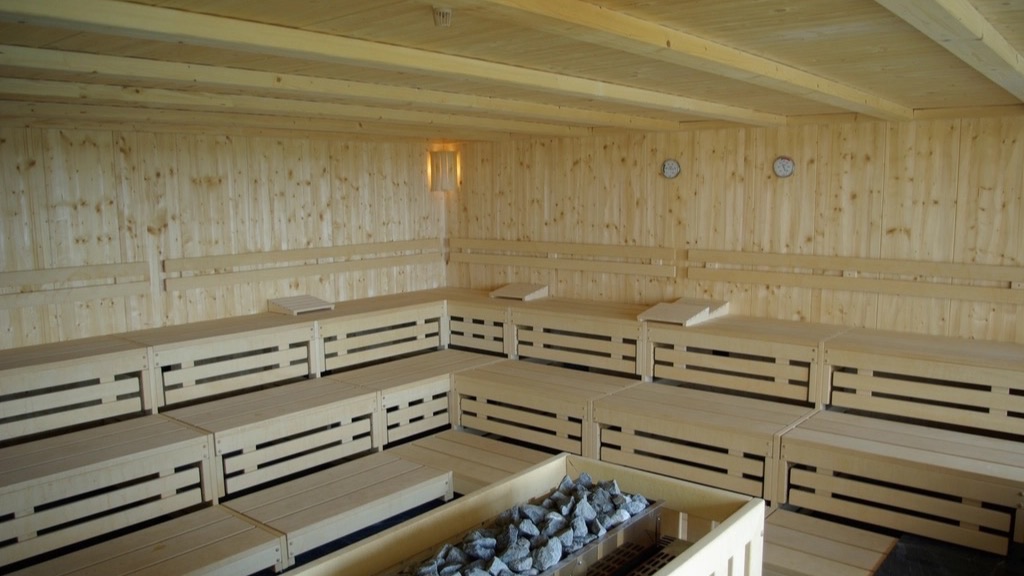
Sauna longevity research suggests sitting in the heat works the heart like exercise, and Finland’s landmark cohort ties frequent bathing to dramatically lower mortality.
Men who took a sauna 4 to 7 times a week were 63% less likely to die suddenly from a cardiac event than men who went just once a week, and their all-cause mortality ran 40% lower too (Study). That is not a wellness slogan; it is the headline finding of one of the strongest cohorts in this whole field. The science of sauna longevity reframes the sweat box as something counterintuitive: not a passive indulgence but a controlled cardiovascular stressor. Heat forces your heart to work, your vessels to dilate, your blood to redistribute, and, like a workout, the body adapts to the load. The question this article chases is how far that adaptation goes, and exactly where the evidence stops.
What Heat Exposure Does
Start with a clean definition. Regular sauna bathing, in the Finnish tradition that produced almost all the longevity data, means a dry sauna heated to roughly 80–100°C, sat in for about 15–20 minutes per session. This is passive heat exposure: you are not moving a muscle, yet your physiology behaves as if you are.
When core temperature climbs, the body scrambles to shed heat. Skin vessels open wide, heart rate accelerates, and blood is rerouted toward the surface to dump warmth. The numbers are striking for someone sitting perfectly still. During a single session, cardiac output can rise by as much as 60–70%, heart rate can reach 100 beats per minute in a moderate sauna and as high as ~150 bpm in a hotter one, and roughly 50–70% of the body’s circulation redistributes from the core to the skin (Review). Stroke volume holds steady while the heart simply beats faster and harder.
Notice what is missing from that list: the legs and lungs. There is no muscular contraction, no pounding stride, no breathlessness. The cardiovascular system is loaded almost in isolation, which is exactly what makes the sauna interesting as a tool. For someone whose joints, lungs, or mobility can’t tolerate a hard workout, the heat delivers a version of the cardiac challenge without the parts of exercise that hurt.
That is the crux of the exercise mimetic framing. When researchers compared a 25-minute sauna session with moderate physical exercise, the cardiac loads came out nearly equivalent (Review). You get a meaningful chunk of an exercise-like cardiovascular challenge without the muscle work, the joint impact, or the gym membership.
This is also where the sauna parts ways from forest bathing. Forest bathing is about calming the nervous system: drifting through trees, inhaling phytoncides, dialing stress down. The sauna does the opposite. It is thermoregulatory stress, a deliberate, repeated cardiovascular load the body has to rise to meet. Both may extend healthspan, but through opposite doors. One soothes, the other challenges.
The Finnish Mortality Data
The spine of the sauna-longevity case is a single, unusually deep dataset: the Kuopio Ischemic Heart Disease (KIHD) study, a prospective cohort of middle-aged men in Eastern Finland, a country where the sauna is woven into ordinary life, making it the natural laboratory for this question.
The foundational analysis, published in JAMA Internal Medicine in 2015, followed 2,315 men aged 42–60 for a median of 20.7 years. The results moved in a clean, graded staircase. Compared with one session a week, men taking a sauna 2–3 times a week had a 22% lower risk of sudden cardiac death, and those going 4–7 times a week had a 63% lower risk (HR 0.37; P for trend = .005) (Study). Fatal coronary heart disease, fatal cardiovascular disease, and all-cause mortality all followed the same dose-dependent gradient, with all-cause mortality landing 40% lower in the most frequent bathers (Study). An accompanying editorial put the fatal-coronary numbers plainly: 23% lower risk at 2–3 sessions a week and 48% lower at 4–7, versus once a week (Review). Session length mattered too: men sitting longer than 19 minutes had roughly half the sudden-cardiac-death risk of those who lasted under 11 (Study).
A fair early objection: this was men only. A 2018 BMC Medicine extension answered it. Analyzing a mixed-sex cohort of 1,688 participants (867 women, 821 men, mean age 63) over a median 15 years, the team found the same dose-dependent protection. Versus one session a week, the adjusted hazard for cardiovascular mortality was 0.75 at 2–3 sessions and 0.23 at 4–7, about 77% lower, with no statistically significant difference between the sexes (Study). The full-text record confirms the exact split and the absence of effect modification by gender (Study). Whatever is happening, it appears to happen in women too.
Now the honest caveat that has to ride alongside every one of these numbers: these are observational associations, not proof of cause. Cohorts can only show that frequent sauna users also die less, not that the sauna is why. Frequent bathers may be fitter, wealthier, or less sick to begin with, a classic healthy-user effect. The investigators adjusted for a long list of confounders, including physical activity and socioeconomic status (Study), which strengthens the signal, but adjustment is not randomization. Hold that thought; it is the hinge of the whole piece.
Pressure, Pipes, and Strokes
If heat genuinely conditions the cardiovascular system, the effect should show up before death does, in the vasculature itself. The KIHD cohort delivers two more graded associations here.
The first is incident hypertension. Tracking 1,621 men who started out normotensive over a median 24.7 years, researchers logged 251 new cases. Men taking a sauna 4–7 times a week had a 47% lower hazard of developing high blood pressure than once-a-week bathers (HR 0.53 after full adjustment) (Study), a figure the journal’s official record confirms (Study). The second is stroke. In a 2018 Neurology analysis of 1,628 men and women followed ~15 years, with 155 incident strokes, the most frequent bathers carried a 61% lower stroke risk (HR 0.39) (Study), a result the University of Eastern Finland highlighted in announcing the work (Study).
Here is where intellectual honesty earns its keep, because the experimental data are messier than the cohorts. When you move from observation to randomized trials, the only design that can prove causation, the vascular story splits in two.
On one side, controlled heat therapy clearly improves the inner lining of vessels. A trial of repeated thermal therapy in patients with coronary risk factors raised brachial-artery flow-mediated dilation (FMD, a direct readout of endothelial function) from 4.0% to 5.8% over two weeks, with the endothelium-independent response unchanged, pinning the gain specifically to the vessel lining (Trial). A single bout of whole-body heating likewise lifted endothelium-dependent dilation by about 50% a day later, though in just eight adults (Study).
On the other side, the pooled picture is sober. A 2025 systematic review and meta-analysis of about 20 passive-heating RCTs found no statistically significant reduction in blood pressure overall: systolic pressure fell a non-significant 2.46 mmHg, diastolic a non-significant 1.08 mmHg (Meta-analysis). A significant systolic drop surfaced only in subgroups, people undergoing whole-body heating and those already at cardiovascular risk, and the authors flagged high heterogeneity (Meta-analysis). The same review’s pooled FMD estimate was also non-significant (Meta-analysis). So while single trials show a clear endothelial lift, the pooled signal is genuinely mixed. Endothelial function looks like the more reproducible direction, but the magnitude across trials remains contested. The cohort percentages and the trial averages do not yet fully agree.
Heat Shock Proteins at Work
If the sauna really does condition the heart, why? The most popular molecular answer is heat shock proteins (HSPs), a family of molecular chaperones, named HSP70 and HSP90 by weight, that cells crank out when stressed.
The proposed chain is elegant. Heat stress induces HSPs; HSPs protect cardiomyocytes from damage, stabilize the enzyme eNOS to boost nitric oxide and so improve endothelial relaxation, and help counter inflammation, insulin resistance, and the ischemia-reperfusion injury that follows a blocked-then-restored blood supply. Lay that mechanism over the vascular and mortality findings and you have a tidy story: heat to HSPs to healthier vessels to fewer events.
It is worth dwelling on why nitric oxide sits at the center of that diagram. Nitric oxide is the signal that tells the smooth muscle wrapping each artery to relax, and a healthy, responsive endothelium is one of the better predictors of long-term cardiovascular risk. If repeated heat exposure genuinely tunes that system upward, the downstream effects on blood pressure, clotting, and plaque stability would plausibly follow. That logic is why the FMD findings carry so much weight in the field: flow-mediated dilation is the closest non-invasive window we have onto whether the lining of your vessels is doing its job.
Tidy, but the human causal chain is still inferred more than demonstrated, and the honest version flags the gaps. When a single bout of passive heating improved endothelial function in humans, circulating HSP90-alpha did not change, dissociating the vascular benefit from any measurable systemic HSP rise (Study). In a controlled crossover holding core temperature at 39°C for 90 minutes, intracellular HSP70 did not climb significantly, and the authors noted the response “appeared to be individual specific” (Trial). A 2023 review goes further: in the authors’ own work, mild thermal stimulation failed to raise serum HSP70 and sometimes lowered it, and it cautioned that the HSP70–atherosclerosis link is inconsistent, with some studies tying elevated HSP70 to more vascular disease, so the relationship “has not yet been fully elucidated” (Review). The HSP hypothesis is a plausible bridge, not a proven one. The endothelium improves; whether HSPs are the reason is still an open question.
More Heat, More Benefit
Step back and one pattern recurs across every KIHD endpoint: a dose-response. More frequent and longer sessions track with bigger associations. Sudden cardiac death, fatal CHD, fatal CVD, hypertension, and stroke all step down as weekly visits rise (Study), and session duration over 19 minutes carried its own benefit (Study). A graded relationship is one of the features epidemiologists look for when weighing whether an association might be causal, though, again, it cannot settle the question alone.
The dose-response extends above the neck. In a 2017 Age and Ageing analysis of the same 2,315 men (204 dementia and 123 Alzheimer’s cases over ~20 years), men taking a sauna 4–7 times a week had a 66% lower dementia hazard (HR 0.34) and a 65% lower Alzheimer’s disease hazard (HR 0.35) than once-a-week bathers (Study). Those estimates came from a Cox model adjusted for age, alcohol, BMI, blood pressure, smoking, diabetes, prior heart attack, resting heart rate, and LDL (Study), a meaningful confounder set, though reverse causation in a single-sex cohort cannot be fully excluded.
Two practical notes close the section. First, the sauna is a complement to exercise, not a substitute; the cardiovascular benefits appear to stack with physical fitness rather than replace it. Second, heat is a real physiological stressor, so some people should be cautious or abstain. Documented contraindications include unstable angina, recent myocardial infarction, uncontrolled hypotension, decompensated heart failure, and severe aortic stenosis (Review). Alcohol around sauna use sharply raises the risk of dangerous blood-pressure drops, arrhythmia, and sudden death and should be avoided entirely; the elderly with orthostatic hypotension should skip sudden temperature swings; and pregnant women should consult a clinician first (Review).
Frequently Asked Questions
How often should you use a sauna for heart health?
In the Finnish research, men who took a sauna 4 to 7 times a week showed the largest associations, including a 63% lower risk of sudden cardiac death and 40% lower all-cause mortality compared with going once a week (Study). Sessions were typically about 15 to 20 minutes in a dry sauna heated to roughly 80 to 100°C, and sitting longer than 19 minutes was linked to lower risk than sessions under 11 minutes. These are observational findings, so they show an association rather than proof, but the pattern that tracked with benefit was consistent use several times a week.
Does sitting in a sauna actually lower blood pressure?
The evidence is mixed, and the article calls blood pressure the “soft spot.” Cohort data linked frequent sauna use, 4 to 7 times a week, to a 47% lower chance of developing high blood pressure, but a 2025 meta-analysis of about 20 randomized trials found no statistically significant overall reduction in blood pressure (Meta-analysis). A meaningful drop in the top number appeared only in certain subgroups, such as people already at cardiovascular risk. So the strong cohort signal and the trial averages do not yet fully agree.
Can a sauna replace exercise?
No. The article frames the sauna as an “exercise mimetic” that complements training rather than replaces it. When researchers compared a 25-minute sauna session with moderate exercise, the cardiac loads came out nearly equivalent, because heat makes the heart beat faster and raises cardiac output even while you sit still. But the benefits appear to stack with physical fitness, so the sauna is presented as a low-effort addition, not a substitute for working out.
Who should avoid using a sauna?
Heat is a real physiological stressor, so some people should be cautious or abstain. Documented reasons to avoid it include unstable angina, a recent heart attack, uncontrolled low blood pressure, decompensated heart failure, and severe narrowing of the aortic valve (Review). The article also says alcohol around sauna use should be avoided entirely because it sharply raises the risk of dangerous blood-pressure drops, irregular heartbeats, and sudden death, that elderly people prone to dizziness on standing should skip sudden temperature swings, and that pregnant women should consult a clinician first.
Is frequent sauna use linked to lower dementia risk?
In the same Finnish cohort of 2,315 men followed about 20 years, those taking a sauna 4 to 7 times a week had a 66% lower risk of dementia and a 65% lower risk of Alzheimer’s disease than once-a-week bathers (Study). The estimates came from a model that adjusted for factors like age, blood pressure, smoking, and diabetes. Still, this is an observational association in men only, so it cannot prove the sauna is the cause.
Key Takeaways
- Frequent sauna tracks with far lower mortality. In 2,315 Finnish men over ~20 years, 4–7 sessions a week versus 1 was tied to 63% lower sudden cardiac death and 40% lower all-cause mortality, observational but striking (Study).
- Blood pressure is the soft spot. Cohort data link frequent sauna to 47% lower incident hypertension (Study), yet a 2025 meta-analysis of ~20 RCTs found no significant overall BP reduction (Meta-analysis).
- Stroke risk runs lower in frequent bathers. Men and women going 4–7 times a week had a 61% lower stroke risk over ~15 years (Study).
- Endothelial function is the most reproducible signal. Thermal therapy raised flow-mediated dilation from 4.0% to 5.8% in at-risk patients (Trial), but the proposed heat-shock-protein mechanism behind it stays inconsistent and largely inferred (Review).
- The brain may benefit too. Frequent sauna was associated with 66% lower dementia and 65% lower Alzheimer’s risk in the same cohort (Study).
- It is correlation, not proof. Every mortality and incidence figure here comes from observational cohorts; no RCT has tested sauna on hard endpoints, so confounding by fitness and wealth can’t be ruled out (Study).
Turn Up the Heat for Life
Strip away the hype and the sauna lands in a sweet spot few longevity habits occupy: low-effort, deeply pleasant, and backed by some of the cleanest cohort data in the field. The honest summary is two-sided. The Finnish mortality, stroke, hypertension, and dementia associations are large, graded, and consistent, but they are associations. The randomized trials that could prove causation either don’t exist for hard endpoints or come back mixed, with endothelial function the steadiest experimental win and blood pressure stubbornly unmoved in pooled analysis. So treat the sauna as a promising, near-passive exercise mimetic for the heart that complements training, not a replacement for it, and not a cure for anything.
Practically, that means consistency over intensity: a comfortable 15–20 minutes at a temperature you can relax in, ideally several times a week, sober, and with your clinician’s blessing if you carry any cardiovascular condition. The beauty of sauna longevity as a habit is that the “dose” feels like a reward rather than a chore. You sit, you sweat, your heart does a quiet workout, and the body adapts, week after low-effort week.
A near-free heat habit that may rival a brisk walk for your heart? Pharmaceutical companies hate this trick!
This article is for educational purposes and is not medical advice. Talk to a qualified clinician before changing your health regimen.


Leave a comment