About one in five adults worldwide have a high lipoprotein(a) level. Almost none of them know it. One lipoprotein a test settles your number for life, because your genes set it in childhood (Consensus statement). In September 2026 the first drug built to prove that lowering Lp(a) prevents heart attacks failed (Trial). The number still matters. It sharpens what else you treat, and it tells your family to get checked.
What Lipoprotein(a) Is
Picture an ordinary LDL cholesterol particle. Now bolt a long, sticky protein onto it. That protein is apo(a). The finished package is Lp(a).
The particle carries cholesterol into artery walls, the way LDL does. It seems to be much better at doing damage. In a large genetic study, each Lp(a) particle carried about six times the heart risk of an LDL particle (Study).
What makes Lp(a) odd is where your level comes from. More than 90% of the difference between people traces back to one gene (Consensus statement). That gene is fully switched on by age two. Most people reach their adult level by about age five. It then holds steady, give or take a small drift upward.
Fasting does not change it, and exercise barely does. In population studies, inflammation has little effect (Consensus statement). So one reading is enough. A result at 30 still describes you at 60.
There is one more catch. A standard cholesterol panel does not include Lp(a). It reports total cholesterol, LDL, HDL and triglycerides, then stops. A normal panel can sit on top of a very high Lp(a). That is why almost nobody knows their number.
Getting the Lipoprotein A Test
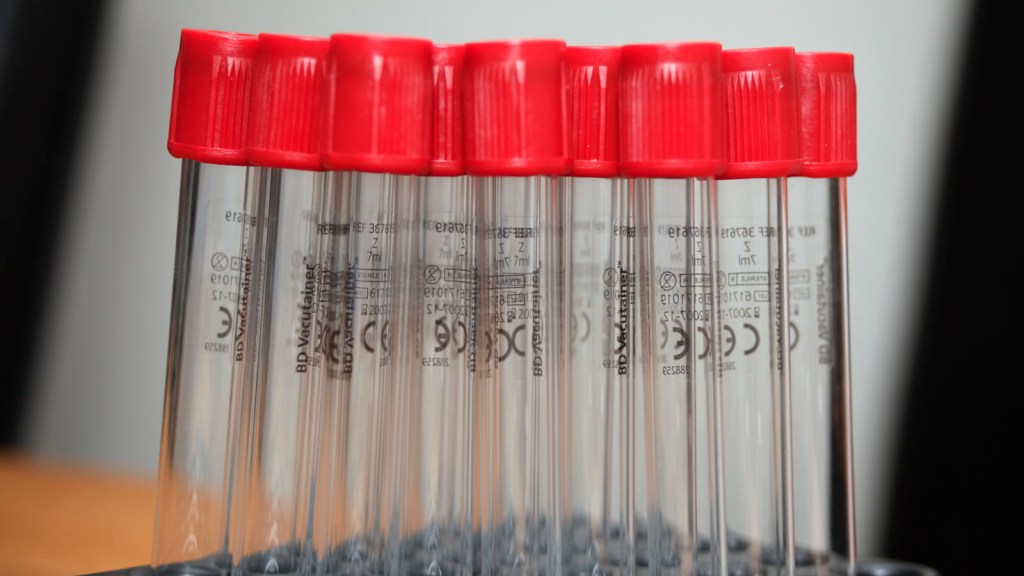
Ask for it by name. A lipoprotein a test is a single blood draw, and you do not need to fast (Consensus statement). It is not part of a routine panel, so somebody has to order it. Most labs can run it.
In 2026 the American College of Cardiology and the American Heart Association wrote a new guideline on blood fats, with nine other societies. It asks that Lp(a) be measured at least once in every adult’s lifetime (Guideline). No US guideline had asked that of every adult before.
One test is enough, and the societies explain why. Lp(a) is mostly genetic and stays steady for life. Lifestyle moves it very little, so repeat testing is usually not needed (Guideline summary).
Units are where people get caught out. Labs report Lp(a) two ways. One is mg/dL, which weighs the particles. The other is nmol/L, which counts them. There is no exact conversion, because particle size varies from person to person. You can see the gap in the published cut-offs. A high level of 50 mg/dL is usually paired with 125 nmol/L (Consensus statement). But the 70 mg/dL entry mark for the recent drug trial works out near 149 nmol/L (Trial). Check which unit your result uses before you compare it to anything.
In mg/dL the rough map is simple. Under 30 is low. From 30 to 50 is a grey zone. From 50 up counts as high (Consensus statement). The recent trials recruited from the very high end, starting at 70 and at 90 (Trial). In nmol/L, the guideline summary gives the risk directly. At 125, the long-term risk of a heart attack or stroke runs about 40% higher. At 250 it is at least double (Guideline summary).
What a High Number Means
The clearest view comes from one big pooled analysis. Researchers gathered the raw records of 126,634 people from 36 long-running studies (Meta-analysis). Those records held 9,336 heart events and 1,903 strokes from a blocked vessel.
Among the third of people with the highest Lp(a), about 5.6 in every 1,000 had a heart event each year. In the lowest third it was about 4.4 in every 1,000 (Meta-analysis). That is one extra event per 1,000 people a year. Over ten years it is one per 100 people.
Read those figures the other way. Even in the highest third, more than 99 in every 100 people got through each year without an event. A high number raises your risk. It is not a diagnosis.
The link held after researchers allowed for cholesterol and the usual risk factors. It showed up for stroke too (Meta-analysis). It did not show up for cancer death. That pattern suggests the effect really is about arteries.
One finding matters most in a doctor’s office. Researchers pooled the records of 27,658 people from six statin trials. Some were on a statin with their LDL pushed into the lowest quarter. Even in that group, an Lp(a) above 50 mg/dL came with more heart and artery events (Meta-analysis). That is a look back at old trial records, not a test of lowering Lp(a). Even so, driving LDL down does not appear to erase Lp(a) risk. An apoB result cannot stand in either. It cannot tell you how much of that apoB is the riskier Lp(a) kind.
Most coverage skips the next risk. Lp(a) is also linked to calcific aortic valve stenosis. The heart’s main outflow valve stiffens with calcium until it can no longer open properly. It is the most common reason an adult needs a heart valve replaced.
One Danish study followed 77,680 adults for up to 20 years. In that time 454 developed aortic valve stenosis, and the risk climbed steadily as Lp(a) rose (Study). People above 90 mg/dL had close to three times the risk of those at the bottom. The authors also checked the link using inherited gene variants. The genetic estimate matched the observed one, which points to a real cause rather than coincidence.
A pooled analysis covered eight studies and 52,931 people. It put an Lp(a) above 50 mg/dL at roughly 75% higher risk of a calcified valve (Meta-analysis). At the lower cut-off of 30 mg/dL the overall link was not clear. It did show up among the long follow-up studies alone.
It matters after a diagnosis too. In people who already have valve disease, a high level goes with worse outcomes. The risk of needing a new valve, or of dying of a heart cause, runs about 40% higher (Meta-analysis). Those studies measured things differently, so treat the figure as rough.
The Trial That Just Missed
The plan looked simple. If Lp(a) causes heart attacks, build a drug that strips it out, then show the events fall. Lp(a)HORIZON was that test.
It enrolled 8,323 people who already had heart or artery disease. Each had had a heart attack, a stroke from a blocked vessel, or poor circulation in the legs. Everyone had an Lp(a) of 70 mg/dL or higher. A coin-flip draw decided who got a monthly injection of pelacarsen and who got a dummy one, on top of the best standard care (Trial). Nobody involved knew which was which. The question was whether it cut heart deaths, heart attacks, strokes and emergency procedures to reopen an artery.
On 4 September 2026 the answer arrived. It did not (Trial). Pelacarsen did lower Lp(a). The announcement said plainly that the lower levels did not translate into fewer heart and artery events. No figures came with that statement. The full data are due at an upcoming medical meeting (Report).
That is a real disappointment. The result is still worth reading carefully.
The genetic case for Lp(a) causing disease has not gone away. It rests on gene variants dealt out at conception. No habit can shift those (Study).
The leading explanation for the miss is arithmetic, not biology. Genetic work suggests the benefit tracks the milligrams removed, not the percentage taken off. One analysis estimated that roughly 100 mg/dL of Lp(a) has to go, to match the heart benefit of a standard LDL reduction (Analysis). A Copenhagen study looked at people who already had heart disease. It put the figure at about 50 mg/dL over five years, to cut repeat events by a fifth (Study). That is a projection from population data, not a drug-trial result.
Now look at who was in the trial. Entry started at 70 mg/dL. Someone sitting at 80 does not have 100 mg/dL to give away, however good the drug is. The trial may have enrolled people who could not shed enough milligrams for a benefit to show.
Outside coverage adds one more detail. A cardiologist quoted there said background care in the trial was unusually good, with LDL averaging around 66 mg/dL (Report). When everything else is already treated hard, any extra benefit is harder to see.
Two bigger trials are still running. Olpasiran is in 7,297 people with Lp(a) at or above 200 nmol/L, finishing around 2028 (Trial). Lepodisiran is in a trial of about 17,300 people, due to report around 2029 (Trial). An earlier study gave 320 people one lepodisiran injection. Over the year that followed, their Lp(a) ran about 88% below placebo (Trial). It measured blood levels only, not heart attacks.
The honest position today is simple. No drug has been shown to prevent heart attacks by lowering Lp(a), and one has now tried and failed. The question is still open.
What Actually Helps Today
No approved treatment aimed at Lp(a) has proven benefit (Consensus statement).
Lipoprotein apheresis is the only approved route that removes most of it. A machine filters the blood, much like dialysis, every week or two. In a German study of 170 patients, one session cut Lp(a) by about two thirds (Study). Event rates dropped sharply once patients started regular treatment.
But every patient there was already getting worse, and there was no comparison group. The paper reports no drug data across those five years either. The result is encouraging, but nobody would call it proof. Apheresis is kept for very high Lp(a) with disease that keeps getting worse despite everything else (Consensus statement).
The drugs already on the shelf do less than people hope. PCSK9 inhibitors lower Lp(a) by about 15% to 30% (Consensus statement). Older drugs that trim Lp(a) by a quarter to a third have never shown fewer heart attacks. The arithmetic explains why. People in those trials started near 12 to 20 mg/dL, so a 30% cut removed only 3 to 6 mg/dL (Analysis).
Statins may nudge it the other way. One pooled analysis of 5,256 people in six trials found a rise of about 11% on a statin (Meta-analysis). A bigger review of 39 trials and 24,448 people found almost no change at all (Meta-analysis). Either way the shift is small in milligrams. Nobody suggests it cancels what statins do for LDL. Decisions about any medicine belong with your doctor.
Lifestyle barely touches Lp(a), which is worth knowing before you try. Cutting saturated fat is the classic cholesterol move. Across 27 controlled diet trials in 1,325 adults, it left Lp(a) slightly higher (Meta-analysis). Dieting can do the same. In 131 people who lost about a tenth of their body weight, LDL improved while Lp(a) rose a little (Study). In the same paper, a group who lost more weight after surgery showed no rise. The low-fat diet looks like the trigger, not the weight.
Exercise has even less behind it. Only four trials have measured Lp(a), and pooled they moved it by about 2.5 mg/dL (Meta-analysis). That is nothing to a person sitting at 100. L-carnitine is the one supplement with a positive pooled result, around 9 mg/dL lower. It rests on seven small, short trials, and none of them measured heart attacks or deaths (Meta-analysis).
That leaves everything else. Lp(a) risk appears to stack on top of LDL risk instead of replacing it (Meta-analysis). So the ordinary work pays you more than it pays someone with a normal level. The major cardiology bodies say exactly this. With no specific therapy available, treat every other risk factor early and hard (Consensus statement). Lowering LDL helps most, and it is worth understanding properly if you have met the cholesterol paradox argument online. Blood pressure comes next, then stopping smoking.
Then do the part only you can do. Tell your parents, your brothers and sisters, and your children to get tested. The level runs in families, and the hit rate is high. In one large study, close to half of the close relatives of someone with a high level were high too (Study). That works out at roughly one new case for every two relatives tested (Review). Real clinics do worse, nearer one in four, so treat one in two as the best case (Study).
Frequently Asked Questions
How often do I need a lipoprotein a test?
Once in adult life is usually enough. Your genes set most of your level, and it holds steady for decades. The 2026 ACC/AHA guideline summary says repeat testing is usually not needed (Guideline summary). There are exceptions. Some kidney conditions, liver disease and pregnancy can move the number (Consensus statement).
Does a standard cholesterol test include Lp(a)?
No. A routine panel reports total cholesterol, LDL, HDL and triglycerides. Lp(a) has to be ordered on its own. Cardiology groups suggest adding it to a first lipid profile where that is possible (Consensus statement). A clean cholesterol result tells you nothing about your Lp(a).
Can diet or exercise lower lipoprotein(a)?
Barely. Cutting saturated fat left Lp(a) slightly higher in pooled diet trials (Meta-analysis). Low-fat dieting nudged it up rather than down (Study). Across the four exercise trials that measured it, training moved it by about 2.5 mg/dL (Meta-analysis). None of that makes those habits pointless. They work on every other part of your risk.
Should children be tested for Lp(a)?
The once-in-a-lifetime advice is written for adults, and the guideline gives children their own advice (Guideline). It advises a standard cholesterol check at ages 9 to 11 (Guideline summary). That can start at age 2 when a close relative has early heart disease or very high cholesterol (Guideline). If a parent has a high level, that is a conversation for the family doctor.
Does a high result mean I will have a heart attack?
No. It means a raised risk, not a diagnosis. In the largest pooled analysis, the gap between the highest and lowest thirds came to one extra heart event per 1,000 people a year (Meta-analysis). Most people with a high number never have an event.
Key Takeaways
- Roughly one in five carry it. About 20% of people worldwide sit above 50 mg/dL (Consensus statement). In a US lab sample of over 530,000 people sent for testing, it was 24% (Study).
- One test covers your life. More than 90% of your level comes from one gene, and it is largely set in childhood (Consensus statement). The 2026 ACC/AHA guideline now asks every adult to measure it once (Guideline).
- A normal cholesterol panel misses it. Lp(a) is a separate request, and driving LDL down does not appear to erase its risk (Meta-analysis).
- It is linked to valve disease. Above 50 mg/dL, the risk of a calcified aortic valve runs roughly 75% higher (Meta-analysis).
- No treatment has proven benefit yet. The first outcomes trial, in 8,323 people, lowered Lp(a) but did not cut heart and artery events (Trial).
- Push hard on the rest. With no specific therapy, guidelines say treat other risk factors early and hard (Consensus statement), and have close relatives tested (Study).
Test Once, Then Tell Your Family
The ask here is small. Get the number once, at your next blood draw. Write it down with the units. Bring it to whoever manages your heart risk. Let it sharpen what you already do about cholesterol, blood pressure and smoking.
Then pass it on. A high result is information for your whole family.
It would be nicer to end this another way. The first drug built to strip out Lp(a) did not prevent heart attacks, and the next answers are years away. The test is still worth doing. It tells you how hard to work on the risks you can already change.
The evidence is still building, and this one is worth watching.
This article is for educational purposes and is not medical advice. Talk to a qualified clinician before changing your health regimen.


Leave a comment