The biggest trial of testosterone therapy risks gave two answers, and the ads only quote one. In TRAVERSE, 5,246 men with confirmed low testosterone and high heart risk used a daily gel for about three years. Heart attacks, strokes and cardiac deaths hit 7.0% of the men on the drug and 7.3% of the men on a dummy gel (Trial). The same trial found more irregular heartbeats, lung clots, sudden kidney injury and broken bones on testosterone.
The heart news is genuine. It also covers a much smaller group of men than a subscription website suggests.
What TRAVERSE Actually Tested
Hypogonadism means the body does not make enough testosterone, and the man has symptoms because of it. That is a medical diagnosis with a blood test behind it. TRAVERSE only took men who met it, and the entry rules were strict.
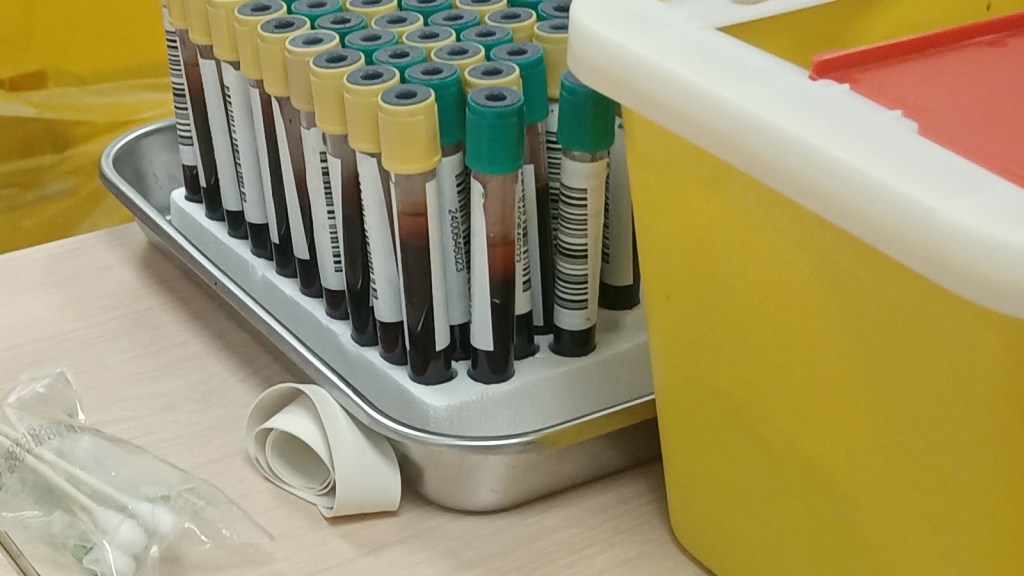
Every man needed two separate morning blood tests below 300 ng/dL. Both draws happened between 5 AM and 11 AM, at least two days apart (Trial). He also needed at least one symptom from a set list. Low sex drive, fewer spontaneous erections, low energy, low mood, thinning body hair and hot flushes all counted. On top of that he needed known heart disease, or at least three heart risk factors such as high blood pressure or diabetes.
Ages ran from 45 to 80. Men whose level came back below 100 ng/dL twice were turned away (Trial). Every man in the trial had therefore been measured twice and questioned about symptoms before he started.
Half the men rubbed on a 1.62% testosterone gel each day. The other half used a gel with nothing in it, and a coin flip decided who got which. Researchers adjusted the dose to hold blood levels between 350 and 750 ng/dL. Men used the gel for about 22 months on average, and were followed for about 33 months (Trial). The trial finished in January 2023 (Trial).
The design matters for how you read the result. TRAVERSE was set up to rule out a big rise in heart attacks and strokes, not to show a benefit. Passing that test means no large harm turned up over three years. It says nothing about testosterone being good for your heart.
Testosterone Therapy Risks, In Full
The main result held up. Of 2,596 men on testosterone, 182 had a heart attack, a stroke or a cardiac death. Among 2,602 men on the dummy gel, 190 did (Trial). A 2025 review in a men’s health journal reports the same split (Review). Over roughly three years, the two groups came out level.
Several other problems were more common on treatment. Doctors diagnosed atrial fibrillation, an irregular heartbeat that raises stroke risk, in 91 men on testosterone and 63 on the dummy gel (Review). Other heart rhythm problems needing treatment ran 134 against 87 (Review). Sudden kidney injury hit 60 men against 40 (Review). Blood clots in the lungs, called pulmonary embolism, turned up in 24 men against 12. The researchers said those counts were too small to test properly (Review).
Two details cut the other way. Counting clots in veins anywhere in the body, the gap narrowed to 44 against 30 (Review). And 16 fewer men died in the testosterone group, which leaves more men alive to have a non-fatal problem recorded (Review). The reviewer who raises that point reads these signals as quirks in how the trial counted events, rather than proof of harm.
Treat them as warning signs that need more work, rather than proven harms. They still came out of the same trial as the reassuring heart number, and they deserve the same attention.
The Fracture Result Nobody Quotes
Testosterone raises bone density, so the bone results looked like a safe bet. They went the other way.
Researchers followed 5,204 of the TRAVERSE men for just over three years to see whether treatment prevented broken bones. More men broke bones on testosterone (Trial). A fracture bad enough to bring a man to a doctor happened in 3.5% of the treated men, against 2.5% on the dummy gel. Put another way, close to 4 in every 100 treated men had broken a bone by year three, against under 3 in every 100 (Review). The Endocrine Society now lists that result next to the reassuring heart one (Statement).
Nobody predicted more fractures, and researchers still have no agreed explanation for them.
This is the clearest reason to read past a headline. The same trial, in the same men, produced the calming heart number and this awkward one. A summary that mentions only the first leaves out half of what was found.
Energy, Mood And Sex Drive
TRAVERSE also studied sex in 1,161 men who had low sex drive at the start. Sex drive improved on testosterone, and so did how often the men had sex. Their overall symptom scores improved too. Erections barely moved at 12 months or at 24 (Trial). The gain in sexual activity was the same at two years as at one, so it held rather than faded.
Older work found the same pattern. In the Testosterone Trials, higher levels went with more desire and more activity, though not with better erections (Trial). Pooling the trials that tested testosterone against a dummy, the gain in erections is small, about the same size as the gain in desire (Meta-analysis).
Tiredness is a harder thing to shift. The Testosterone Trials enrolled 790 men aged 65 and over with low levels. One part of the study asked whether they felt less tired after a year of treatment. More men on testosterone did report less fatigue, but the gap was small enough that chance could explain it (Trial). Another part asked whether men walked much further in six minutes. That target was missed too, though walking did improve a little when all 790 men were pooled.
A review for the American College of Physicians pooled 38 trials lasting at least six months. Most of them ran in older men with no clear medical cause for their low levels. Testosterone gives a small lift to sexual function and quality of life. It does little or nothing for physical function, low mood, energy or thinking (Review).
Mood is the one part of that summary that stays murky. In the Testosterone Trials, mood and depression scores improved a little (Trial). A pooling of the best-designed trials found no change in energy or mood at all (Meta-analysis). Any mood benefit is small, and it does not show up every time.
Body composition does change. Across 29 trials in 1,083 middle-aged and older men, testosterone added about 1.6 kg of lean tissue and took off about the same weight in fat. Total weight stayed put, and measured strength did not clearly improve (Meta-analysis). A larger pooling found the same thing. Lean mass goes up while everyday physical performance barely moves, and in men under 60 it did not move at all (Meta-analysis). A similar gap between what is promised and what trials find shows up with growth hormone peptides.
One more thing worth knowing before you buy. TRAVERSE has published no results at all on strength, power or physical function (Review).
The Fertility Shutdown
Your brain runs testosterone production by sending a signal to the testicles. Testosterone from a gel or an injection tells the brain that levels are fine, so the signal stops. Sperm production winds down with it. This happens to most men who take it, and it follows directly from how the drug works.
The clearest evidence came from research into male contraception. In a trial across 10 countries, 271 healthy fertile men had weekly testosterone injections. Sperm counts fell to zero in about two thirds of them within six months. The average time to get there was about four months (Trial). Modern long-acting testosterone works faster. In a large contraceptive study, 93 to 99 in every 100 men had no sperm left after three months (Review).
Recovery is usual, and it takes time. An analysis pooling 30 trials and 1,549 men tracked what happened after stopping. Two thirds were back to a normal sperm count within six months, and nine in ten within a year. By two years, essentially all had recovered (Meta-analysis). The typical man got there in about three and a half months.
Every man in that pooling was healthy and had used testosterone for 18 months or less. So those numbers say little about years of use, and the longer-use data looks worse. Among 463 men checked a year after stopping anabolic steroids, most still had abnormal semen tests, and 7 in every 100 had no sperm at all (Review). In another group, sperm took about 14 months on average to come back, and normal movement took about three years (Review).
If children are still a possibility, say so before the first prescription. A clinician can plan around it, and that is far easier before you start.
What Real Monitoring Looks Like
A testosterone prescription comes with tests before it and a schedule of checks after it.
The diagnosis comes first. The Endocrine Society guideline asks for testosterone measured on two separate mornings, before eating, because levels swing from day to day. It also asks for two brain hormones, LH and FSH, which show whether the problem sits in the testicles or in the pituitary gland (Guideline). A statement issued in July 2026 repeats that standard, and adds that the lab test itself should be a properly standardized one (Statement). The same statement says there is not enough evidence to screen men with no symptoms. If the low level traces back to carrying a lot of extra weight, and nothing else explains it, losing weight usually comes first.
After that come the ongoing checks. Testosterone is measured again 3 to 6 months after starting. Hematocrit, the share of your blood made up of red cells, is checked before treatment, again at 3 to 6 months, then once a year (Guideline). A doctor should review symptoms and side effects 3 to 12 months in, then yearly. Testosterone thickens the blood, and it does that far more often than a dummy gel does. Above 54%, the guideline says to stop treatment until the count falls, look for sleep apnea, then restart at a lower dose. That is one reason the signs of sleep apnea are worth knowing before you start.
Prostate checks sit mostly in the first year. For men aged 55 to 69 who choose prostate monitoring, a PSA blood test and an exam happen before starting and again 3 to 12 months in (Guideline). A confirmed PSA above 4.0, a confirmed rise of more than 1.4 ng/mL, or an abnormal exam sends the man to a urologist. Repeating the test matters. In the earlier Testosterone Trials, only half of the raised PSA readings were still raised on a second test (Review). TRAVERSE rechecked every raised reading. Its average rise was small, and it showed up in the first year only.
TRAVERSE looked at prostate cancer directly and found no increase (Trial). The authors are careful about what that means. There were too few cases to say the two groups were equal. The finding also covers only men with confirmed low testosterone, and men at high risk of prostate cancer were kept out of the trial.
Real practice looks different. A 2026 review of medical records at one US medical centre followed 200 men diagnosed with low testosterone who then got a first prescription. Only 12%, about 1 in 8, had the full recommended workup (Presentation). That means two low morning tests, LH or FSH measured, and no reason to avoid the drug. PSA had been checked in 62% of them and a blood count in 77%. This was presented at a conference and has not been peer reviewed, so read it as a rough signal.
That gap matters for every number in this article. TRAVERSE studied men who cleared the diagnostic bar. Most men who end up on testosterone were never measured against it.
Frequently Asked Questions
What Are the Real Testosterone Therapy Risks?
Heart attacks and strokes came out even in TRAVERSE (Trial). The testosterone therapy risks that did go up were irregular heartbeats, blood clots in the lungs and sudden kidney injury (Review). Broken bones were also more common on treatment than on the dummy gel (Trial). Thickened blood is the other well-documented risk, which is why the red cell count is checked at least once a year (Guideline).
Does TRT Cause Heart Attacks?
The largest trial found no meaningful rise over about three years. It followed 5,246 men with diagnosed low testosterone and high heart risk. Heart attacks, strokes and cardiac deaths hit 7.0% of the treated men and 7.3% of the men on a dummy gel (Trial). The trial was designed to rule out a big increase rather than to show a benefit. It also ran in carefully diagnosed men, so it may not describe men who get testosterone without that workup (Statement).
Will Testosterone Make Me Infertile?
It will almost certainly cut your sperm count, often to zero, within a few months (Trial). For most men that reverses after stopping. Two thirds are back to a normal count within six months, and nine in ten within a year (Meta-analysis). Recovery is usual but not guaranteed, and it may take longer after years of use (Review).
Do I Need Two Blood Tests to Be Diagnosed With Low Testosterone?
That is the standard, yes. The Endocrine Society asks for symptoms plus at least two early morning fasting tests before anyone calls a level low (Statement). Levels move a lot from one day to the next, so a single reading can mislead (Guideline). One 2026 review of medical records found only about 1 in 8 men prescribed testosterone had that workup (Presentation).
Key Takeaways
- The heart result is real, and it is narrow. Heart attacks, strokes and cardiac deaths came out even, 182 men against 190, over about three years (Trial). The trial was built to rule out big harm, not to find benefit.
- Several problems went up on treatment. Irregular heartbeats, other rhythm problems, sudden kidney injury and lung clots were all more common on testosterone (Review, Review).
- Bones were not protected. By year three, close to 4 in every 100 treated men had broken a bone, against under 3 in every 100 on the dummy gel (Trial). Researchers expected the opposite.
- Sex drive responds, tiredness does not. Desire and sexual activity improved and stayed improved (Trial), while energy, walking distance and thinking did not (Review).
- Fertility is the cost nobody advertises. Sperm counts fall to zero in most men within months, and recovery usually takes 6 to 12 months after stopping (Meta-analysis).
- These numbers describe diagnosed men, not everyone who buys the drug. Every TRAVERSE man had two low morning tests plus symptoms (Trial). In ordinary practice, only about 1 in 8 did (Presentation).
Take the Question to a Clinician
Testosterone is a real treatment for a real diagnosis. Men with genuinely low levels and clear symptoms may feel better on it, and TRAVERSE gives them better information to decide with. The decision is still a complicated one.
Those results came from men who had been tested twice, asked about symptoms and checked for other causes. They apply to men who go through the same process. An online questionnaire and a credit card are a different starting point.
If you recognise yourself in the symptoms, the useful next step is two early morning blood tests. Get them ordered by someone who will also ask why the level is low (Statement). Sometimes the answer is treatment. Sometimes it is sleep, weight or a medicine you already take.
That is slower than a website promising your old self back within a week. It is also the route where the numbers in this article actually apply to you.
This article is for educational purposes and is not medical advice. Talk to a qualified clinician before changing your health regimen.


Leave a comment