Hot baths may be good for you if the water isn’t too hot, the soak is short and the room is warm. A Japanese study tracked 30,076 adults for up to 19 years. People who soaked almost every day had about 28% less heart disease and stroke than those who bathed twice a week or less (Study).
That study only watched people’s habits, so it can’t prove the bath caused the benefit. Healthier people may simply bathe more. Japan also shows the downside. In 2024, 7,363 Japanese people aged 65 or older died by drowning in a bathtub. That is more than three times the 2,103 people that age killed in traffic (Source). The risk depends a lot on how you bathe, and that part is up to you.
What Japan’s Ofuro Is
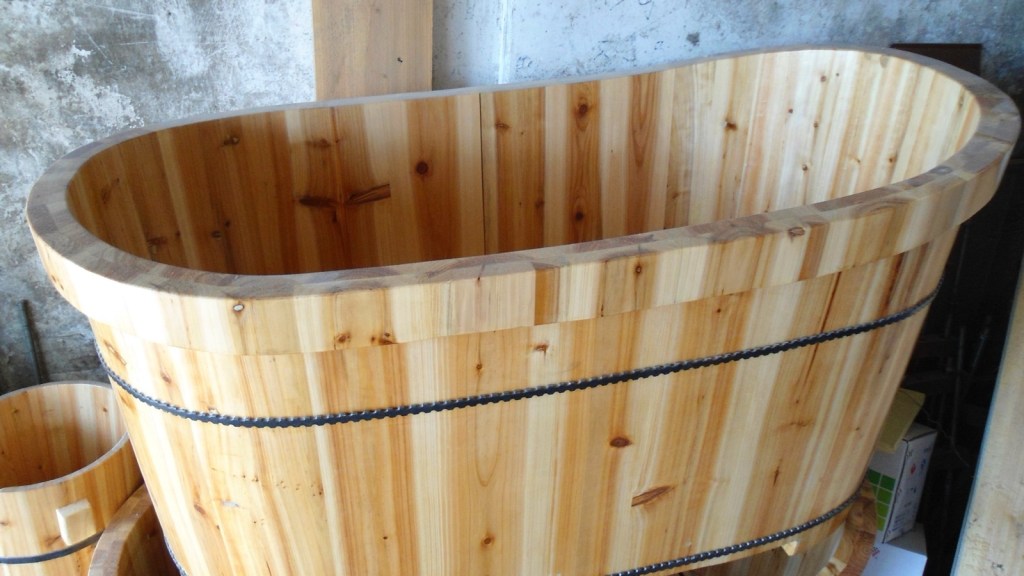
The ofuro is the Japanese home bath. It is a deep tub of hot water that you sit in up to your shoulders, usually in the evening. You wash and rinse outside the tub first, so the water is only for soaking. It is quite different from a quick shower, or from a Finnish dry sauna, where you sit in hot air.
For many Japanese adults, the ofuro is a daily habit. In the large study above, 72% of people soaked in a tub almost every day (Study). In a smaller study of 873 middle-aged and older adults, the average soak lasted about 12 minutes, close to 6 times a week (Study).
Water moves heat into your body much faster than air does. A 2025 lab study tested this directly (Study). Twenty healthy young adults each tried three kinds of heat, at least a week apart. One was a 45-minute bath at 40.5 C (about 105 F). Another was a traditional sauna set to 80 C, in three 10-minute rounds. The third was 45 minutes in a cooler infrared sauna, at 45 to 65 C.
The bath heated people far more than either sauna. Core body heat rose about 1.1 C (2 F) in the bath, against about 0.4 C in the traditional sauna. The infrared sauna did not raise it at all. The heart also worked hardest in the bath. It pumped about 3.7 more liters of blood a minute, against 2.3 in the sauna (Study).
This is why a hot soak can help or harm. Heat makes the heart pump harder and opens the blood vessels wide. Over time, that may train the vessels. In the moment, it also pulls blood pressure down. During the bath, average pressure fell by about 14 points, more than in either sauna (Study). These young volunteers did not have low blood pressure after they got out. Older bodies can react quite differently (Review).
Fewer Strokes in Daily Bathers
The strongest evidence comes from Japan’s JPHC study, a long-running study of middle-aged adults. In 1990, researchers asked 30,076 people aged 40 to 59 how often they took a tub bath. None had heart disease, stroke or cancer at the start. The team then followed them until 2009 (Study).
Over that time, 2,097 people developed heart disease or had a stroke. Near-daily bathers had about a 28% lower risk of the two combined than people who bathed twice a week or less. Their stroke risk was 26% lower.
The clearest gap was in strokes caused by bleeding inside the brain. Those were about half as common in near-daily bathers. Coronary heart disease, the artery disease behind heart attacks, was about a third lower. That number is less certain, because it rests on only 328 cases (Study).
One outcome showed no link either way: sudden cardiac death, when the heart suddenly stops. But there were only 53 such deaths, too few to rule out a small effect.
The researchers accounted for age, weight, smoking, exercise, drinking, diet, sleep, stress and schooling (Study). But they asked about bathing only once, in 1990. Frequent bathers were also more educated and more likely to work in offices. Things the study didn’t measure could still explain part of the link.
A smaller study looked at the heart itself. Researchers checked 873 middle-aged and older Japanese adults with no history of stroke or heart disease (Study). People who bathed 5 or more times a week had slightly less stiff arteries than those who bathed less. They also had lower levels of BNP, a hormone the heart releases when it is under strain.
The gaps were small, and only the BNP gap held up in both of the team’s main tests. The bathing survey also went out in late 2014, after the health checks had already happened. The authors say this design can’t show cause and effect (Study).
Bathing also goes with staying independent in old age. The JAGES study followed 13,786 older adults, average age 73, who could all manage daily life on their own (Study). Over 3 years, 1,203 of them, about 9 in every 100, became disabled enough to need official long-term care.
Bathing 7 or more times a week went with about a 28% lower risk of disability than bathing twice a week or less. The result was nearly the same for summer and winter bathing. Bathing 3 to 6 times a week made no clear difference.
The authors could not rule out the obvious catch: “healthier people might bathe more frequently” (Study). The disability results held when the team left out anyone followed for less than a year. That makes the link a little more convincing.
All three studies point the same way. But all three only watched people, so none can prove the bath is the cause.
What a Soak Does to You
A hot soak puts real work on the heart. A 2026 review gathered 20 studies of 384 healthy adults who sat in water at 37.5 to 45 C (Meta-analysis). Compared with lukewarm water or no bath, one hot soak raised heart rate by about 28 beats a minute. The size of that jump varied a lot from study to study.
It also lowered diastolic pressure, the bottom number of a blood pressure reading, by about 5 points (mmHg). That figure comes from just 6 studies. The top number, systolic pressure, barely moved. The vessels near your skin open wide to shed heat, so your heart speeds up to keep blood flowing.
Does a regular soak change anything? One small trial suggests it can, at least in young people. Twenty inactive adults, average age 22, finished the trial (Trial). Half soaked in 40.5 C water 4 to 5 times a week for 8 weeks, for up to 90 minutes each time. The other half sat in 36 C water instead.
By the end, the artery lining’s ability to widen the vessel had roughly doubled. The body’s main artery got less stiff, and the wall of the neck artery got thinner. Average blood pressure fell by about 4 to 5 points. The top number did not drop any more than it did in the cooler water group.
This trial has big limits. The researchers matched the groups by hand rather than by coin flip. And these were healthy people in their early 20s, soaking under close lab supervision (Trial).
The bigger picture is less exciting. A 2025 review gathered 20 trials that decided by coin flip who got repeated heat and who did not (Meta-analysis). They tested hot baths, saunas, hot yoga and heating of one body part, for 2 to 15 weeks.
For most measures, any change was small enough that chance could explain it. That included artery function, artery stiffness, resting heart rate, blood sugar and cholesterol. Across all trials, the drop in the top number could also be chance. Whole-body heating did better, lowering it by about 4 points across 11 trials.
Even that result needs care. The studies disagreed with each other, and most were small. In most, people knew which group they were in, which can make a treatment look better than it is. The authors call the blood pressure finding not conclusive.
For baths on their own, four trials reported blood pressure. They showed a small drop of about 2.5 points in the bottom number and no clear change in the top one (Meta-analysis). The 2026 review of hot soaks agrees. Its authors call the heart benefits of repeated soaking in healthy adults “inconclusive” (Meta-analysis).
An evening soak may also help you sleep. In a review of 17 studies, a warm bath or shower at 40 to 42.5 C (about 104 to 108 F) went with better sleep (Meta-analysis). Taken 1 to 2 hours before bed, for as little as 10 minutes, it helped people fall asleep faster.
The authors’ university puts that at about 10 minutes sooner on average (Source). The warmth draws blood to your hands and feet, which may help the body cool down for sleep. The authors note that the research is still thin.
Why Winter Baths Turn Deadly
In December 2025, Japan’s Consumer Affairs Agency (CAA) issued a year-end warning. It reported that 7,776 people died in 2024 from drowning in a bathtub or after falling into one (Source). Of those, 7,363 were 65 or older, about 95%. More than 4,700 were 80 or older (Source).
Winter drives much of this. A study of death records counted 99,930 home bathtub drownings in Japan from 1995 to 2020 (Study). Cold weather outside accounted for about 80% of the winter rise. New Year’s Day and New Year’s Eve were among the riskiest days. Their risk was roughly 70% and 60% higher than on an ordinary day.
Why would cold air outside matter for a hot bath? A 2026 review by Japanese researchers lays out a likely chain of events (Review). Many detached Japanese houses have little insulation and are only partly heated. So in winter, the changing room and bathroom get cold. A nationwide survey found more bath deaths in regions with colder changing rooms.
It starts when an older person undresses in that cold room. Their blood pressure jumps, even if they don’t feel cold. Stepping into the hot water pushes it up again. Older bathers often don’t feel the water as too hot, so they settle in, stay a long time and overheat.
Age matters most at the next step. In a younger person, the heart speeds up to hold blood pressure steady. In an older person, heart rate barely changes, so pressure falls sharply during a long soak. Standing up drops it further, because the vessels near the skin are still wide open. The person can faint, slip under the water and drown (Review). The review pieces this chain together from lab and survey studies, not from a single trial.
Autopsies back this up. Tokyo’s medical examiners handled 3,289 bath-related deaths from 2009 to 2011, mostly in people over 60 and mostly in winter (Study). Of the 550 that were autopsied, about 4 in 5 showed signs that the person had breathed in water.
Heart or blood vessel disease played a part in just over half of those 550 cases. About a quarter had blood alcohol above 0.5 mg per mL. The authors repeat the old advice: people who are ill or drunk should not take baths.
How to Bathe Safely
Each step in that chain has a fix. The CAA keeps a standing checklist for older bathers (Source). It calls its numbers a rough guide, not a hard limit.
Warm the changing room and bathroom first. This heads off the blood pressure jump when you undress.
Keep the water at 41 C (about 106 F) or below. Older bathers may not notice when water is too hot (Review). The CAA suggests a bath thermometer and a timer so you don’t have to guess (Source).
Get out within about 10 minutes. Long soaks are what overheat the body and pull pressure down.
Stand up slowly. Rising fast from hot water drops your pressure even further (Review). Hold the side of the tub and take your time.
Skip the bath right after a meal, or while alcohol is still in you. The Tokyo autopsies found blood alcohol above 0.5 mg per mL in a quarter of the autopsied cases (Study).
Don’t bathe after taking tranquilizers or sleeping pills. The CAA calls this dangerous.
Tell someone at home before you get in. Ask them to look in on you while you bathe (Source).
The CAA’s newer advice adds two more steps. Drink some water before you bathe. And if you start to feel foggy in the tub, pull the plug before you pass out (Source).
Three groups need the most care: older adults, people with heart disease and people on blood pressure drugs. Those drugs lower pressure, and so does a hot soak. Together, the two may push it too low. The CAA advises against bathing right after taking medicine (Source). The JAGES authors also say people with a fever or very high blood pressure should skip the bath (Study). If any of this applies to you, ask your doctor how to bathe safely.
Frequently Asked Questions
Does Hot Bath Lower Blood Pressure?
Yes, for a while. In healthy adults, one hot soak lowered the bottom number by about 5 points (Meta-analysis). In older people, pressure can first jump as they step in, then fall during a long soak (Review). Any lasting drop looks small, and the trial evidence is not conclusive (Meta-analysis).
Is Hot Bath Good for High Blood Pressure?
It may help a little, but the proof is thin. Four bath trials reported blood pressure, and they found a small drop in the bottom number only (Meta-analysis). If you take blood pressure drugs, a hot soak may add to their effect and raise your risk of fainting. Keep the bath warm and short, and ask your doctor first.
Does Hot Bath Increase Heart Rate?
Yes. In healthy adults, one hot soak raised heart rate by about 28 beats a minute on average, though studies varied a lot (Meta-analysis). In older people it rises less, which is one reason their pressure can fall too far (Review).
Hot Bath vs Sauna?
In a lab test, a hot bath heated people more than a sauna did. Forty-five minutes in 40.5 C water raised core heat by about 1.1 C. Three 10-minute rounds in a traditional sauna raised it by about 0.4 C (Study). For the long-term research on dry heat, see our look at Finnish sauna studies and longevity.
Key Takeaways
- Daily baths, fewer strokes: In 30,076 Japanese adults tracked for up to 19 years, near-daily bathers had about 28% less heart disease and stroke. The study only watched habits, so it can’t prove cause (Study).
- Small effect in trials: In coin-flip trials, most heart measures barely changed. Whole-body heat lowered the top number by about 4 points, and the authors call that not conclusive (Meta-analysis).
- A real death toll: In 2024, 7,363 Japanese people aged 65 or older drowned in a bathtub. That is more than three times the 2,103 that age killed in traffic (Source).
- Winter and New Year are riskiest: Cold weather accounted for about 80% of the winter rise in bath drownings. New Year’s Day and New Year’s Eve were among the riskiest days (Study).
- 41 C, about 10 minutes: Japan’s safety agency advises a warm room first and water at 41 C or below. Stay in the tub for about 10 minutes at most (Source).
- Who should be most careful: Older adults and people with heart disease face the most risk. Blood pressure drugs may add to it. The danger points are a cold room, a long soak and a fast stand-up (Review).
Soak Warm, Not Hot
If a nightly soak is part of your routine, you don’t need to give it up. The Japanese data suggest a regular warm bath may go with a healthier heart. No one has proven the bath is the reason, but it is a pleasant habit to keep.
Just treat the heat with respect. Warm the room first, keep the water at 41 C or below and get out within about 10 minutes.
If you have older parents or grandparents who love a hot bath, check on them this winter. Ask them to tell someone before they get in, especially around New Year, one of the riskiest times of the year (Study).
The heart benefit is promising but not yet proven, and the risks are well documented. So keep the soak if you enjoy it, and change how you take it.
This article is for educational purposes and is not medical advice. Talk to a qualified clinician before changing your health regimen.


Leave a Reply